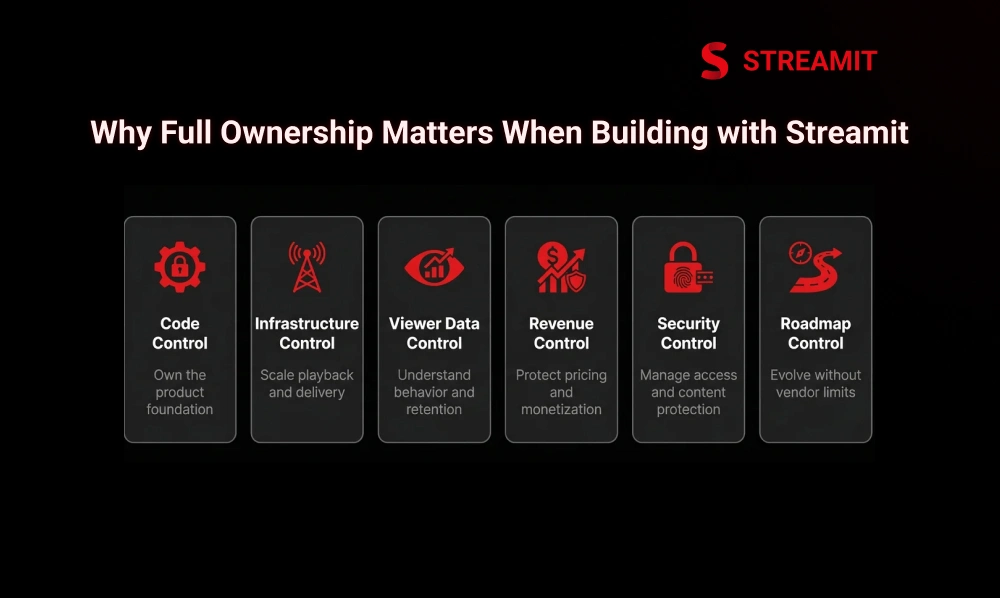
Why Full Ownership Matters When Building with Streamit


Most OTT platforms do not fail because of weak content. They fail because the business loses control over performance, data, revenue, and growth.
Streamit helps businesses build a custom OTT platform with ownership over code, infrastructure, user data, monetization, security, and roadmap.
This control matters when the platform needs better playback, new pricing models, AI-powered discovery, analytics, TV apps, or stronger content protection.
For serious OTT businesses, ownership is not a technical extra. It is the foundation for scalability, flexibility, and long-term control.
Part 2
The Risk of Building on Locked OTT Systems
Locked OTT systems can solve the launch problem, but they often create the growth problem. They help businesses go live quickly, but not always freely.
For a simple content test, that may be enough. But for a serious streaming business, limited control can become a wall between the platform and its next stage.
Locked Platforms Can Limit Features and Product Flexibility
Locked systems usually come with fixed workflows and limited customization. That becomes a problem when the product needs to move beyond basic streaming.
You may want custom subscription flows, regional content access, smarter discovery, creator dashboards, or advanced user journeys. If the platform cannot support it, the roadmap slows down.
Revenue Sharing and Limited Monetization Control Hurt Long-Term Profit
OTT monetization should not be trapped inside one fixed setup. A growing platform may need subscriptions, rentals, ad-supported content, bundles, coupons, or hybrid pricing.
If payment rules, pricing logic, or revenue sharing are controlled by the vendor, your margins become harder to protect. Long-term profit needs monetization freedom.
Limited Data and Technical Control Make Retention and Scaling Harder
Retention depends on understanding what users actually do. You need to know what they watch, where they drop off, what they search, and why they return.
If analytics are limited, the team is forced to guess. If technical control is limited, even useful insights may be difficult to act on.
Weak Technical Control Can Force a Rebuild Later
Many OTT businesses eventually outgrow their first platform. The app may still work, but the architecture may not support scale, deeper analytics, or new devices.
That is when rebuild risk appears. A rebuild is expensive because it affects development, users, content operations, revenue, and business momentum.
Part 3
What Full Ownership Actually Means in a Streaming Business
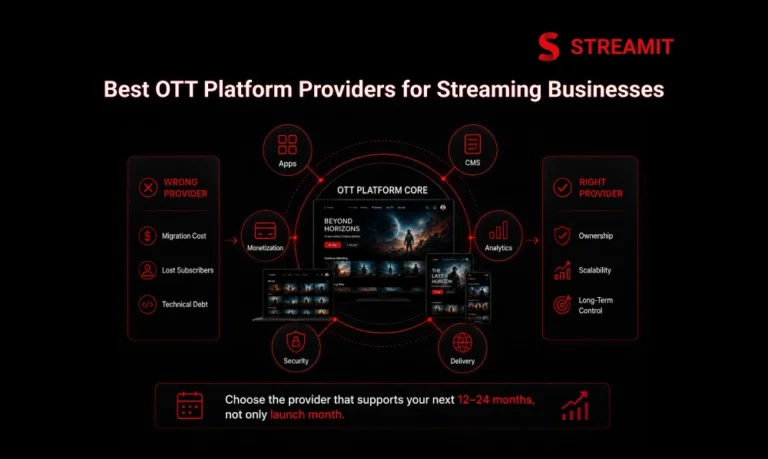
Full ownership means control across the business-critical layers of the platform. It is not just having access to an admin panel or changing colors on the app.
A serious OTT platform solution should give the business control over code, data, infrastructure, monetization, security, and future product direction.
| Ownership Area | Business Value |
|---|---|
| Codebase | Roadmap control |
| Infrastructure | Scale and performance |
| User data | Retention insight |
| Monetization | Revenue flexibility |
| Security | Content protection |
Ownership of the Codebase and Product Roadmap
Codebase ownership gives your team the freedom to improve the product over time. You can add features, refine workflows, and build based on real user behavior.
OTT products are never truly finished at launch. The platform should keep evolving as the audience, content strategy, and revenue model mature.
Ownership of Infrastructure and Video Delivery
Infrastructure ownership affects how reliably users can stream content. It includes cloud setup, CDN strategy, uptime planning, transcoding, and delivery performance.
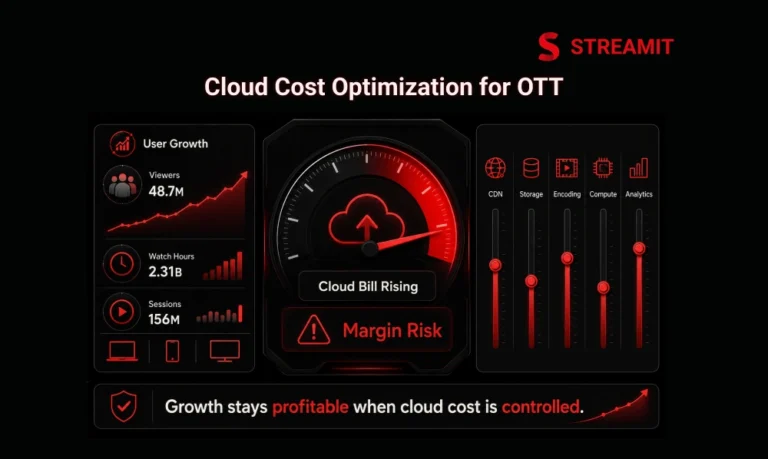
Better control over infrastructure helps the business improve buffering, playback quality, regional speed, and scaling costs as the platform grows.
Ownership of User Data and Viewer Insight
Viewer data is one of the most valuable assets in an OTT business. It shows what users watch, skip, finish, search for, and revisit.
When you own viewer insight, you can improve recommendations, content placement, pricing, onboarding, and retention decisions with more confidence.
Ownership of Monetization and Pricing
Monetization ownership gives your business control over how revenue is created. You can test plans, rentals, trials, bundles, coupons, and regional pricing.
This matters because the best pricing model is rarely final on day one. A growing streaming business needs room to experiment without rebuilding the platform.
Part 4
How Streamit Builds Ownership Into the Platform Foundation
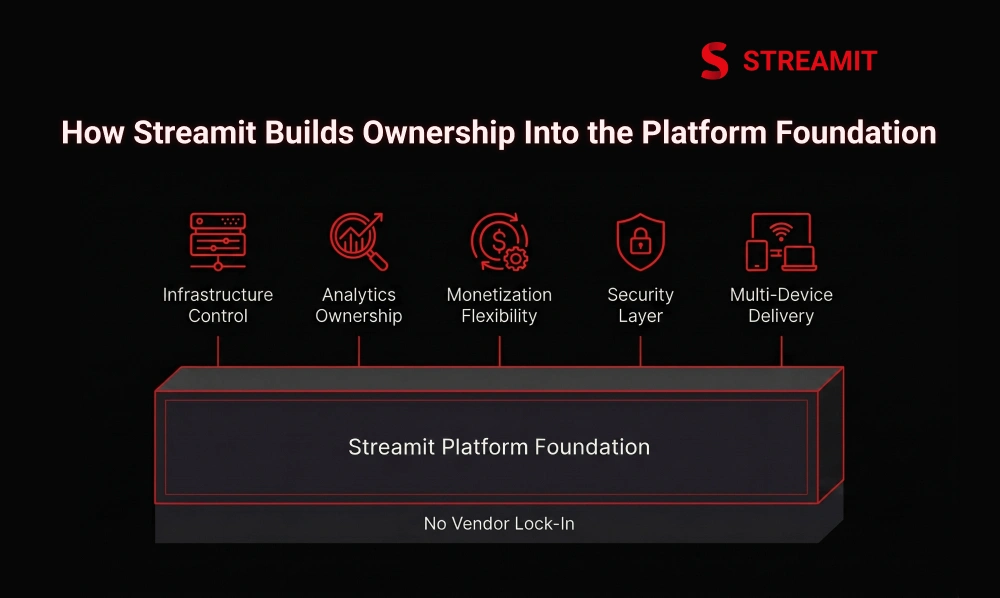
Streamit is designed as an ownership-first OTT platform solution, not a fixed app template. It helps businesses build a foundation they can control and scale.
The focus is not only on launching a streaming app. The focus is on connecting infrastructure, analytics, monetization, security, and multi-device delivery into one platform system.
Streamit Builds Around Your Business Model, Not a Fixed Template
A sports platform, fitness platform, education platform, creator platform, and entertainment platform do not need the same structure. Their users, content, and revenue models behave differently.
Streamit builds around the business model first. That means the platform can match your audience, content type, monetization plan, and long-term product direction.
Streamit Keeps Core Systems Flexible for Future Growth
Growth brings new requirements. You may need better analytics, new devices, smarter recommendations, regional expansion, different pricing, or stronger security.
Streamit keeps the core systems flexible so the platform can evolve. This reduces the risk of technical debt and unnecessary rebuilds.
Streamit Helps You Avoid Vendor Lock-In and Black-Box Systems
Vendor lock-in becomes a serious problem when the business needs faster decisions, but the system does not allow them. It limits data access, technical freedom, and product control.
Streamit helps reduce this risk by keeping ownership and transparency at the center. The business gets more control over the platform foundation instead of depending on a black-box setup.
Part 5
Why Ownership Improves Streaming Performance
Streaming performance is not only a technical metric. It affects trust, watch time, renewals, and the perceived value of the platform.
Users do not care why a video buffers. They only remember that the experience was poor, and that can directly affect retention.
Control Over CDN, Cloud, and Scale Improves Delivery
CDN and cloud decisions affect how quickly and smoothly users receive content. Weak delivery can create buffering, slow starts, and inconsistent playback.
With ownership, the platform can be planned around real traffic needs. That gives more control over delivery routes, edge caching, failover, and regional performance.
Traffic Spikes Need Planning Before They Happen
Traffic spikes can come from live events, new releases, campaigns, creator promotions, or regional launches. They are not rare in OTT.
If infrastructure is not ready, traffic spikes expose platform weakness. Ownership helps the team plan for scale before pressure arrives.
Adaptive Streaming Depends on the Right Encoding and Transcoding Setup
Adaptive streaming helps users watch smoothly across different devices and internet speeds. But it depends on the right encoding and transcoding setup.
When these systems are controlled properly, the platform can deliver better playback quality. Users get a smoother experience without being forced into one fixed video format.
Playback Quality Directly Affects Retention and Revenue
Bad playback creates silent churn. Users may not complain, but they may stop returning or cancel the subscription later.
Better playback improves trust, session length, repeat viewing, and subscription value. In OTT, performance is part of the product itself.
Part 6
Why Ownership Improves Retention and Growth
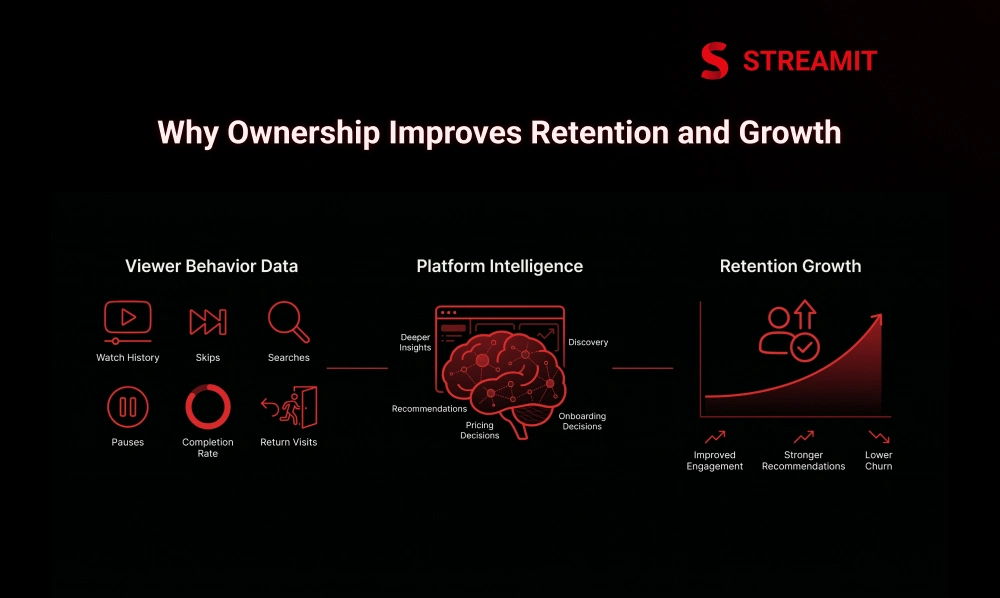
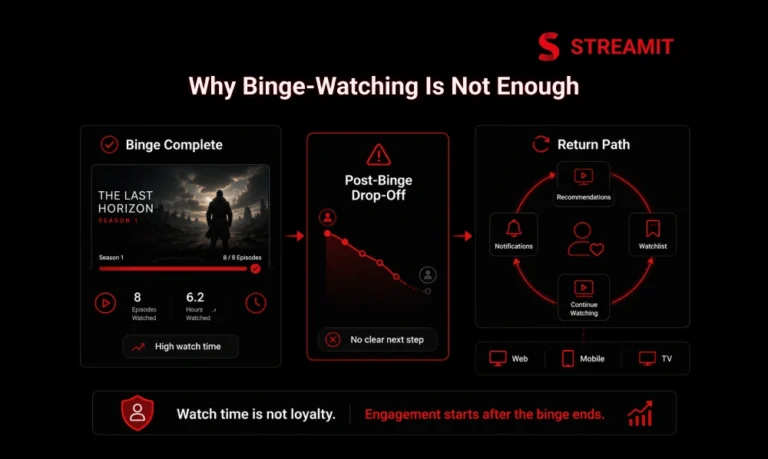
Retention improves when the business understands user behavior clearly. Guesswork is not enough when acquisition costs are high, and users have many options.
Ownership gives the platform access to deeper signals. Those signals help improve discovery, pricing, recommendations, onboarding, and content strategy.
Better Viewer Data Shows What People Actually Watch
Viewer data shows which content users start, finish, skip, pause, search for, and return to. These patterns reveal what users actually value.
This is more useful than surface-level numbers. A platform may have many views, but the real question is what drives repeat engagement.
Better Data Improves Recommendations and Discovery
Recommendations become stronger when they are based on real viewing behavior. Better data helps users find content that matches their interests faster.
Strong discovery improves the viewing journey. When users find relevant content easily, they have more reasons to stay active on the platform.
Retention Decisions Need More Than Basic Reports
Basic reports can show views, users, and revenue. But they do not always explain why people stay, leave, or lose interest.
Retention needs deeper insight into user journeys, churn signals, content performance, and engagement patterns. Without that, decisions remain reactive.
Streamit Connects Analytics With Platform Improvement
Streamit helps analytics become part of platform improvement, not just reporting. Data can guide recommendations, content placement, pricing, and retention decisions.
This is important because dashboards alone do not grow a platform. Growth happens when insight turns into better product decisions.
Part 7
Why Monetization Ownership Matters for OTT Revenue
Revenue control becomes more important as the platform grows. A fixed monetization setup can quietly limit long-term upside.
OTT businesses need the freedom to test, adjust, and improve revenue models over time. Ownership keeps monetization decisions inside the business.
Your Platform Should Not Be Locked Into One Revenue Model
A streaming platform should not be forced into one revenue model too early. SVOD, AVOD, TVOD, and hybrid models serve different audience needs.
Ownership allows the business to choose and combine models based on real market response. That flexibility supports better long-term revenue planning.
Pricing and Subscription Changes Should Stay in Your Control
Pricing changes with audience behavior, content value, and business strategy. Monthly plans, annual plans, trials, coupons, and premium tiers may all need testing.
If every pricing change depends on external restrictions, monetization becomes slow. Subscription control should stay with the business.
Revenue Tracking Should Work Across Web, Mobile, and TV
Users may subscribe on the web, browse on mobile, and watch on TV. Revenue tracking should connect these journeys clearly.
Without cross-device revenue visibility, the business may struggle to understand what is working. A serious OTT platform needs unified revenue insight.
Streamit Supports Monetization Models That Can Evolve Over Time
Streamit supports monetization flexibility so businesses can adapt as the audience grows. This helps the platform avoid being trapped by one early revenue decision.
As the business learns from users, it can refine subscriptions, rentals, bundles, offers, and hybrid models. That keeps the revenue strategy flexible.
Part 8
Why Content and Security Ownership Matter in OTT
Content is the core asset of a streaming business. If content access, rights, and delivery are weak, the entire business is exposed.
Security should not be added after problems appear. It should be part of the platform foundation from the beginning.
Content Protection Should Be Planned Before Launch
Content protection includes secure playback, encrypted delivery, rights management, and access rules. These should be planned before users enter the platform.
Early planning reduces risk. It also helps protect premium content, paid access, and the trust of users and partners.
Multi-DRM Helps Protect Content Across Devices
Different devices and playback environments may require different protection systems. Multi-DRM helps secure content across browsers, mobile apps, and TV devices.
Support for systems like Widevine, FairPlay, and PlayReady helps protect video access more effectively. This is important for platforms with premium or licensed content.
Secure Access Control Protects Users and Revenue
Access control decides who can watch what, under which plan, and on which device. It directly affects both user experience and revenue protection.
Strong access control reduces account misuse, unauthorized viewing, and content leakage. For paid OTT platforms, this is a business-critical layer.
Ownership Helps You Control Risk Instead of Depending Fully on Third Parties
Third-party tools can support security, but the platform should not depend blindly on them. The business still needs visibility and control over its risk strategy.
Ownership gives more clarity over how users, content, payments, and access are protected. That makes security a strategic decision, not only a technical add-on.
Part 9
When a Locked or White-Label OTT Solution May Still Work
A locked or white-label OTT solution may still work when the goal is simple, temporary, or low-risk. Not every streaming idea needs full ownership on day one.
The key is honesty. If the goal is only to test demand, speed may matter more than deep control in the beginning.
You Only Need a Simple Test or MVP
If you only need a simple MVP streaming app, a white-label solution can help validate the idea faster. This can be useful before making a larger investment.
At this stage, the goal is learning. The business may not yet need advanced infrastructure, deep analytics, complex monetization, or multi-device scale.
You Do Not Need Deep Customization Yet
Some early platforms only need basic streaming, standard subscriptions, and simple content access. In that case, deep customization may not be urgent.
A lightweight OTT setup can help the team understand the audience first. But it should not be mistaken for a long-term platform foundation.
You Are Not Ready to Own Infrastructure or Scale
Owning infrastructure requires planning, technical clarity, and responsibility. Some early teams may not be ready for that immediately.
That is fine if the business is still testing. But once traffic, revenue, and content value grow, infrastructure ownership becomes more important.
Part 10
When Streamit Is the Better Ownership-First Choice
Streamit is the better choice when OTT is not just a launch project. It is built for teams that see streaming as a long-term business system.
If the platform needs scale, customization, monetization flexibility, analytics, and multi-device delivery, ownership should be part of the foundation.
You Want Control Over Code, Data, Revenue, and Roadmap
Streamit fits businesses that want control over product direction, viewer data, monetization, infrastructure, and future growth. This protects long-term freedom.
That control matters because serious OTT businesses cannot depend on fixed templates forever. They need room to improve based on real users and real business needs.
You Need Web, Mobile, and TV Apps Working as One System
A serious OTT platform usually needs web, mobile, and TV apps to work together. Users expect a connected experience across devices.
Streamit supports this as one platform system. That helps avoid disconnected builds and inconsistent user experiences.
You Need AI, Analytics, Monetization, and Infrastructure Together
Modern OTT growth needs analytics, recommendations, monetization, infrastructure, and security to work together. These systems should not operate in isolation.
Streamit is useful when these layers need to be connected inside one platform. That creates a stronger foundation for growth and retention.
You Want to Avoid Rebuilding When the Business Grows
Rebuilds usually happen when the first platform was not designed for growth. It may lack flexibility, performance planning, analytics, or monetization control.
Streamit reduces this risk by building around a scalable architecture and ownership from the start. That helps the platform grow without starting again from zero.
Part 11
Ownership Checklist Before You Build an OTT Platform
Before choosing an OTT platform solution, ask ownership questions before feature questions. Features help you launch, but ownership helps you grow.
This checklist helps you understand whether the platform supports long-term control. It also reveals whether the setup is built for serious scale or only short-term delivery.
Do You Own the Codebase?
Codebase ownership gives your team control over future development. You can change features, improve workflows, and adapt the product as the market changes.
Without codebase ownership, your roadmap may depend on external limitations. That can slow product decisions and increase long-term dependency.
Do You Control the Infrastructure and CDN Setup?
Infrastructure and CDN control affect speed, buffering, uptime, and scalability. These systems directly shape the viewing experience.
If you cannot control them, performance improvements become harder later. A serious streaming business needs visibility into how content is delivered.
Do You Own User Data and Analytics?
User data helps you understand engagement, churn, content performance, and watch behavior. It is one of the most important assets in OTT.
Without analytics ownership, retention becomes guesswork. You may know users are leaving, but not understand what needs to change.
Can You Change Monetization Without Rebuilding?
A strong OTT platform should support new pricing, plans, bundles, rentals, ads, and trials without major rebuilding. Revenue strategy needs flexibility.
If monetization is locked, the business may lose opportunities. Ownership keeps pricing and revenue decisions in your control.
Can the Platform Support Future Devices, AI, and Regions?
A serious OTT platform should be ready for future devices, smarter discovery, regional growth, and advanced product improvements.
If the architecture cannot support these future needs, growth creates pressure too early. Planning for the future reduces rebuild risk.
Summary
Key Takeaways
Ownership Is a Business Foundation
Full ownership directly affects how much control an OTT business has over its code, infrastructure, data, monetization, security, and long-term roadmap – it is not just a technical benefit.
App Ownership ≠ Platform Ownership
A streaming app is only the visible layer. Real business value sits in the systems behind it – managing delivery, payments, analytics, users, and scale.
Locked Systems Become Limiting During Growth
Locked OTT systems can work for simple launches, but once the business needs custom features, flexible pricing, or deeper analytics, the lack of control becomes expensive.
Streamit Is Built for Ownership-First Growth
Instead of forcing businesses into a fixed template, Streamit supports a custom OTT platform foundation shaped around the business model, audience, monetization strategy, and future roadmap.
Ownership Powers Performance and Retention
Control over CDN, cloud, encoding, and viewer data helps reduce buffering, improve playback, understand watch behavior, and make smarter decisions to reduce churn.
Security and Monetization Need Ownership Too
Planning DRM, encrypted delivery, and flexible pricing models from the beginning protects content, revenue, and long-term business value – not just at launch, but as the platform scales.
Final Word
Conclusion
Full ownership is what separates a short-term OTT launch from a serious streaming business. When you control your code, infrastructure, data, monetization, security, and roadmap, you are not forced to grow inside someone else’s limits.
Streamit helps businesses build an OTT platform with long-term control at the center. Instead of depending on locked systems or fixed templates, founders can shape the platform around their audience, content strategy, revenue model, and future growth plans.
If your goal is only to test an idea, a basic setup may work. But if you want to build a scalable streaming platform across web, mobile, and TV, ownership should not be treated as an extra. It should be the foundation.
FAQs
Frequently Asked Questions
-
What does full ownership mean in an OTT platform?
Full ownership means control over code, infrastructure, user data, analytics, monetization, security, and roadmap. It helps the business scale without being trapped by fixed platform limits.
-
Why is ownership important when building with Streamit?
Ownership is important because Streamit is built for long-term OTT growth, not only a fast launch. It helps businesses control performance, revenue, data, infrastructure, and future product decisions.
-
Do I own the code and infrastructure with Streamit?
Streamit is positioned around ownership-first custom OTT development. That means businesses can control core systems, platform direction, infrastructure planning, and long-term roadmap.
-
Why is user data ownership important for OTT retention?
User data shows what people watch, where they drop off, and what keeps them engaged. This helps improve recommendations, content strategy, pricing, onboarding, and retention.
-
How does ownership help avoid future rebuilds?
Ownership allows the platform to improve over time instead of being replaced when growth creates new needs. It reduces technical debt, vendor dependency, and rebuild risk.
-
Who should choose an ownership-first OTT platform?
An ownership-first OTT platform is ideal for founders, media brands, broadcasters, creators, education businesses, fitness platforms, sports organizations, and content-driven companies that want to build for long-term growth.