OTT Platform Development Cost in 2026: Full Breakdown


OTT platform development cost in 2026 is no longer just about building an app. It is about building a platform that can handle growth, performance, and long-term product control.
A simple OTT platform can still launch on a manageable budget. But once you add more devices, stronger infrastructure, better discovery, and deeper monetization, the cost starts moving fast.
That is why founders should not look at OTT cost as a one-time development number. The real cost includes the systems needed to keep the platform stable, scalable, and easier to improve over time.
The smarter question in 2026 is not just how much it costs to launch. It is how much it costs to build an OTT platform that will still work well when the business becomes bigger.
Cost Factors
What Affects OTT Platform Development Cost in 2026?
OTT platform development cost depends on what you are building, who you are building for, and how far you want the platform to go in the next 12 to 24 months. A simple VOD product and a multi-device OTT business do not sit in the same cost bracket.
The biggest cost shifts usually come from platform type, feature depth, device coverage, infrastructure planning, and long-term product control. Design matters, but architecture decisions usually matter more.
Why OTT Development Costs Are Increasing in 2026
OTT development costs are rising because viewers expect more from every streaming experience. Faster playback, cleaner interfaces, stronger recommendations, and smoother device continuity are now baseline expectations.
At the same time, the technology stack is getting heavier. Modern OTT platforms now need better workflows for streaming, content management, subscriptions, analytics, and security, even at an early stage.
Higher Viewer Expectations for Quality and Speed
Users expect content to start quickly and play without friction. If startup time is slow or buffering appears early, many users lose trust before the content itself has a chance to win them.
That is why playback quality has become a cost driver. Adaptive bitrate streaming, optimized video delivery, and better performance across network conditions all add technical depth to the product.
More Complex Streaming Technology Stacks
A modern OTT stack includes much more than a player and a video library. It usually includes encoding, storage, authentication, billing, analytics, admin workflows, delivery logic, and access control.
As more layers need to work together, the product becomes more expensive to build. Even one new feature can affect multiple systems at the same time, which is why OTT costs rise faster than many founders expect.
Multi-Device and Global Content Delivery
Supporting web, mobile, and TV apps increases cost because each device family behaves differently. User flows may look similar, but playback behavior, UI patterns, and testing requirements are not the same.
If the platform also serves users across regions, the cost rises further. Subtitles, language handling, bandwidth variation, and broader delivery requirements all add more technical effort.
The Biggest Cost Drivers in OTT Platform Development
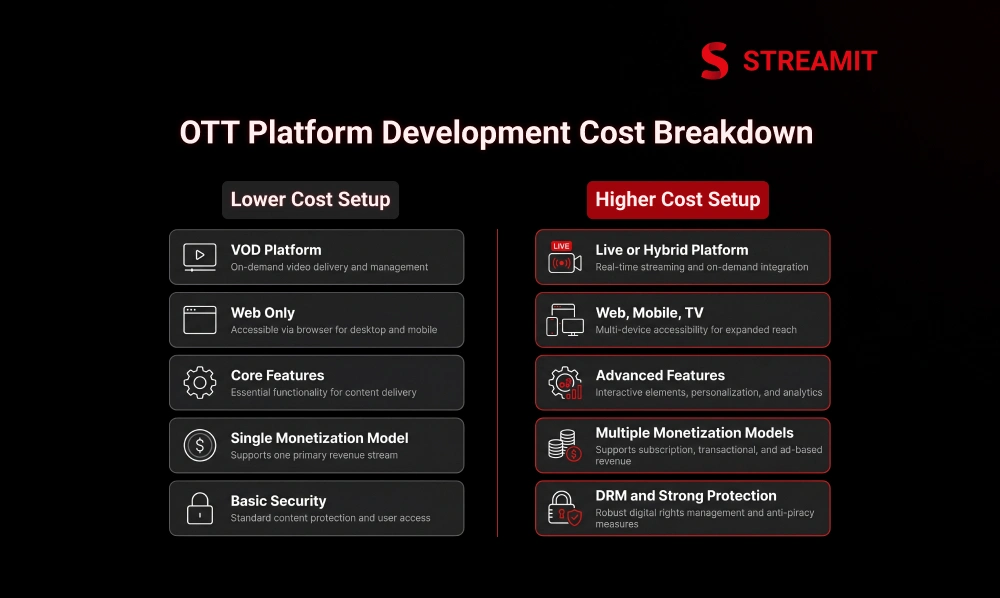
The biggest cost drivers in OTT are usually platform type, supported devices, and feature scope. These are the decisions that shift a project from lean MVP territory into growth-stage or enterprise-level pricing.
Other cost drivers include security requirements, monetization model, infrastructure scale, and how much custom control the business wants. The more serious the business case, the more important these layers become.
| Cost Driver | Lower-Cost Direction | Higher-Cost Direction |
|---|---|---|
| Platform Type | VOD | Live or Hybrid |
| Devices | Web only | Web, Mobile, TV |
| Features | Core features | Advanced workflows |
| Monetization | One model | Multiple models |
| Security | Basic access | DRM and stronger protection |
Platform Type: VOD, Live, or Hybrid
A VOD platform is usually the most affordable path because content is already prepared before playback begins. The delivery model is simpler, and traffic patterns are easier to manage.
Live streaming costs more because the platform has to handle real-time delivery, concurrency, lower latency expectations, and stronger reliability. Hybrid platforms cost the most because they combine both systems.
Supported Devices: Web, Mobile, and Smart TV
A web-first OTT platform is usually the easiest and most cost-effective way to launch. It allows teams to validate the product without taking on the full complexity of multi-device development.
Once mobile and TV apps are added, the cost rises quickly. Each added platform brings more frontend work, more QA, more release handling, and more playback edge cases.
Feature Scope: Basic vs Advanced OTT Features
Basic features help a platform launch and function reliably. These usually include login, content browsing, video playback, subscriptions, and a simple admin panel.
Advanced features make the platform more competitive, but they also raise the cost. Personalization, offline access, multilingual support, deeper analytics, and advanced search all add more moving parts.
Feature Costs
Which OTT Features Increase Development Cost the Most?
Not every feature affects the budget equally. The most expensive features are usually the ones that touch backend logic, frontend behavior, content operations, and infrastructure at the same time.
That is why small-looking features can still carry a high development cost. The real question is not how the feature looks in the UI, but how many systems it changes behind the scenes.
Core OTT Features Every Platform Needs
Every OTT platform needs a stable base before premium functionality is added. Without that, advanced features usually make the platform more expensive without making it stronger.
Core features are what support usability, content flow, monetization, and operational control. If these are weak, the platform starts struggling long before scale becomes the issue.
User Accounts and Multi-Profile Access
User registration, authentication, and subscription access are basic platform requirements. They support account control, content entitlement, and the foundation of user-specific experiences.
Multi-profile access adds more value because it helps separate watch history, preferences, and viewing journeys. It looks simple in the UI, but it shapes a lot of product logic underneath.
Video Upload, Encoding, and Streaming
Video upload and encoding are central to OTT operations. Content needs to be processed correctly, stored in the right format, and delivered in a way that supports smooth playback across different conditions.
This is one of the biggest technical layers in OTT. The more quality levels, formats, and delivery requirements involved, the higher the cost the platform carries over time.
Search, Discovery, and Recommendations
As the content catalog grows, discovery becomes more important. Users should be able to find relevant content quickly, or the platform starts losing watch time and engagement.
Even a basic discovery layer needs good content structure and thoughtful presentation. Once recommendation logic becomes more personalized, this cost rises further.
Advanced Features That Push OTT Costs Higher
Advanced OTT features often improve retention and user experience. But they also increase the product’s technical complexity, which is why they should be added with a clear business intent.
Teams often make the mistake of adding these features too early. That raises launch cost, increases maintenance pressure, and sometimes delays the platform without enough return.
AI-Based Recommendations
AI-based recommendations require much more than a content slider on the homepage. They depend on user activity data, content relationships, ranking logic, and a clean feedback loop.
This makes them one of the more expensive feature categories in OTT. They can drive strong value later, but they need real usage data and a solid content base to work properly.
Offline Downloads
Offline downloads are attractive because they improve convenience, especially on mobile. But they also introduce more complexity around storage, rights handling, sync logic, and secure access.
This feature costs more than many teams expect. It affects app behavior deeply and needs careful planning if content protection and user experience both matter.
Multi-Language Support and Subtitles
Multi-language support goes beyond translated labels. It often includes subtitle workflows, alternate audio tracks, localized metadata, and region-aware content presentation.
That makes it valuable, but also more expensive. The broader the audience reach, the more this feature starts affecting both operations and development costs.
Cost Breakdown
OTT Platform Development Cost Breakdown
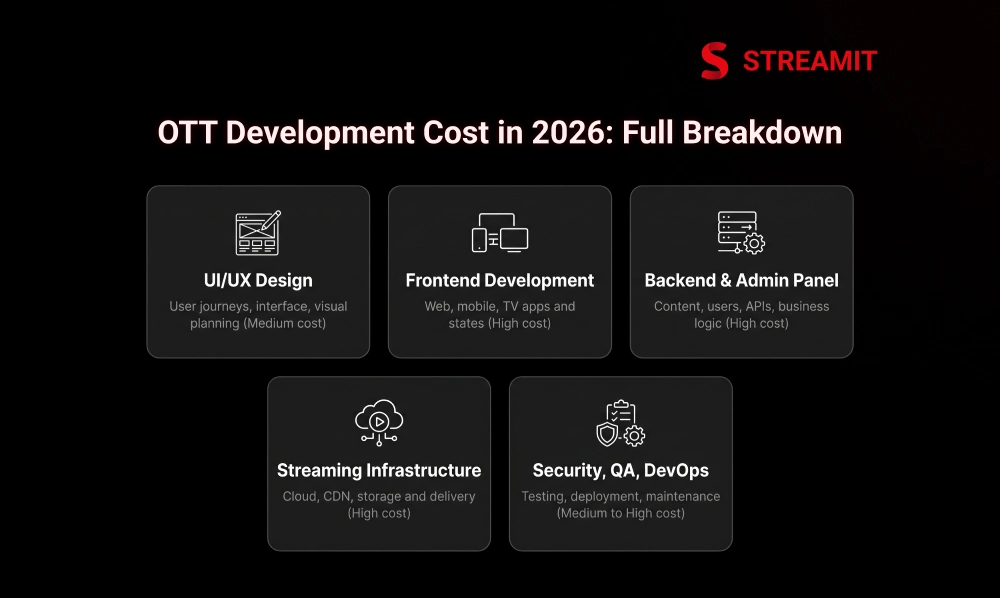
The best way to understand OTT platform cost is to break it into product layers. A single estimate is useful, but it does not show where the real budget pressure sits.
When founders understand the cost blocks separately, they can plan better. It becomes easier to decide what to build now, what to delay, and where the product needs stronger investment.
| Cost Area | Cost Impact |
|---|---|
| UI/UX Design | Medium |
| Frontend Development | High |
| Backend & Admin Panel | High |
| Streaming Infrastructure | High |
| Security, QA, DevOps | Medium to High |
UI/UX Design Cost
UI/UX cost depends on how many journeys the platform needs to support. A simple VOD product is easier to design than a platform with profiles, subscriptions, TV navigation, and deeper discovery.
Good OTT design reduces friction, not just improves appearance. The more surfaces and user states involved, the more time and planning the design layer needs.
Frontend Development Cost
The cost of frontend development is largely influenced by how many platforms need to be supported. A web-only OTT frontend can stay lean, but mobile and TV apps expand the workload fast.
A large part of the frontend cost comes from states, not screens. Playback states, network states, logged-in states, billing states, and device-specific behavior all increase effort.
Backend and Admin Panel Cost
Backend and admin panel cost is one of the largest parts of OTT development. This is where content management, user control, subscriptions, permissions, reporting, and business workflows are handled.
If this layer is weak, every future feature becomes harder to build. A strong backend creates flexibility and keeps the platform easier to manage as content and users grow.
Video Streaming Infrastructure Cost
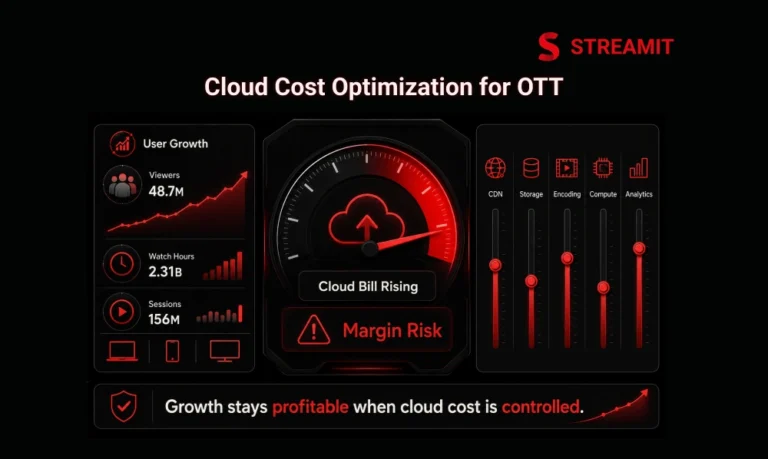
Streaming infrastructure is where OTT cost becomes ongoing, not just project-based. It includes the systems that keep content available, smooth, and scalable once users begin streaming in real conditions.
This part is often underestimated at the start. Many teams focus on launch cost, but monthly infrastructure cost becomes more important as watch time and catalog size grow.
Cloud Hosting and Servers
Cloud hosting cost depends on traffic volume, backend processing, and platform complexity. A small VOD platform can stay relatively light compared to a platform handling live workflows or large-scale activity.
The key is not to underbuild or overbuild. Strong cloud planning allows the platform to grow without carrying unnecessary costs too early.
CDN and Bandwidth
CDN and bandwidth costs rise as streaming minutes increase. The more users watch, and the higher the video quality, the more the delivery cost becomes part of the platform’s financial reality.
This is why OTT cost is tied to usage, not just development. A platform may look affordable at launch, but the delivery cost grows with success.
Video Storage
Video storage cost depends on catalog size, file quality, renditions, thumbnails, subtitle files, and archive strategy. Even a moderate content library can become expensive over time without good storage discipline.
Storage is often quiet in the early stage, but loud later. As more assets accumulate, poor media planning starts turning into an avoidable monthly cost.
Business Model
How Platform Type, Monetization, and Scale Change OTT Development Cost
OTT cost does not come only from features. It also comes from the business model behind the platform and the size of the product the company is trying to build.
That is why two platforms with similar interfaces may have very different budgets. Revenue model, audience size, and operational maturity all change how the platform needs to be structured.
Cost Difference Between VOD, Live, and Hybrid OTT Platforms
VOD platforms are more affordable because delivery is more controlled and predictable. The platform can optimize the content before users press play, which keeps the technical burden lower.
Live platforms cost more because they need real-time stability, faster reaction to failures, and better concurrency handling. Hybrid platforms combine both models, which usually makes them the most expensive option.
How SVOD, AVOD, TVOD, and Hybrid Models Affect Cost
SVOD platforms need strong subscription logic, access control, billing, and retention flows. AVOD platforms need ad workflows, segmentation, reporting, and monetization structure around content consumption.
TVOD platforms need transactional logic and entitlement handling. Hybrid models cost more because the platform has to support multiple revenue rules inside one system.
Startup vs Growth-Stage vs Enterprise OTT Platform Cost
A startup OTT platform is usually focused on proving demand. It keeps scope controlled and tries to validate content, audience, and monetization before deeper expansion.
A growth-stage platform adds more structure, while an enterprise platform adds scale, workflows, stronger reporting, and broader device coverage. The more mature the business, the more mature the system needs to be.
| Platform Stage | Estimated Range |
|---|---|
| Startup / MVP | $30,000 to $80,000 |
| Growth-Stage | $80,000 to $200,000 |
| Enterprise | $200,000 to $500,000+ |
Build Strategy
White-Label vs Custom OTT Platform Cost
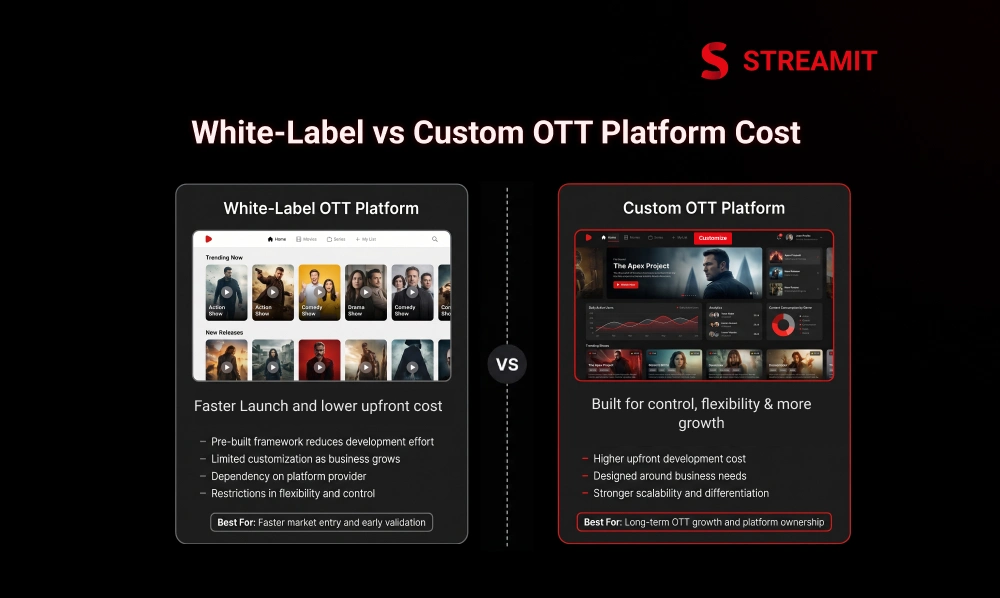
This is one of the most important decisions in OTT planning. The lowest upfront cost is not always the best long-term decision for a serious streaming business.
White-label and custom OTT platforms solve different problems. One is built for faster entry. The other is built for deeper control and long-term flexibility.
White-Label OTT Platform Pricing
White-label OTT platforms are usually faster to launch and cheaper upfront. The core framework already exists, which reduces initial product development effort.
But this comes with trade-offs. Customization limits, recurring dependency, and platform restrictions can reduce flexibility later as the business grows.
Custom OTT Platform Development Pricing
Custom OTT development costs more upfront because it includes architecture planning, unique workflows, better control, and cleaner ownership. The product is shaped around the business instead of the other way around.
This approach usually makes more sense for companies that want long-term control. It is more expensive early, but often stronger for scale and differentiation.
Which Option Is Better in 2026?
White-label is useful when speed matters most, and the platform is still validating the business model. It can help teams enter the market faster with less early investment.
Custom is usually better when the business wants control over the roadmap, monetization, data flow, and future expansion. In 2026, that level of control often matters more than launch speed.
Cost Optimization
How to Reduce OTT Platform Development Cost Without Hurting Quality
The best way to reduce OTT cost is not to cut the wrong layers. It is to remove waste, sequence features intelligently, and avoid overbuilding before demand is proven.
That means focusing on what protects the business first. A lean platform can still be a strong platform if the foundation is planned properly.
-
1
Start With an MVP
A good OTT MVP focuses on the essential user journey. It should support content access, smooth playback, core monetization, and a manageable admin workflow without carrying unnecessary complexity. The goal of an MVP is to reduce uncertainty, not product quality. If the platform feels unstable at launch, the business does not actually save money.
-
2
Prioritize the Right Features and Devices First
Not every OTT platform needs TV apps, offline downloads, or advanced personalization at the start. The first release should reflect audience behavior and business priorities, not feature pressure. This is one of the smartest ways to control costs. Building the right features first usually saves more than trying to launch everything at once.
-
3
Use Scalable Cloud Infrastructure
Scalable infrastructure helps platforms grow without locking too much money into the early build. It gives teams room to expand without forcing a large rebuild later. The idea is to create a path for growth, not to build the heaviest possible setup on day one. Good cloud planning protects both quality and budget.
-
4
Choose the Right OTT Development Partner
The wrong development partner can create hidden costs later through poor planning, weak architecture, and avoidable rework. A lower quote does not always mean lower total cost. A strong OTT partner thinks beyond launch. They help structure the platform around performance, scale, maintainability, and long-term business control.
Cost Estimates
Final OTT Platform Cost Estimate in 2026
OTT platform cost estimates make more sense when tied to the business stage. Founders need practical ranges that reflect scope, not generic pricing labels.
The right estimate depends on how many devices are supported, how strong the backend needs to be, and whether the platform is being built for validation or scale.
Estimated Cost for a Startup or MVP OTT Platform
A startup or MVP OTT platform may range from $30,000 to $80,000. This is realistic for a focused VOD product with core features and limited device coverage.
This stage is about proving business value. The platform should stay lean, but not so lean that it becomes fragile.
Estimated Cost for a Growth-Stage OTT Platform
A growth-stage OTT platform may range from $80,000 to $200,000. This usually includes stronger backend workflows, mobile apps, improved discovery, and more scalable streaming systems.
At this level, the platform is no longer only proving demand. It is trying to improve retention, expand usage, and support a more serious operating model.
Estimated Cost for an Enterprise OTT Platform
An enterprise OTT platform may range from $200,000 to $500,000+. These platforms usually include broader device support, live or hybrid capabilities, deeper analytics, stronger security, and more custom workflows.
Enterprise cost is high because the platform is built to hold complexity. It is designed for long-term scale, not just launch.
| Platform Stage | Estimated Cost Range | Typical Scope | Main Goal |
|---|---|---|---|
| Startup / MVP OTT Platform | $30,000 to $80,000 | Focused VOD product, core features, limited device coverage | Prove business value with a lean but stable platform |
| Growth-Stage OTT Platform | $80,000 to $200,000 | Stronger backend workflows, mobile apps, improved discovery, scalable streaming systems | Improve retention, expand usage, and support growth |
| Enterprise OTT Platform | $200,000 to $500,000+ | Broader device support, live or hybrid capabilities, deeper analytics, stronger security, custom workflows | Build for long-term scale and operational complexity |
How Region Affects Final OTT Development Cost
Development cost also changes by region. Teams in India are usually more cost-effective than teams in the US or Western Europe, especially on hourly pricing.
But the hourly rate should not be the only decision factor. OTT experience, communication quality, product thinking, and architecture strength matter just as much.
Summary
Key Takeaways
Scope Drives Cost
OTT cost depends on platform type, supported devices, and feature complexity – not just development time alone.
Devices Increase Budget
Adding mobile and smart TV apps raises cost significantly through extra development, testing, and maintenance work.
Infrastructure Is Ongoing
Hosting, CDN, bandwidth, and storage are major cost factors that grow beyond the initial build as usage increases.
Hidden Costs Matter
Maintenance, DRM, security, third-party tools, and app store fees all impact the total budget and should be planned from day one.
Custom Offers More Control
White-label costs less upfront, but custom development offers better scalability, ownership, and long-term flexibility.
MVP Saves Budget
Starting with the right MVP and prioritizing key features helps control cost without sacrificing the platform’s core quality or stability.
Conclusion
Conclusion
OTT platform development cost in 2026 should be treated as a strategic investment, not a one-time app budget. The real issue is not how cheaply a platform can launch, but how well it can grow without breaking later.
Founders who understand this early usually make better product decisions. In OTT, clean architecture and better sequencing often save far more money than chasing the smallest possible quote.
FAQs
Frequently Asked Questions
-
How much does OTT platform development cost in 2026?
OTT platform development cost in 2026 can range from $30,000 to $500,000+. The final cost depends on platform scope, supported devices, feature depth, and business scale.
-
What factors increase OTT platform development cost the most?
The biggest cost drivers are live streaming, multi-device support, advanced features, and infrastructure requirements. Security, monetization logic, and backend complexity also increase the overall budget.
-
Why does the smart TV app support increase OTT app development cost?
Smart TV app support increases cost because it requires extra UI adaptation, playback optimization, and device-specific testing. It also adds more QA effort, maintenance work, and release management.
-
Which OTT platform features add the highest development cost?
Features like AI recommendations, offline downloads, DRM, and multilingual support usually add the highest cost. That is because they affect multiple layers of the platform, not just the frontend.
-
How much does OTT app development cost in India vs the USA vs Europe?
OTT app development is generally more cost-effective in India than in the USA or Europe. However, the final value depends not only on region but also on expertise, quality, and OTT-specific experience.
-
How do AI recommendations and personalized content affect OTT platform cost?
AI recommendations and personalized content increase cost because they require data tracking, ranking logic, and stronger backend systems. These features improve user experience, but they also make the platform more complex to build and maintain.