Why Your OTT Platform Needs Advanced Analytics


Most OTT platforms do not fail because they lack content. They struggle because they cannot clearly see what users watch, where they drop off, why playback suffers, and which decisions are affecting growth.
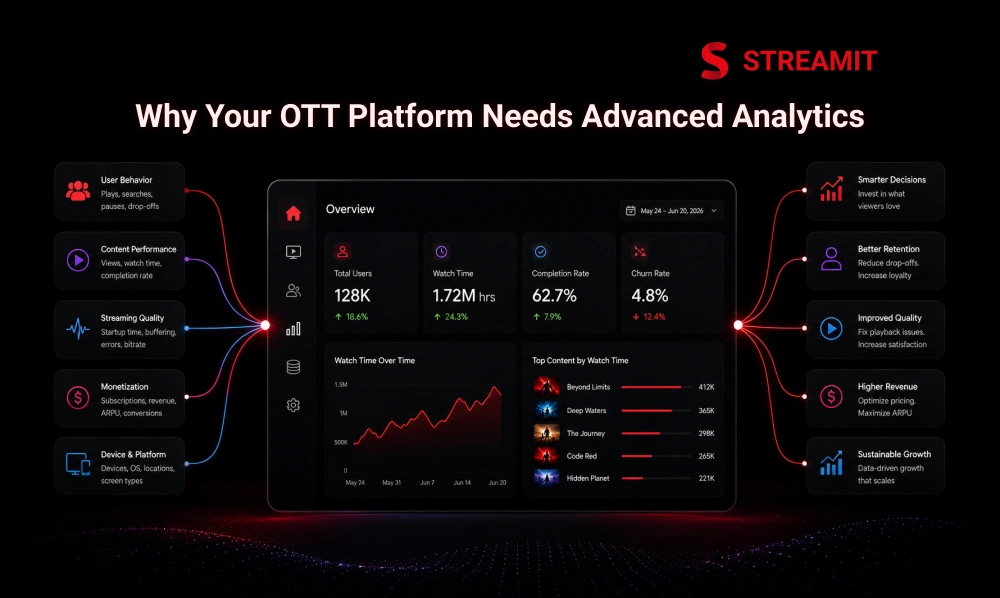
Advanced analytics gives OTT teams that visibility. It connects viewer behavior, content performance, streaming quality, monetization, and retention into one clearer view, so founders can build a platform that scales with control instead of reacting after problems become expensive.
The Growing Data Challenge in OTT Platforms
At 10,000 viewers, data feels useful. At 100,000 viewers across web, mobile, and TV, data becomes operational pressure. Every play, pause, search, payment, buffer, device switch, and drop-off creates a signal.
The problem is not that OTT platforms lack data. The problem is that most teams cannot turn OTT platform data into fast decisions. Advanced analytics helps separate noise from business signals.
What Data OTT Platforms Generate
Every OTT platform generates user behavior data, streaming quality data, content performance data, revenue data, and device-level usage data. Watch time, session duration, completion rate, churn, ARPU, startup delay, and buffering ratio are common OTT metrics used to understand platform health.
This data is valuable only when it connects. A viewer leaving after three minutes may be a content issue, a recommendation issue, a playback issue, or a pricing issue. Basic numbers rarely explain the real cause.
Why Basic Reports Are Not Enough
A monthly report can tell you what happened. It cannot always tell you why it happened, where it started, or what should happen next. That delay is expensive for growing streaming businesses.
Basic OTT analytics often show views, users, and revenue in separate boxes. Advanced analytics integrates user behavior, content, playback, monetization, and infrastructure into a single decision-making system.
What Advanced Analytics Means in OTT Platforms
Advanced analytics OTT is not about adding a fancy dashboard. It means using streaming analytics to understand behavior, detect issues, forecast risk, and guide better decisions before damage becomes visible.
For serious OTT businesses, analytics should not sit at the end of the platform. It should be part of the foundation, connected to content, users, revenue, delivery, and multi-device performance.
Basic Reporting vs Advanced OTT Analytics
Basic reporting is useful for visibility. Advanced OTT analytics is useful for action. The difference is whether the data helps your team simply observe the platform or actively improve it.
| Area | Basic Reporting | Advanced OTT Analytics |
|---|---|---|
| User data | Shows views and users | Finds behavior patterns |
| Content data | Shows top videos | Explains completion and drop-off |
| Playback data | Shows errors | Detects quality issues early |
| Revenue data | Shows sales | Tracks churn, ARPU, LTV, conversion |
| Action | Manual review | Faster decisions and alerts |
A basic OTT analytics dashboard may say one show performed well. An advanced dashboard may show which audience segment watched it, where they dropped off, what device they used, and whether they returned.
Descriptive, Diagnostic, Predictive, and Prescriptive Analytics
Descriptive analytics shows what happened. Diagnostic analytics explains why it happened. Predictive analytics estimates what may happen next. Prescriptive analytics suggests what action to take.
For example, churn prediction OTT is not magic. It can be built from real patterns such as falling watch time, shorter sessions, poor playback experience, failed payments, or reduced return frequency.
Why Advanced Analytics Is Critical for OTT Growth
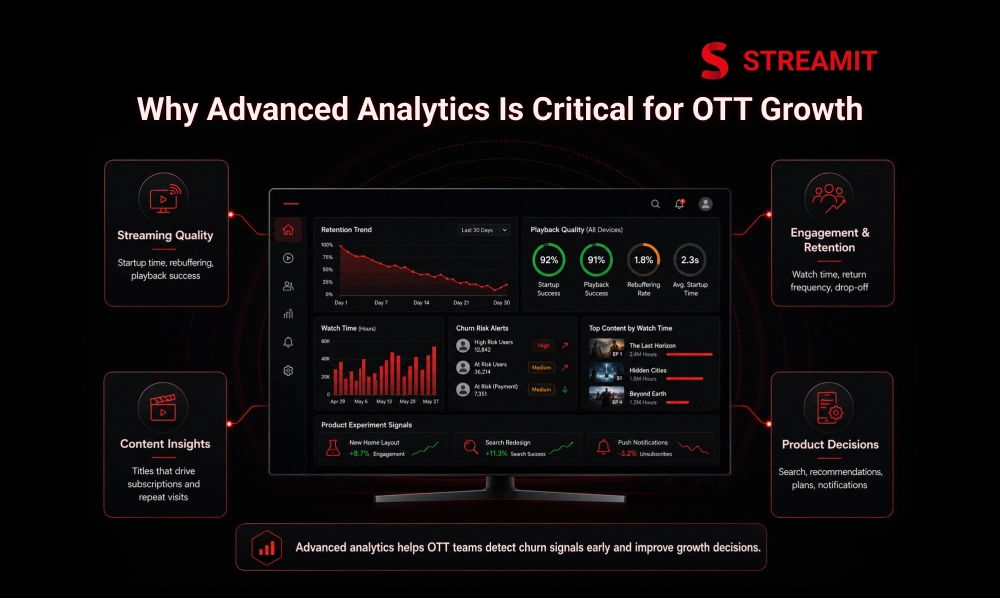
Growth does not fail only because content is weak. Many OTT platforms lose users because they do not detect problems early enough. By the time churn appears in revenue reports, the shift in behavior has already happened.
Advanced analytics benefits OTT teams by making growth more measurable. It gives founders and operators a clearer view of what improves retention, what wastes cost, and what actually moves revenue.
Improve Streaming Quality and User Experience
A viewer does not care whether the issue is CDN, device, app, encoder, or network. They only know the video did not start smoothly. Quality of Experience analytics tracks startup time, rebuffering, playback success, and visual quality.
This is where streaming quality analytics becomes a growth tool. If one device version has higher playback errors, your team can act before a bad experience becomes bad reviews.
Increase User Engagement and Retention
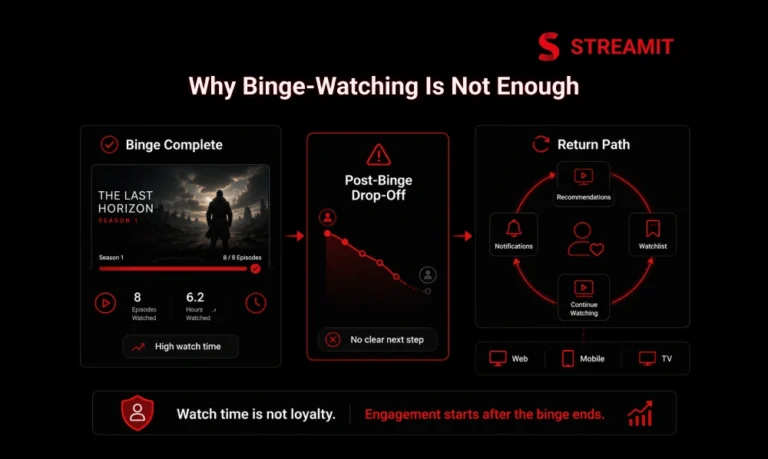
More views do not always mean stronger retention. A platform can have high launch traffic and weak repeat behavior. Engagement analytics for OTT help track watch time, return frequency, completion rate, and user drop-off.
Low engagement and poor playback quality are common warning signals for churn risk in OTT services. Advanced analytics helps teams identify these patterns before users cancel or disappear.
Make Better Content and Product Decisions
Content analytics for OTT helps teams understand more than popularity. It can show which shows drive subscriptions, which categories create repeat visits, and which titles attract users but fail to retain them.
Product decisions also become sharper. Search design, homepage layout, thumbnails, recommendations, subscription plans, and notifications can all improve when teams study behavior instead of guessing.
Advanced Analytics for OTT Monetization
Revenue growth is not only about adding more users. It is about understanding how users convert, what keeps them paying, and where money leaks inside the platform.
OTT monetization analytics connects subscriptions, ads, rentals, renewals, refunds, trials, and plan changes. Without that view, teams may spend heavily on acquisition while losing value through churn.
Track Subscription, Churn, and Lifetime Value
Subscription analytics OTT should track trial-to-paid conversion, active subscribers, cancellation reasons, payment failures, ARPU, and lifetime value. These metrics help show whether growth is healthy or just temporary.
Churn is especially important because it changes the economics of the platform. A small drop in retention can reduce lifetime value, increase pressure on marketing, and slow long-term growth.
Improve Ad Revenue and Audience Targeting
For ad-supported or hybrid OTT platforms, analytics help measure impressions, fill rate, ad completion, viewer segments, and ad fatigue. Better audience analytics can improve targeting without damaging the viewing experience.
The mistake is treating ads as only a sales layer. In OTT, monetization affects experience. Too many ads, poor placement, or irrelevant targeting can reduce engagement and hurt repeat viewing.
Key OTT Metrics Advanced Analytics Should Track
A serious OTT platform should not track every number with equal importance. The best analytics system separates vanity metrics from operating metrics.
The right OTT metrics should answer three questions: are users engaged, is playback reliable, and is the business model working?
User Engagement Metrics
User engagement metrics include watch time, session duration, DAU, MAU, completion rate, return frequency, search usage, and content saves. These numbers show whether users are building a habit.
| Metric | What It Shows |
|---|---|
| Watch time | Depth of viewing |
| Session duration | Strength of each visit |
| Completion rate | Content relevance |
| DAU/MAU | Usage habit |
| Drop-off point | Where attention breaks |
A viewer who watches five short sessions per week may be more valuable than someone who watches once and disappears. Advanced analytics helps identify this difference.
Quality of Experience Metrics
QoE analytics OTT should track video startup delay, buffering ratio, playback errors, bitrate changes, crash rate, and exit before video starts. These metrics show the viewer’s real technical experience.
Buffering ratio and startup delay matter because streaming frustration happens quickly. Even strong content can lose value when the platform feels slow or unstable.
Revenue and Business Metrics
Revenue metrics include ARPU, LTV, conversion rate, renewal rate, churn rate, refund rate, payment success rate, and plan upgrade behavior. These show whether engagement is leading to business growth.
The strongest OTT teams look at revenue and behavior together. A plan may have high signups, but if those users churn quickly, the offer may not be commercially strong.
How Advanced Analytics Helps OTT Platforms Scale
Scaling an OTT platform is not only about adding servers. It is about predicting demand, managing cost, protecting playback, and keeping decisions visible as complexity increases.
As audiences grow, small technical blind spots become expensive. Advanced analytics helps teams see pressure across content, devices, regions, infrastructure, and monetization before they turn into a major problem.
Predict Traffic Spikes and Peak Usage
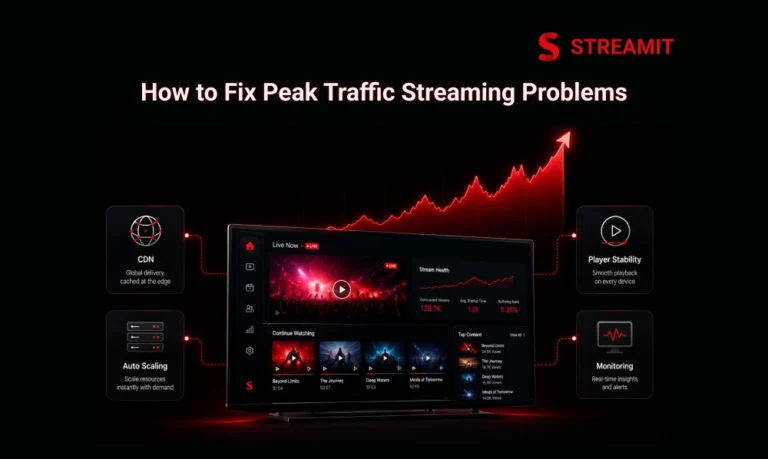
OTT traffic often moves unevenly. Live events, new releases, regional campaigns, influencer mentions, and weekends can create sudden demand. Traffic forecasting helps prepare capacity before users arrive.
Peak usage analytics also protects the budget. Instead of overbuilding for every possible spike, teams can plan infrastructure around real patterns and expected demand.
Optimize Cloud, CDN, and Delivery Costs
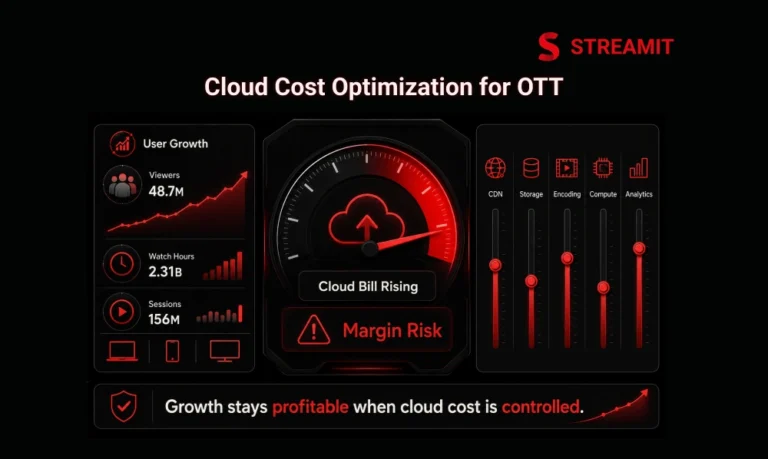
Cloud and CDN costs can rise quietly as libraries grow and audiences expand. OTT cloud cost analytics help identify heavy regions, inefficient delivery paths, storage waste, and bitrate decisions that affect spend.
This does not mean cutting costs blindly. It means improving delivery efficiency while protecting playback quality. Cost control should never create buffering.
Detect Issues Faster Across Apps and Devices
A platform may work well on the web but fail on one smart TV model. It may perform in one region but struggle in another. Device-level analytics makes these problems easier to find.
Proactive monitoring analytics help teams move from complaint-based support to early detection. That shift matters when the brand promise depends on reliable streaming.
Choosing the Right Advanced Analytics Solution for OTT
The right OTT analytics tools should match the business model, not just the dashboard wishlist. A subscription platform, an ad-supported platform, a live sports platform, and an education platform need different analytics priorities.
A good advanced analytics platform OTT should connect data across content, users, payments, apps, infrastructure, and support. Fragmented tools create delayed decisions.
Real-Time Dashboards and Alerts
Real-time OTT dashboards matter when the issue is happening now. Playback failure, traffic spikes, payment errors, or app crashes should not wait for tomorrow’s report.
Alerts should also be meaningful. Too many alerts create noise. The right system highlights what affects users, revenue, or platform stability.
AI and Machine Learning Capabilities
AI analytics for OTT should be practical. It should help detect churn risk, recommend content, identify unusual behavior, forecast traffic, and support better decision-making.
The goal is not to make the platform sound advanced. The goal is to help the business respond faster with clearer signals and less manual guesswork.
Integration With Your OTT Tech Stack
OTT analytics integration should work across the full tech stack: CMS, video player, apps, payment system, CDN, CRM, notifications, and support tools.
If analytics is disconnected from operations, insights stay trapped in reports. The stronger approach is to connect insight with action.
Build vs Buy OTT Analytics Solutions
Third-party analytics can help teams move faster. Custom OTT analytics can offer more ownership, deeper control, and better alignment with unique business models.
For high-growth OTT platforms, the real question is not build or buy. It is which parts must be owned, which can be integrated, and which should never become a black box.
How Streamit Helps OTT Platforms Use Analytics for Growth
Streamit is built for streaming businesses that want ownership, performance, monetization, and long-term scalability across web, mobile, and TV apps. Its positioning focuses on AI-first OTT platforms, analytics, infrastructure, and control from the foundation.
That matters because analytics should not be treated as an afterthought. For serious OTT founders, data ownership and platform control directly affect future growth decisions.
Track User Behavior, Content Performance, and Viewing Trends
Streamit helps OTT teams track user behavior, content performance, and viewing trends across the platform. This gives teams a clearer view of what users watch, where they drop off, and what keeps them returning.
These insights support better content planning, stronger recommendations, and more confident product decisions. The point is simple: build with evidence, not assumptions.
Improve Retention With Better Engagement and Drop-Off Insights
Retention improves when teams understand why users leave. Streamit supports engagement analytics, OTT, and user drop-off tracking so teams can see where attention breaks.
That may reveal weak onboarding, poor discovery, slow playback, irrelevant recommendations, or pricing friction. The value is not only the data. It is knowing where to act.
Make Smarter Decisions Across Web, Mobile, and TV Apps
OTT app analytics should not live separately for each device. A user may discover content on mobile, continue on TV, and manage billing on the web.
Streamit helps teams think across the full multi-device journey. That creates better decisions around user experience, monetization, content discovery, and platform performance.
Summary
Key Takeaways
Analytics is not just a report
It helps OTT teams connect user behavior, content performance, playback quality, revenue, and platform health in one clear view.
Basic reports fall short
Views and user counts show activity, but advanced analytics explain drop-offs, churn risk, playback issues, and content gaps.
Streaming quality drives retention
Buffering, startup delay, playback errors, and device issues can quietly push users away before they complain.
Engagement reveals real behavior
Watch time, session duration, completion rate, and drop-off points show whether viewers are building a habit or losing interest.
Content decisions get sharper
OTT teams can see which content attracts users, keeps them watching, and brings them back.
Monetization needs connected data
Subscription churn, ARPU, LTV, payment success, and ad performance help teams understand what is actually driving revenue.
Conclusion
On a small scale, an OTT platform can survive with basic reports. At a serious scale, it needs advanced analytics to understand users, protect experience, control cost, and make better business decisions.
The slightly uncomfortable truth is this: most platforms do not fail because they have no data. They fail because the data was too late, too scattered, or too shallow to guide action.
For founders building OTT as a real business, analytics should be part of the architecture from day one. Streamit helps streaming businesses build with that mindset: own the platform, understand the audience, and scale with control.
FAQs
Frequently Asked Questions
-
What is advanced analytics in an OTT platform?
Advanced analytics in an OTT platform means using connected data to understand user behavior, content performance, playback quality, monetization, and churn risk. It goes beyond basic reports by helping teams make faster and more useful decisions.
-
Why do OTT platforms need advanced analytics?
OTT platforms need advanced analytics because growth creates complexity across users, content, devices, revenue, and infrastructure. Without strong analytics, teams may react late to churn, playback issues, cost spikes, or weak engagement.
-
What kind of data do OTT platforms collect?
OTT platforms collect data such as watch time, session duration, searches, device usage, content completion, subscriptions, payments, buffering, startup delay, and errors. This data helps teams understand both user behavior and platform performance.
-
Is real-time analytics important for OTT platforms?
Yes, real-time analytics is important because streaming issues can affect users immediately. If playback errors, traffic spikes, or payment failures happen, teams need visibility before users lose trust.
-
What role does AI play in OTT advanced analytics?
AI can help identify patterns in user behavior, recommend content, detect churn risk, forecast traffic, and surface unusual platform activity. The best use of AI is practical: clearer decisions, faster action, and better user experience.
-
What features should an OTT analytics platform have?
An OTT analytics platform should include real-time dashboards, user behavior tracking, content performance analytics, QoE metrics, revenue analytics, churn insights, alerts, and multi-device reporting. It should also integrate with the wider OTT tech stack.