Best Revenue Models to Monetize Video Content


The video economy is no longer experimental. Streaming, live content, education platforms, creator ecosystems, and enterprise video platforms now operate as serious digital businesses. Yet many platforms still treat monetization as a feature rather than a business strategy.
The difference between a video platform that scales and one that stalls often comes down to its revenue model. Monetization choices determine audience growth, retention, content investment, and long-term profitability.
In this guide, we will break down the best revenue models to monetize video content, how they work, when to use them, and how modern video businesses combine them to build sustainable revenue systems.
What Does It Mean to Monetize Video Content?
Video monetization simply means turning content consumption into revenue. But in practice, it is less about charging viewers and more about designing a system where content, audience behavior, and pricing align.
A monetization strategy is essentially the business architecture behind a video platform. When structured well, it creates a predictable income while maintaining a strong viewer experience.
Monetize Video Content: Meaning in Simple Words
Video monetization means earning revenue when people watch, access, or distribute your video content.
This revenue may come from viewers directly through subscriptions or payments, from advertisers who want access to your audience, or from partners who license your content.
In simple terms, your content becomes the product, and attention becomes the currency.
Monetization Model vs Revenue Model
A monetization model explains how viewers access content, while a revenue model explains how money actually flows into the business.
For example, a subscription system is a monetization model, but the revenue model includes pricing, retention strategy, and payment cycles.
Understanding this difference matters because a monetization model without a revenue structure rarely produces predictable income.
Why Choosing the Right Revenue Model Matters?
According to industry benchmarks, OTT platforms with the right monetization strategy can increase ARPU (Average Revenue Per User) by 2-3x.
But the wrong model can reduce engagement, create churn, or limit growth potential.
Revenue Goals Change the Model You Choose
Different revenue goals demand different monetization structures.
A platform focused on recurring revenue may prioritize subscriptions, while one built around events may rely on pay-per-view.
Audience Behavior Affects Revenue
Viewer habits heavily influence monetization success.
Audiences accustomed to free content may resist subscriptions but respond well to ad-supported platforms.
User Experience Can Increase or Reduce Revenue
Even profitable models fail if they damage user experience.
Ad overload, confusing pricing, or fragmented access can quickly reduce engagement and retention.
How Video Content Monetization Works?
The mechanics of video monetization are straightforward, but the structure behind them requires strategic planning.
Every monetization model answers one simple question: who pays for the content?
Once that question is clear, platforms design revenue streams around audience access and content value.
Who Pays in a Video Monetization Model?
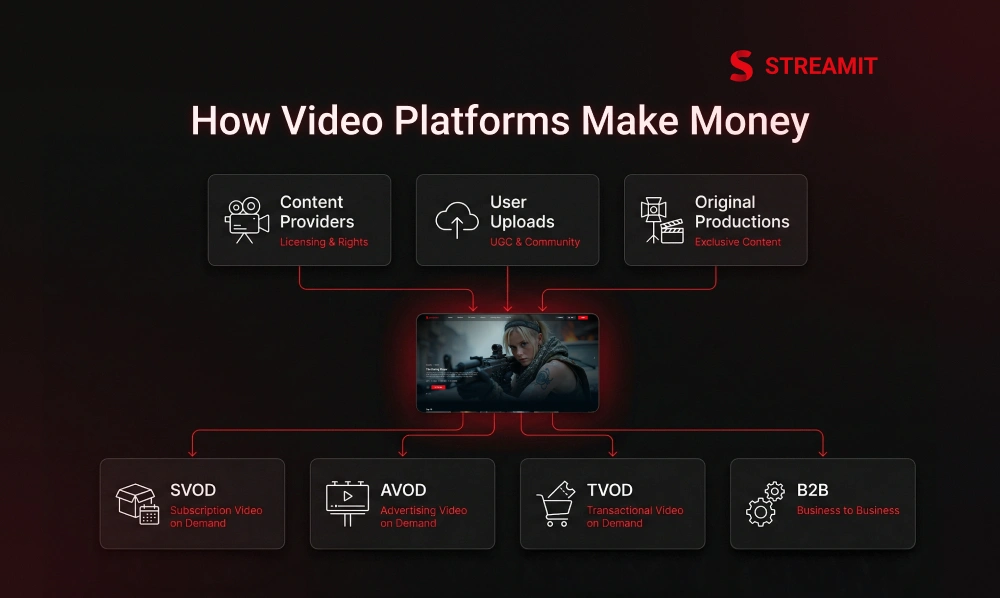
In most video monetization systems, revenue does not always come directly from the viewer. Modern video platforms typically earn money through three main sources: viewers, advertisers, and distribution partners.
Each revenue source represents a different monetization structure. Understanding who pays for the content helps platforms design pricing models, access rules, and long-term revenue strategies that align with audience behavior and business goals.
Viewer-Paid Revenue
In viewer-paid models, audiences pay directly to access content. Subscriptions, pay-per-view events, and digital purchases all fall into this category.
Ad-Paid Revenue
Advertisers pay to place ads within video content. This approach allows viewers to access content for free while the platform earns advertising revenue.
Partner or Distributor-Paid Revenue
Content owners may also license videos to distributors or platforms. In this model, revenue comes from content partnerships rather than end viewers.
The Main Ways Platforms Make Money From Video
Video platforms generate revenue through several core monetization methods built around how audiences access content. The most common approaches include subscriptions, advertising, one-time purchases, and content licensing.
Each method represents a different revenue stream, and many platforms combine multiple models to create a more stable and scalable video business.
Subscription Revenue
Subscription models charge viewers recurring fees for unlimited access to content libraries.
Advertising Revenue
Ad-supported platforms earn income through commercial placements within video streams.
Transactional Revenue
Transactional models allow viewers to pay for individual pieces of content.
Licensing Revenue
Content creators can license videos to other platforms for distribution.
Types of Video Content You Can Monetize
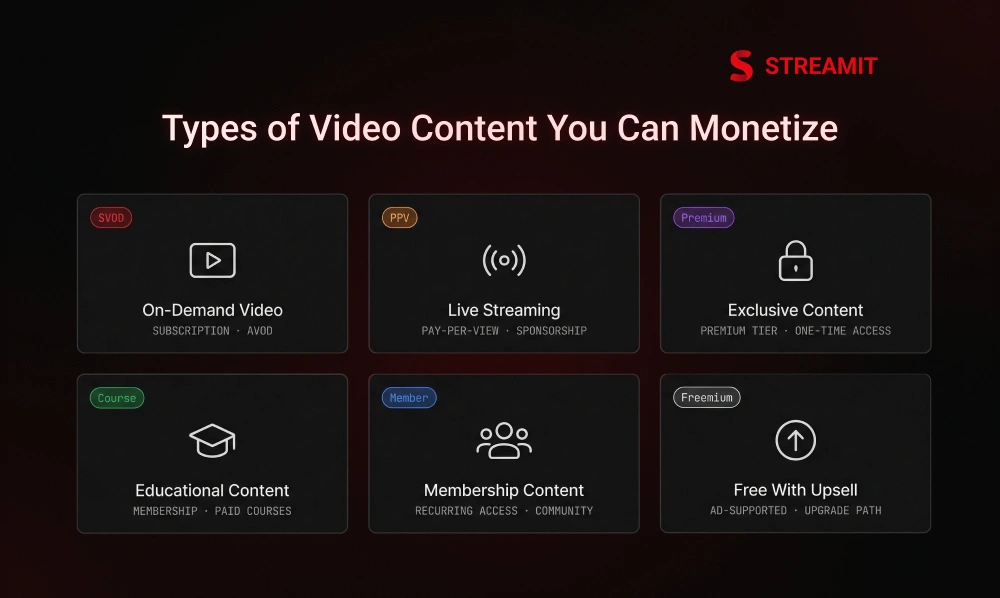
Not every type of video content works equally well with every monetization model.
Successful platforms align their revenue strategy with the nature of their content and audience expectations.
Some content thrives on subscriptions, while other formats generate more revenue through one-time purchases or advertising.
On-Demand Video Content
On-demand video content allows viewers to watch videos anytime rather than following a fixed broadcast schedule. This format gives audiences full control over when and how they consume content.
Because of this flexibility, on-demand libraries work well with monetization models such as subscriptions, advertising-supported access, or transactional purchases, depending on the platform’s strategy.
Live Streaming and Events
Live streaming content creates real-time viewing experiences where audiences watch events as they happen. This format is commonly used for sports matches, concerts, conferences, product launches, and special broadcasts.
Because live content generates urgency and time-based demand, it is often monetized through models such as pay-per-view, premium event access, sponsorships, or advertising-supported streams.
Premium Exclusive Content
Premium exclusive content includes videos that are available only on a specific platform or for a limited audience. This exclusivity increases the perceived value of the content.
Because viewers cannot access this content elsewhere, platforms often monetize it through subscriptions, premium tiers, or one-time access payments.
Educational and Membership Content
Educational and membership content includes training videos, online courses, and knowledge-based content designed for learning or skill development. These videos are usually created for a specific audience or community.
Because this content offers ongoing value, platforms commonly monetize it through subscriptions, membership access, or paid course purchases.
Free Video Content With Upsell Potential
Free video content is often used to attract a large audience and introduce viewers to a platform or creator’s content. It lowers the barrier to entry and helps build trust with new users.
Once viewers are engaged, platforms can offer premium features, exclusive videos, or ad-free experiences as paid upgrades.
Best Revenue Models to Monetize Video Content
The streaming industry has gradually converged around several proven revenue models.
While hundreds of variations exist, most successful platforms rely on a combination of five or six core monetization frameworks.
Choosing the right one depends on content type, audience expectations, and long-term business strategy.
Subscription Video on Demand (SVOD)
SVOD has become one of the most stable revenue models for digital video platforms.
Platforms using subscriptions often benefit from predictable monthly revenue and stronger customer relationships.
How does the SVOD Model Work?
Viewers pay a recurring fee for unlimited access to a content library. This subscription may be billed monthly or annually.
Best Use Cases for SVOD
SVOD works best for platforms with consistent content pipelines.
Educational libraries, series-driven content, and niche entertainment networks perform well under this model.
Pros and Cons of SVOD
Subscriptions create predictable revenue but require continuous content investment. Without fresh content, subscriber churn tends to increase.
Advertising Video on Demand (AVOD)
AVOD allows viewers to access content for free while the platform generates income through advertisements.
Ad-supported streaming has grown rapidly as audiences become more selective about subscription spending.
How the AVOD Model Works?
Ads are inserted before, during, or after videos. Revenue depends on ad impressions, completion rates, and targeting efficiency.
Best Use Cases for AVOD
AVOD works well for large audience platforms where scale drives revenue. Media publishers, news platforms, and entertainment libraries often use this model.
Pros and Cons of AVOD
Advertising expands reach but can reduce viewer satisfaction if ad frequency becomes excessive.
Transactional Video on Demand (TVOD)
Transactional Video on Demand allows viewers to pay for individual pieces of content instead of subscribing to an entire library. Users typically purchase or rent a specific movie, event, or program.
This model works well for high-value content where audiences are willing to pay for one-time access without committing to a recurring subscription.
Rent vs Buy Video Access
Transactional platforms typically offer rental or permanent purchase options. Rentals provide temporary access, while purchases allow long-term viewing rights.
Best Use Cases for TVOD
TVOD works best when content carries strong standalone value. Examples include new film releases, documentaries, and special events.
Pros and Cons of TVOD
Revenue can spike around popular releases but may fluctuate significantly.
Premium Video on Demand (PVOD) and Pay-Per-View (PPV)
Premium Video on Demand and Pay-Per-View models allow viewers to pay a one-time fee to access exclusive or time-sensitive content. This approach is commonly used for major events, early movie releases, or special broadcasts.
Because access is limited to a specific piece of content or event, these models work best when the content carries strong demand or unique value.
When PVOD or PPV Works Best?
Major events, concerts, sports matches, or limited screenings perform well under these models.
Best Content Types for One-Time Premium Payments
Premium experiences that audiences cannot easily access elsewhere generate the most revenue.
FAST Channels
FAST channels, or Free Ad-Supported Streaming TV, deliver scheduled video content similar to traditional television but through streaming platforms. Viewers can watch curated channels without paying a subscription fee.
Revenue is generated through advertisements placed within the stream, making this model effective for platforms with large content libraries and broad audiences.
How FAST Is Different From AVOD?
FAST channels run scheduled programming streams instead of on-demand libraries. Revenue comes primarily from advertising.
Best Use Cases for FAST
Large content catalogs or legacy media libraries perform well under this model.
Licensing and Syndication
Licensing and syndication allow content owners to generate revenue by distributing their videos to other platforms or broadcasters. Instead of relying only on direct viewers, the platform earns money through distribution agreements.
This model works well for studios and media companies that want to expand reach while earning revenue through licensing fees or revenue-sharing partnerships.
Fixed Fee Licensing
Platforms pay a fixed fee to distribute content for a defined period.
Revenue Share Licensing
Revenue is shared between content owners and distributors.
Minimum Guarantee Deals
Some licensing agreements include guaranteed minimum payments regardless of viewership.
Freemium Video Monetization
Freemium video monetization allows users to access a portion of the content for free while offering premium features or exclusive videos through paid plans. This approach helps platforms attract a wider audience without immediate payment barriers.
As users engage with the platform, they are encouraged to upgrade for additional benefits such as ad-free viewing, exclusive content, or advanced features.
How Free Access Can Support Paid Growth?
Free content introduces users to the platform’s ecosystem. Premium features, exclusive content, or ad-free viewing become upgrade incentives.
Best Use Cases for Freemium Video Platforms
Creator communities, niche networks, and early-stage platforms often use freemium models to accelerate growth.
Hybrid Revenue Models for Video Platforms
The most successful streaming platforms rarely rely on a single revenue model.
Hybrid monetization features allow platforms to diversify income streams while adapting to different audience segments.
Instead of forcing one model on all viewers, platforms offer multiple access tiers.
Why Hybrid Monetization Is Growing Fast?
Hybrid monetization combines multiple revenue models, such as subscriptions, advertising, and pay-per-view, within the same platform. This approach allows businesses to serve different audience segments without relying on a single income source.
As viewer preferences continue to vary, hybrid strategies help platforms expand reach, increase revenue opportunities, and create more flexible pricing structures.
More Reach With Free Access
Ad-supported tiers help platforms grow faster. Free entry points significantly reduce friction for new users.
More Revenue With Premium Upsells
Paid upgrades generate higher revenue from engaged viewers. Premium features often include ad-free viewing, exclusive content, or early access.
SVOD + AVOD
The SVOD + AVOD model combines subscription access with ad-supported viewing options. Platforms may offer a premium ad-free subscription while also providing a lower-cost or free tier supported by advertisements.
This approach allows platforms to reach a broader audience while still generating recurring revenue from subscribers.
SVOD + TVOD
The SVOD + TVOD model combines a subscription content library with pay-per-view access for premium titles or special releases. Subscribers get regular access to standard content, while certain movies or events require a separate payment.
This approach allows platforms to generate recurring revenue from subscriptions while earning additional income from high-demand content.
AVOD + PPV
The AVOD + PPV model combines ad-supported free content with paid access to premium events or exclusive videos. Viewers can watch regular content for free with ads, while special releases or live events require a one-time payment.
This approach helps platforms grow audience reach through free access while still generating revenue from high-demand content.
SVOD + PPV for Live Events
The SVOD + PPV model for live events combines a subscription-based content library with pay-per-view access to major live broadcasts. Subscribers can watch regular content through their subscription, while special events require an additional payment.
This approach is commonly used for live sports, concerts, and exclusive broadcasts where viewers are willing to pay extra for real-time access.
TV Everywhere and Bundled Access
TV Everywhere and bundled access allow viewers to watch content across multiple devices or TV platforms using a single subscription. This approach often combines different services or content libraries under one access plan.
By offering bundled content, platforms can increase perceived value while encouraging users to stay longer within the ecosystem.
How to Choose a Hybrid Model Without Confusing Users?
Hybrid monetization can increase revenue opportunities, but too many pricing options can confuse viewers. Platforms should keep pricing tiers simple and clearly explain what each plan includes.
A clear structure helps users understand the value of each option, making it easier for them to choose between free, ad-supported, or premium access.
How to Choose the Right Revenue Model for Your Video Business?
Choosing the right revenue model is not just about how you charge viewers. It depends on the type of content you produce, how your audience prefers to watch, and the long-term goals of your video platform.
A well-chosen monetization model aligns content value with audience behavior and business strategy. When these elements work together, platforms can generate stable revenue without disrupting the viewing experience.
Instead of copying what large platforms do, businesses should evaluate their content strengths, audience expectations, and growth stage before deciding how their video content should generate income.
Choose Based on Content Type
Different types of video content support different monetization models. The value, length, and viewing patterns of the content often determine how audiences are willing to pay for it.
For example, movies and series often work well with subscriptions, while live events, training programs, or exclusive releases may perform better with pay-per-view or transactional pricing.
Movies and Series
Subscription models often work well for serialized content.
Live Sports and Events
Pay-per-view and premium access models generate strong event revenue.
Online Courses and Training Videos
Education platforms frequently rely on subscriptions or course purchases.
Creator-Led and Community Content
Membership subscriptions are common within creator communities.
Choose Based on Audience Behavior
Audience behavior plays a major role in determining which monetization model will work best. Viewer expectations, spending habits, and content consumption patterns often influence how people are willing to pay for video content.
For example, price-sensitive audiences may prefer ad-supported platforms, while premium viewers often choose subscription services that offer ad-free and exclusive content.
Price-Sensitive Audiences
Ad-supported platforms may perform better with cost-conscious audiences.
Premium Audiences
High-value audiences often prefer ad-free subscription experiences.
Event-Driven Buyers
Certain audiences are willing to pay for major events but not ongoing subscriptions.
Choose Based on Business Stage
The stage of your video business also influences the monetization model you should adopt. Early-stage platforms often focus on audience growth, while mature platforms prioritize predictable revenue.
Startups may begin with free or ad-supported access to attract viewers, whereas established platforms often introduce subscriptions, premium content, or hybrid monetization strategies.
Launch Stage
Early platforms may prioritize audience growth over immediate revenue.
Growth Stage
Subscriptions and premium tiers become more important during expansion.
Mature Platform Stage
Established platforms often diversify revenue streams.
Choose Based on Revenue Goals
The stage of your video business also influences the monetization model you should adopt. Early-stage platforms often focus on audience growth, while mature platforms prioritize predictable revenue.
Startups may begin with free or ad-supported access to attract viewers, whereas established platforms often introduce subscriptions, premium content, or hybrid monetization strategies.
Maximize Reach
Free access models expand audience size.
Build Recurring Revenue
Subscriptions provide a predictable monthly income.
Increase Average Revenue Per User
Upsells and premium tiers increase ARPU.
Reduce Risk by Using More Than One Model
Diversifying revenue sources reduces dependency on a single income stream.
Pricing Strategies That Support Video Monetization
Pricing plays a major role in how effectively a video platform converts viewers into paying users. Even strong content may struggle to generate revenue if the pricing structure does not match audience expectations.
A well-designed pricing strategy should balance accessibility with long-term revenue potential. Platforms need to make entry easy while gradually introducing higher-value plans, upgrades, or premium access.
When pricing is clear and aligned with content value, it improves user trust, increases conversions, and supports sustainable growth for the video platform.
Monthly vs Annual Pricing
Monthly pricing offers flexibility, allowing users to subscribe without a long-term commitment. It is often attractive for new users who want to explore the platform before deciding to stay.
Annual pricing, on the other hand, encourages longer-term commitment by offering discounted rates. This approach helps platforms improve cash flow and reduce subscriber churn.
Free Trial vs Free Plan vs Teaser Content
Free trials allow users to experience the full platform for a limited time before committing to a paid plan. This approach helps potential subscribers understand the value of the content.
Free plans or teaser content provide partial access to the platform, giving viewers a preview while encouraging them to upgrade for full features or exclusive videos.
Paywalls for Video Content
Paywalls control how and when viewers must pay to access video content. They help platforms protect premium content while encouraging users to subscribe or purchase access.
Depending on the platform’s strategy, paywalls can allow limited free viewing before payment or require full payment before any content can be accessed.
Hard Paywall
All content remains locked until users subscribe.
Soft Paywall
Some content is free, while premium videos require payment.
Metered Paywall
Users receive limited free views before hitting a paywall.
Bundles, Add-Ons, and Channel Packs
Bundles, add-ons, and channel packs allow platforms to offer multiple content options within a single pricing structure. Instead of paying for each service separately, viewers can access grouped content through one subscription.
This strategy increases perceived value while giving users flexibility to upgrade with additional channels, premium features, or specialized content packages.
Local Pricing and Offer Testing
Local pricing allows video platforms to adjust subscription costs based on regional markets and purchasing power. This approach helps platforms remain competitive while expanding into different geographic audiences.
Offer testing involves experimenting with different price points, discounts, or promotional plans to understand what drives conversions and long-term subscriber growth.
Ad Revenue Strategies for AVOD and FAST Platforms
Ad-supported video platforms rely heavily on advertising to generate revenue. In AVOD and FAST models, viewers access content for free while advertisers pay to reach those audiences through video ads.
For these platforms, the challenge is balancing ad revenue with viewer experience. Too many ads can reduce watch time, while too few ads may limit revenue potential.
A strong ad strategy focuses on ad placement, targeting, and performance optimization. When managed well, it helps platforms maximize advertising income while maintaining consistent viewer engagement.
Types of Video Ads You Can Sell
Video platforms can generate revenue by offering different advertising formats within their content streams. Each ad format provides brands with unique ways to reach audiences during the viewing experience.
The choice of ad type often depends on viewer behavior, content length, and platform strategy, helping balance monetization with a smooth watching experience.
Pre-Roll, Mid-Roll, and Post-Roll Ads
These ads appear before, during, or after video playback.
Overlay and Companion Ads
Overlay ads appear on top of the video interface.
CSAI vs SSAI for Video Monetization
CSAI (Client-Side Ad Insertion) and SSAI (Server-Side Ad Insertion) are two methods used to deliver advertisements within video streams. In CSAI, ads are inserted on the user’s device during playback, allowing greater flexibility in targeting and tracking.
SSAI inserts ads directly from the server before the video reaches the viewer. This approach creates smoother playback and reduces ad blocking, making it a preferred option for many streaming platforms.
How to Increase Ad Revenue Without Hurting Watch Time?
Increasing ad revenue should not come at the cost of viewer experience. Platforms that overload content with ads often see a drop in watch time, which ultimately reduces long-term monetization potential.
A better approach is to optimize ad placement, frequency, and targeting so that ads feel relevant rather than disruptive. When advertising is balanced with viewing experience, platforms can maintain engagement while still generating strong revenue.
Ad Load Optimization
Balancing ad frequency prevents viewer fatigue.
Better Targeting and Fill Rates
Improved targeting increases ad relevance.
Better Ad Experience for Retention
User-friendly ad formats reduce viewer frustration.
Programmatic Ads vs Direct Ad Sales
Programmatic advertising uses automated systems to buy and sell ad inventory in real time. It allows video platforms to fill ad spaces quickly and efficiently through ad networks and demand-side platforms.
Direct ad sales involve negotiating advertising deals directly with brands or agencies. While this approach requires more effort, it often generates higher revenue because platforms can offer premium placements and customized campaigns.
Metrics to Track for Ad-Supported Video Monetization
Tracking the right metrics is essential for understanding how effectively a video platform generates advertising revenue. These metrics help platforms evaluate ad performance, viewer engagement, and overall monetization efficiency.
By analyzing performance data regularly, platforms can optimize ad placement, improve targeting, and adjust strategies to increase revenue without negatively affecting the viewer experience.
eCPM, Fill Rate, and Ad Completion Rate
These metrics measure ad effectiveness.
Watch Time and Ad Drop-Off
Engagement metrics reveal how ads affect viewer retention.
Subscription Growth Strategies for SVOD Platforms
SVOD platforms rely on recurring subscriptions, making consistent subscriber growth important for long-term revenue. Attracting new viewers is necessary, but maintaining existing subscribers is equally important.
Strong content libraries and regular content updates help keep users engaged with the platform. When viewers find ongoing value in the content, they are more likely to continue their subscriptions.
Improving content discovery, personalization, and user experience also plays a key role in reducing churn and supporting steady subscription growth.
Build a Content Library Worth Paying For
A strong content library is one of the main reasons viewers decide to subscribe to a video platform. When users see consistent value in the available content, they are more likely to pay for ongoing access.
Platforms that regularly update their libraries with relevant, high-quality content can keep audiences engaged and reduce the chances of subscribers leaving.
Improve Content Discovery and Personalization
Content discovery helps viewers quickly find videos that match their interests. When users can easily locate relevant content, they are more likely to spend more time on the platform.
Personalization systems such as recommendations, watch history, and curated categories help guide viewers toward content they are likely to enjoy. This improves engagement and encourages longer subscriptions.
Increase Trial-to-Paid Conversion
Free trials allow viewers to experience the platform before making a payment decision. When users clearly understand the value of the content during the trial period, they are more likely to convert into paying subscribers.
Platforms can improve conversion by highlighting premium features, recommending relevant content early, and guiding users toward content that demonstrates the platform’s value.
Reduce Churn in the First 30, 60, and 90 Days
The first few months after a user subscribes are critical for long-term retention. If viewers fail to find value quickly, they are more likely to cancel their subscriptions within the early stages.
Platforms can reduce churn by improving onboarding, recommending relevant content, and encouraging regular engagement during the first 30, 60, and 90 days of the subscription journey.
Better Onboarding
Guided onboarding improves initial user experience.
Watchlists, Alerts, and Re-Engagement
Notifications encourage viewers to return to the platform.
Annual Plan Upsells
Annual subscriptions reduce churn.
Metrics to Track for Subscription Monetization
Tracking the right metrics helps platforms understand how well their subscription model is performing. These metrics reveal patterns in subscriber growth, engagement, and revenue generation.
By monitoring performance regularly, platforms can identify churn risks, improve retention strategies, and make better decisions to strengthen long-term subscription revenue.
Churn Rate, ARPU, LTV, and Retention Rate
These metrics determine long-term revenue health.
Trial Conversion and Paid Subscriber Growth
Conversion metrics reveal marketing effectiveness.
Best Revenue Models by Video Business Type
Different types of video businesses operate with different goals, audiences, and content formats. Because of this, the most effective monetization model often depends on the nature of the platform and the value of its content.
Choosing a revenue model that aligns with the business type helps platforms maximize revenue while maintaining a strong viewing experience. A model that works for entertainment streaming may not be suitable for education platforms or creator communities.
Understanding how monetization fits each business category allows platforms to design pricing strategies that support both audience growth and long-term sustainability.
Best Revenue Model for OTT Streaming Platforms
OTT streaming platforms usually rely on subscription-based models because they offer large libraries of on-demand content. Recurring subscriptions help generate predictable revenue while keeping viewers engaged over time.
Many OTT platforms also combine subscriptions with advertising or premium pay-per-view events. This hybrid approach allows them to reach a wider audience while increasing overall revenue potential.
Best Revenue Model for Live Sports and Events
Live sports and event streaming platforms often perform best with pay-per-view or premium access models. Viewers are usually willing to pay for one-time access to high-demand matches, tournaments, or exclusive live broadcasts.
Some platforms also combine subscriptions with pay-per-view events, allowing regular subscribers to access general content while charging additional fees for major live events.
Best Revenue Model for Online Courses and Education Platforms
Online education platforms commonly use subscription or course purchase models to monetize their video content. Learners often pay for access to structured courses, training programs, or certification content.
Some platforms also combine memberships with premium course sales, allowing users to access basic learning materials while paying separately for advanced or specialized programs.
Best Revenue Model for Creators and Niche Communities
Creators and niche communities often rely on membership or subscription models to monetize their video content. Loyal audiences are usually willing to support creators in exchange for exclusive content and deeper engagement.
Many creators also combine subscriptions with freemium strategies, offering free content to attract viewers while reserving premium videos or community access for paying members.
Best Revenue Model for Media Publishers and News Video
Media publishers and news platforms often rely on advertising-based monetization because their content reaches large audiences. Ad-supported models allow viewers to access news videos for free while generating revenue through video advertisements.
Some publishers also combine advertising with subscription tiers for premium reports or exclusive content. This approach helps balance audience reach with additional revenue opportunities.
Best Revenue Model for Brands Selling Premium Content
Brands selling premium video content often rely on subscription or pay-per-view models. Audiences are usually willing to pay when the content offers specialized knowledge, exclusive experiences, or high production value.
Some brands also combine subscriptions with premium releases or limited-access content. This approach helps generate recurring revenue while creating additional income from high-value content offerings.
Revenue Model Comparison Table for Video Content
Not all revenue models offer the same level of predictability, complexity, or growth potential. The following table provides a simplified comparison.
| Revenue Model | Revenue Predictability | Setup Complexity | Best Content Fit | User Experience Impact |
| SVOD | High | Medium | Series, education, libraries | Strong if the content is valuable |
| AVOD | Medium | Medium | Media, news, entertainment | Can decline with high ad load |
| TVOD | Low–Medium | Low | Movies, special releases | Good for premium content |
| PPV | Low | Low | Live events, sports | High engagement |
| FAST | Medium | High | Large content catalogs | TV-like experience |
| Licensing | High | Medium | Studios, content owners | Neutral for end users |
Common Mistakes When You Monetize Video Content
Monetizing video content can generate strong revenue, but many platforms struggle because of strategic mistakes rather than weak content. Choosing the wrong monetization approach can limit growth and reduce viewer engagement.
Many businesses focus only on launching a revenue model without fully understanding their audience, content value, or long-term business goals. This often leads to pricing confusion, poor retention, or unstable revenue streams.
Avoiding common monetization mistakes helps platforms build sustainable revenue systems while maintaining a positive viewing experience for their audience.
Choosing a Revenue Model Before Understanding Audience Demand
Many platforms select a monetization model before analyzing what their audience actually wants. Without understanding viewer preferences and willingness to pay, even strong content may struggle to generate revenue.
Researching audience behavior, viewing habits, and price sensitivity helps platforms design a monetization strategy that aligns with real demand rather than assumptions.
Copying Netflix or YouTube Without a Real Fit
Many video platforms try to replicate the business models of large platforms like Netflix or YouTube without considering their own content, audience, or scale. What works for global platforms may not work for niche or early-stage businesses.
Instead of copying large platforms, businesses should build monetization strategies that match their content strengths, audience expectations, and long-term goals.
Launching With Too Many Pricing Options
Some platforms introduce multiple pricing plans at launch in an attempt to appeal to every type of viewer. However, too many options can confuse users and make it harder for them to choose a plan.
A simpler pricing structure helps viewers quickly understand the value of the platform and improves the chances of conversion.
Ignoring Licensing, Rights, and Payment Terms
Many platforms focus on monetization strategies but overlook the importance of content licensing and usage rights. Without clear agreements, platforms may face legal or distribution challenges when generating revenue from video content.
Understanding licensing terms, distribution rights, and payment structures helps ensure that content can be monetized legally and sustainably across different platforms and markets.
Focusing Only on Signups Instead of Retention
Many video platforms concentrate heavily on acquiring new users but pay less attention to keeping them engaged. High signup numbers may look promising initially, but revenue becomes unstable if users leave quickly.
Long-term growth depends on retention, where viewers continue to return and find value in the platform. Strong content discovery, consistent updates, and user engagement strategies help maintain subscriber loyalty.
Adding Too Many Ads and Hurting Watch Time
Some platforms try to maximize ad revenue by inserting too many advertisements into their video streams. While this may increase short-term revenue, it often frustrates viewers and reduces watch time.
When ads interrupt the viewing experience too frequently, audiences are more likely to leave the platform. A balanced ad strategy helps maintain engagement while still generating advertising revenue.
How to Build a Video Monetization Plan?
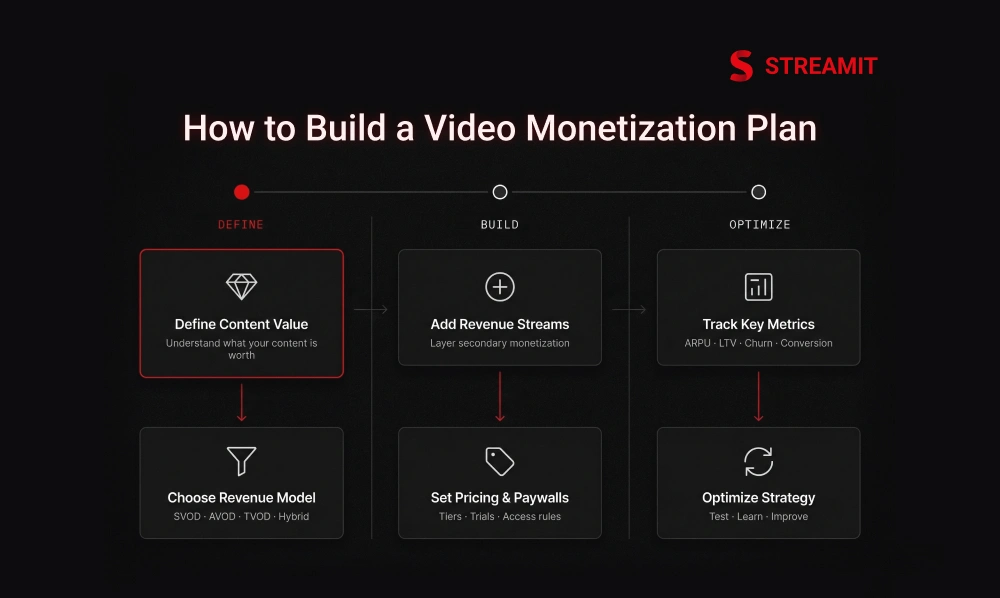
Building a video monetization plan requires more than simply choosing a revenue model. It involves understanding the value of your content, the expectations of your audience, and how different monetization methods support long-term growth.
A clear monetization plan helps platforms structure pricing, access, and revenue streams in a way that supports both audience engagement and business sustainability.
By combining a primary revenue model with supporting strategies such as pricing optimization and performance tracking, platforms can create a stable system for generating consistent video revenue.
Step 1: Define the Value of Your Content
Start by identifying what makes your video content valuable to viewers. Content quality, uniqueness, and relevance influence how audiences perceive its worth.
Understanding this value helps platforms decide the right pricing and monetization approach.
Step 2: Pick One Primary Revenue Model
Choose one primary monetization model that fits your content and audience behavior. This helps keep the platform’s pricing structure simple and easy for users to understand.
Starting with a clear revenue model also makes it easier to manage growth before introducing additional monetization options.
Step 3: Add a Secondary Revenue Stream
After establishing a primary revenue model, platforms can introduce a secondary revenue stream to expand monetization opportunities. This could include advertising, pay-per-view events, or premium add-ons.
Adding a secondary stream helps diversify income while reducing dependence on a single source of revenue.
Step 4: Set Pricing, Packaging, and Paywalls
Define clear pricing plans and content packages that match the value of your videos. Simple pricing structures make it easier for viewers to understand what they are paying for.
Paywalls can then be used to control access, ensuring premium or exclusive content is available only to paying users.
Step 5: Track Revenue and Engagement Metrics
Monitor key metrics such as revenue, watch time, subscriber growth, and churn rate to understand how your monetization strategy is performing. These insights help reveal what content and pricing models are working.
Tracking performance regularly allows platforms to adjust strategies, improve engagement, and increase overall revenue.
Step 6: Test, Learn, and Improve Every Quarter
Video monetization strategies should evolve as audience behavior and market conditions change. Regular testing helps platforms understand which pricing models, content types, and offers perform best.
By reviewing performance every quarter, platforms can refine their monetization approach and improve both revenue and viewer engagement over time.
Monetization Strategy Snapshot
Different platforms prioritize different revenue structures depending on their business model.
| Video Business Type | Primary Revenue Model | Secondary Revenue Model |
| OTT Streaming Platforms | SVOD | AVOD |
| Live Sports Platforms | PPV | Subscription |
| Education Platforms | Subscription | Course purchases |
| Creator Platforms | Membership | Freemium |
| Media Publishers | Advertising | Licensing |
Key Takeaways
- Video Monetization Is a Strategic Decision: Monetizing video content is not just about charging viewers. Successful platforms design revenue systems that align content value, audience behavior, and long-term business goals.
- Multiple Revenue Models Exist: The most common revenue models include subscriptions (SVOD), advertising (AVOD), transactional payments (TVOD), pay-per-view (PPV), FAST channels, licensing, and freemium strategies.
- Hybrid Monetization Is Becoming the Industry Standard: Many platforms combine multiple revenue models, such as SVOD + AVOD or AVOD + PPV, to balance audience reach with revenue growth.
- Content Type Influences Monetization: Different content formats require different revenue strategies. For example, movies and series often work with subscriptions, while live events perform better with pay-per-view models.
- Audience Behavior Matters: Monetization strategies should reflect how viewers prefer to consume content. Price-sensitive audiences respond well to ad-supported models, while premium audiences often prefer subscription access.
- Pricing Strategy Plays a Critical Role: Clear pricing structures, including monthly plans, annual subscriptions, bundles, and paywalls, help platforms convert viewers into paying users.
- Advertising Requires Balance: AVOD and FAST platforms must optimize ad placement, targeting, and frequency to increase revenue without damaging viewer experience.
- Subscription Platforms Must Focus on Retention: SVOD success depends heavily on strong content libraries, personalization, and reducing churn during the first few months of subscription.
- Different Video Businesses Use Different Models: OTT platforms, education platforms, creators, and media publishers all rely on different monetization approaches based on their audience and content type.
- A Structured Monetization Plan Is Essential: Platforms should define content value, choose a primary revenue model, add secondary revenue streams, optimize pricing, track performance metrics, and continuously refine their strategy.
Conclusion
Video platforms are no longer simple content distribution tools. They are digital businesses with complex revenue ecosystems.
The most successful platforms do not rely on a single monetization strategy. They design flexible systems that evolve as audiences and markets change.
For founders building serious video platforms, monetization should be approached strategically. The right revenue model not only generates income but also shapes the platform’s growth, audience experience, and long-term sustainability.
FAQs
1. What are the best revenue models to monetize video content?
The most common video monetization models include SVOD (subscription), AVOD (advertising), TVOD (pay-per-view), FAST channels, licensing, and freemium models.
2. What is the most profitable way to monetize video content?
Profitability depends on content and audience. Subscription models often generate predictable revenue, while pay-per-view events can produce high short-term income.
3. Which video monetization model is best for OTT platforms?
Most OTT platforms use a combination of SVOD and AVOD to balance audience reach and recurring revenue.
4. What is the difference between SVOD, AVOD, and TVOD?
SVOD charges recurring subscriptions, AVOD provides free access supported by advertising, and TVOD allows users to pay for individual pieces of content.
5. What are the pros and cons of different video monetization models?
Subscription models offer predictable income but require consistent content investment. Advertising expands reach but may affect user experience.
6. Which revenue model is better for video platforms: ads or subscriptions?
Neither model is universally better. Many platforms combine ads and subscriptions to maximize both reach and revenue.
Read Also
1. Top OTT Solution Providers for Modern Streaming Platforms
2. Why Streaming Startups Fail Within 18 Months?
3. Why Binge-Watching Isn’t Enough to Keep Your OTT Subscribers Engaged
4. 7 Best OTT Security Solutions for Streaming Platforms
5. 7 Reasons Why OTT Platforms Will Fail in 2026 Without Retention