Best Online Fitness Streaming Solution for Coaches


A coach does not need another place to go live. They need a platform that helps them run the business behind every class.
Online fitness has moved beyond simple video sessions. Clients now expect live workouts, replay access, program structure, progress tracking, smooth payments, and an experience that works across devices.
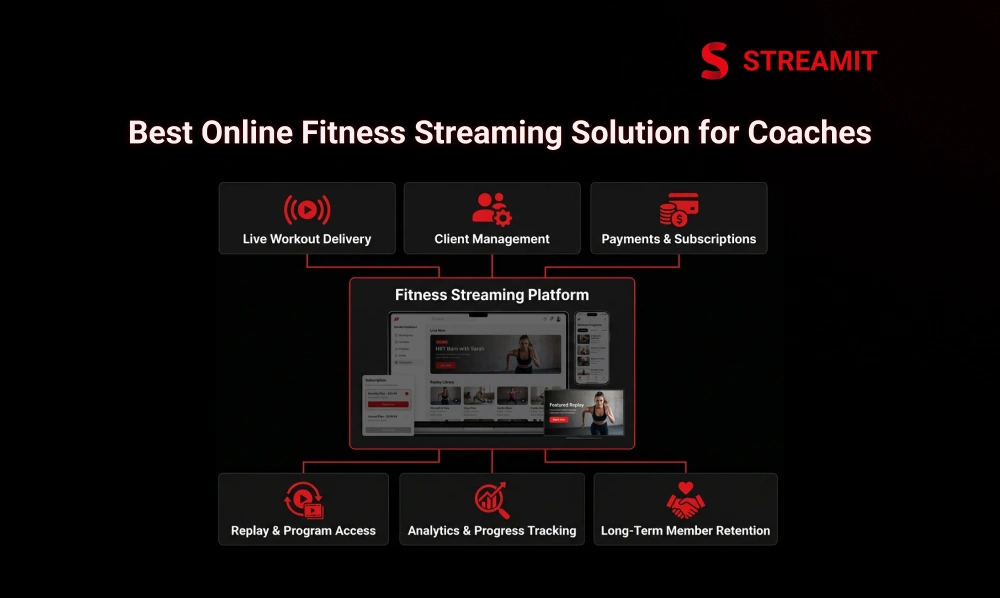
That is why the best online fitness streaming solution for coaches should not be treated as a basic video tool. It should work as a complete system for content delivery, monetization, client management, and long-term retention.
Part 1
Why Coaches Need More Than Basic Live Streaming Tools
Going live can start an online fitness business, but it cannot scale one by itself.
Basic live streaming apps help coaches run early sessions and test demand. But once members grow, the gaps become clear. Payments happen outside the platform. Replays are shared manually. Progress is hard to track.
A proper online fitness streaming solution brings live delivery, content access, payments, analytics, and communication into one controlled flow. That is what helps coaches move from casual online classes to a structured fitness business.
Going Live Alone Does Not Build a Full Fitness Business
A live class is only one moment in the client journey.
Before the class, clients need reminders and easy access. During the class, they need stable video and clear audio. After the class, they need replays, next steps, and follow-up.
A fitness live streaming platform should help coaches turn sessions into repeatable programs, not just one-time events.
Coaches Need Delivery, Payments, Client Tracking, and Retention in One Flow
A coach should not need five disconnected tools to manage one paying member.
When video, payments, messaging, and progress tracking are separate, the business becomes harder to manage. The coach ends up doing more admin instead of improving the client experience.
A stronger platform connects content delivery with billing, access rules, activity data, and retention tools.
Free Tools Create More Work as Clients and Content Grow
Free tools feel easy at 10 clients and heavy at 100.
As content, members, and programs grow, coaches need better structure. They need organized libraries, member access, platform analytics, and cleaner subscription handling.
Without that foundation, growth creates more manual work instead of more control.
Part 2
What Coaches Should Plan Before Choosing a Fitness Streaming Solution
The first question is not which platform to use. It is what kind of fitness business you are building.
A personal trainer, yoga coach, group instructor, and premium coaching brand all need different workflows. The right streaming platform solution depends on offer, audience, pricing, and scale.
| Planning Area | What to Decide |
|---|---|
| Content model | Live, on-demand, or both |
| Audience | Beginners, athletes, busy professionals |
| Pricing | Subscription, bundle, one-time program |
| Access | Website, mobile app, TV app |
| Retention | Replays, reminders, tracking, community |
Decide If You Are Selling Live Classes, On-Demand Workouts, or Both
Live classes create urgency. On-demand workouts create flexibility.
Live classes work well for challenges, group sessions, and real-time coaching. They make members show up at a fixed time.
On-demand workouts help clients train when their schedule allows. This supports repeat usage and makes the platform useful every day.
Define Your Audience, Program Style, and Pricing Model
A strong fitness platform starts with a clear member journey.
A beginner weight-loss program needs a different structure from a premium strength plan. Your audience decides how content should be organized.
Coaches should also decide whether they want monthly memberships, fixed programs, workshops, challenges, or a hybrid model.
Decide If You Need a Website, Mobile App, or Full Multi-Device Setup
Not every coach needs an app on day one, but every coach needs a clear access path.
A streaming website may be enough for an early-stage coach. It gives members one place to log in, watch workouts, and follow programs.
As the brand grows, mobile apps and TV apps can improve convenience, engagement, and perceived value.
Plan for Member Retention, Not Just New Signups
Signups create first-time revenue. Retention creates a real business.
Coaches should plan replays, reminders, check-ins, progress tracking, and community touchpoints early.
The best fitness streaming platforms are designed to bring members back again and again.
Part 3
Core Features Every Online Fitness Streaming Solution Should Have
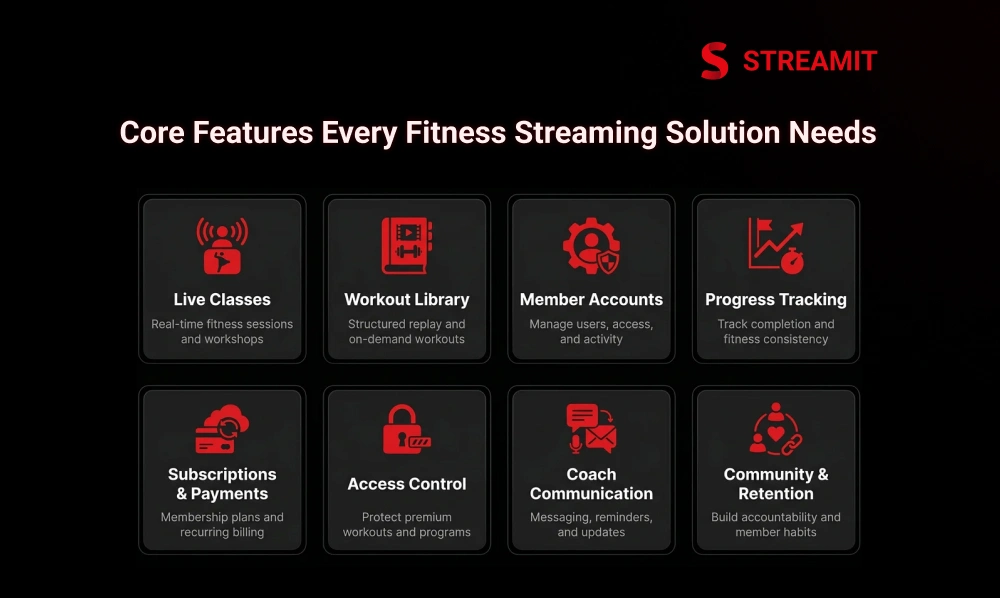
A good platform should feel simple for clients and structured for coaches.
The goal is not to add every possible feature. The goal is to connect the right features so classes, content, payments, and communication work smoothly together.
Live Streaming for Classes, Workshops, and Challenges
Live streaming is still one of the strongest tools for accountability.
It works well for daily classes, transformation challenges, expert workshops, and group coaching. Members feel part of a shared session.
The platform should make joining easy. If access feels confusing, the class loses energy before it starts.
Stable Video, Clear Audio, and Easy Guest or Co-Coach Access
In fitness, poor audio or frozen video breaks the flow.
Members need to hear cues clearly and see movements without delay. This matters in high-energy workouts, yoga flows, and form-based training.
If a guest coach joins, the experience should still feel professional and smooth.
Class Recordings for Replay and On-Demand Use
Every live class can become long-term content.
Recordings help members catch up when they miss a session. They also help coaches build a video library without recreating every workout. A good VOD setup turns one class into repeated value.
Workout Library and On-Demand Content Access
A workout library should feel like a guided path, not a random video folder.
Clients should find workouts by goal, level, duration, equipment, body part, or training style. This makes the platform easier to use and reduces repeated questions for the coach.
Organize Programs by Goal, Level, and Training Type
Structure helps members make faster decisions.
A beginner should not scroll through advanced workouts. A strength client should not be mixed into random mobility, HIIT, and yoga sessions.
Clear content organization improves completion and reduces drop-off.
Let Users Resume, Save, and Rewatch Sessions Easily
Small UX details quietly improve retention.
Continue watching, saved workouts, watch history, and replay access make the platform easier to return to.
Convenience matters because members are more likely to continue when the next step is clear.
Member Accounts, Progress Tracking, and Client Management
Coaches need visibility, not guesswork.
Member accounts help coaches see who is active, who is skipping sessions, and who may need support.
This is especially important for personal trainers and premium programs where accountability is part of the offer.
Track Workout Completion, Adherence, and Fitness Progress
If progress is not tracked, coaching becomes reactive.
Workout completion and adherence data help coaches understand client behavior.
Platform analytics can also show which programs perform well and where members lose interest.
Keep Messaging, Notes, and Client History in One Place
Scattered communication creates hidden workload.
When chats, notes, payments, and client history live in separate tools, coaching becomes messy.
A connected workflow helps coaches respond faster and manage relationships better.
Subscription Plans, Payments, and Access Rules
A fitness streaming business needs monetization built into the platform.
Coaches should be able to sell memberships, bundles, workshops, paid challenges, and one-time programs.
Payments should connect directly with content access so members get the right experience immediately.
Monthly Plans, Program Bundles, and One-Time Purchase Offers
Different buyers need different offers.
Some clients want monthly access. Some want a fixed 8-week program. Others may only want one paid workshop.
A flexible platform allows coaches to test revenue models without rebuilding the system.
Control Access by Plan, Program, or Challenge
Access rules protect the value of your content.
A basic member should not access a premium program by mistake. A workshop buyer should not receive full membership access.
Secure access control keeps the platform clean and commercially strong.
Branded Experience Across Website and App
A coach’s platform should feel owned, not rented.
Branding affects trust, pricing, and perceived professionalism. A generic setup may work early, but it weakens premium positioning over time.
A branded streaming platform helps coaches control design, layout, and content flow.
Use Your Own Brand, Colors, Content Layouts, and Program Flow
Design is not decoration when people are paying for an experience.
A custom platform lets coaches present their programs in their own method and voice. This matters more for high-value fitness brands that want trust, control, and consistency.
Community, Accountability, and Coach-Client Communication
Fitness retention depends on connection, not only content.
Members stay longer when they feel supported. Messaging, check-ins, and progress updates create that support.
A strong online fitness streaming solution should help coaches build relationships between sessions.
Add In-App Messaging, Check-Ins, and Progress Updates
Communication keeps clients moving when motivation drops.
In-app messaging helps coaches answer questions, send reminders, and guide members. Check-ins make clients feel seen, which improves trust and consistency.
Build More Than Content by Creating Ongoing Member Accountability
Content gets people started. Accountability keeps them active.
Members do not stay only because videos exist. They stay because the platform helps them build a habit.
Community, reminders, and coach feedback make the experience feel alive.
Part 4
Live Streaming vs On-Demand Workouts for Fitness Coaches
The strongest fitness businesses usually do not choose one. They use both with intention.
Live classes bring energy and urgency. On-demand workouts bring flexibility and repeat usage. Together, they create a more complete member experience.
Live Classes Build Energy, Urgency, and Community
Live fitness works because people feel part of the moment.
Members show up together, follow the coach in real time, and feel group momentum. This is powerful for challenges, community programs, and high-accountability coaching.
On-Demand Workouts Build Flexibility and Repeat Usage
On-demand content keeps the platform useful outside live hours.
Clients can train when they are free, repeat sessions, and follow programs at their own pace. This improves retention because the platform becomes part of their routine.
The Best Fitness Businesses Usually Need Both
Live creates connection. On-demand creates scale.
A hybrid fitness streaming model helps coaches serve more clients without being live all the time.
It also gives members more reasons to stay subscribed.
Part 5
Streaming Technology That Affects Fitness Class Quality
Streaming quality affects movement, timing, safety, and trust.
Fitness content needs smooth playback because clients follow cues in real time. A serious platform should be built for reliable delivery, not only video upload.
Adaptive Streaming Helps Different Users Watch Smoothly
Every member has a different device, internet speed, and viewing setup.
Adaptive streaming adjusts quality based on connection strength. This reduces buffering and helps members continue the workout without disruption.
Video Quality Should Adjust to Different Devices and Internet Speeds
One video quality does not fit every viewer.
Mobile users, desktop users, and TV viewers need different delivery conditions. Automatic quality adjustment improves playback and reduces frustration.
CDN and Faster Delivery Matter for Live Fitness Sessions
A class with 200 members should not feel weaker than a class with 20.
A strong CDN helps deliver video faster across locations. This matters during peak class times when many users join at once.
Reduce Delay and Playback Problems During Busy Class Times
High-traffic sessions put pressure on delivery.
Morning and evening classes often create traffic spikes. Low latency and better delivery planning help reduce delay, buffering, and playback errors.
Good Recording and Playback Matter as Much as Going Live
A replay should not feel like a weaker version of the live class.
Recordings should load quickly, play clearly, and be easy to find. Good VOD delivery turns replays into a serious retention asset.
Part 6
What Coaches Usually Get Wrong When They Move Online
Most coaches do not struggle because they lack content. They struggle because the system around the content is weak.
The workout may be strong, but if access, replays, payments, and follow-up are messy, clients lose interest.
Online fitness needs structure before it needs more videos.
-
They Focus on Going Live but Ignore Client Experience After Class
The client journey does not end when the stream ends. Members need replays, next steps, reminders, and progress updates. The experience after class often decides whether they return.
-
They Add Content but Do Not Build a Clear Program Structure
More content can create more confusion. If workouts are not organized by goal, level, and journey, members do not know what to follow. A clear workout library improves action and completion.
-
They Use Too Many Tools That Do Not Work Well Together
Disconnected tools create hidden operational cost. One tool for streaming, another for payment, another for messaging, and another for tracking can work temporarily. But as the business grows, this setup becomes harder to manage.
-
They Do Not Plan for Retention, Billing, and Support Early Enough
Retention problems usually start before cancellations appear. If billing is unclear, support is slow, and members feel unguided, they leave. Retention, billing, and support should be planned early.
Part 7
Different Fitness Businesses Need Different Streaming Solutions
There is no single perfect platform structure for every coach.
The right setup depends on business type, pricing, content model, and client expectations. A serious platform should fit the business, not force the business into one template.
Personal Trainers
Need client tracking, workout delivery, client notes, progress data, and check-ins. This helps them guide clients more personally. Accountability is core to the offer.
Group Fitness Coaches
Depend on shared energy. Live classes, replays, and community tools help members stay connected. The platform should support both the live moment and the replay journey.
Premium Coaching Brands
Premium pricing needs a premium experience. Branded apps, subscriptions, analytics, and retention tools help create that experience. Members paying more expect smoother access and stronger structure.
Studios and Growing Teams
Need multi-coach access, shared schedules, content control, and member data. A scalable solution should support the business as the team expands.
Part 8
Cost, Setup Time, and Build Model for Fitness Streaming Platforms
The cost depends on the system around streaming, not only the video player.
Live streaming, VOD, payments, apps, member tools, analytics, and infrastructure all affect scope.
Coaches should plan based on where the business is going, not only what is needed this week.
What Changes the Cost: Live Features, Apps, Payments, and Member Tools
Every serious feature adds convenience, control, or scale.
Live features, mobile apps, payment gateways, access rules, and progress tracking all change the build.
The more connected the system, the stronger the platform becomes.
Fast Setup Tools vs More Custom Fitness Streaming Platforms
Fast tools help launch. Custom platforms help own.
Simple tools are useful for testing demand.
Custom platforms make sense when coaches need branding, apps, analytics, monetization control, and long-term flexibility.
When a Coach Can Start Simple and When a Full Platform Makes Sense
Starting simple is smart when the offer is still being tested.
A full platform makes sense when there is clear demand, paid members, content depth, and a growth plan.
The goal is to avoid rebuilding too soon.
Part 9
How to Choose the Best Online Fitness Streaming Solution
The best platform should help clients train more often and help coaches manage less manually.
Coaches should review live quality, replay access, payments, tracking, branding, and retention features.
The right choice should support both current needs and future scale.
-
Check Live Quality, Replay Support, and On-Demand Experience
Video experience is the first layer of trust. Clients should join live classes easily and watch replays without confusion. If the viewing experience is weak, even strong content feels less valuable.
-
Check Client Tracking, Messaging, and Coaching Workflow Tools
A platform should help coaches coach better. Progress tracking, messaging, notes, and activity data help coaches understand members clearly. This improves support and reduces guesswork.
-
Check Payments, Plan Flexibility, and Retention Features
Monetization should not feel patched together. The platform should support subscriptions, bundles, one-time programs, and secure access. Retention features should help members return, not just pay once.
-
Check Branding, Apps, and Long-Term Growth Flexibility
A serious coaching brand needs room to grow. The platform should support branded design, mobile access, future apps, and feature expansion. It should not become the reason growth slows down.
Part 10
Why Streamit Can Fit Fitness Streaming Businesses That Want to Scale
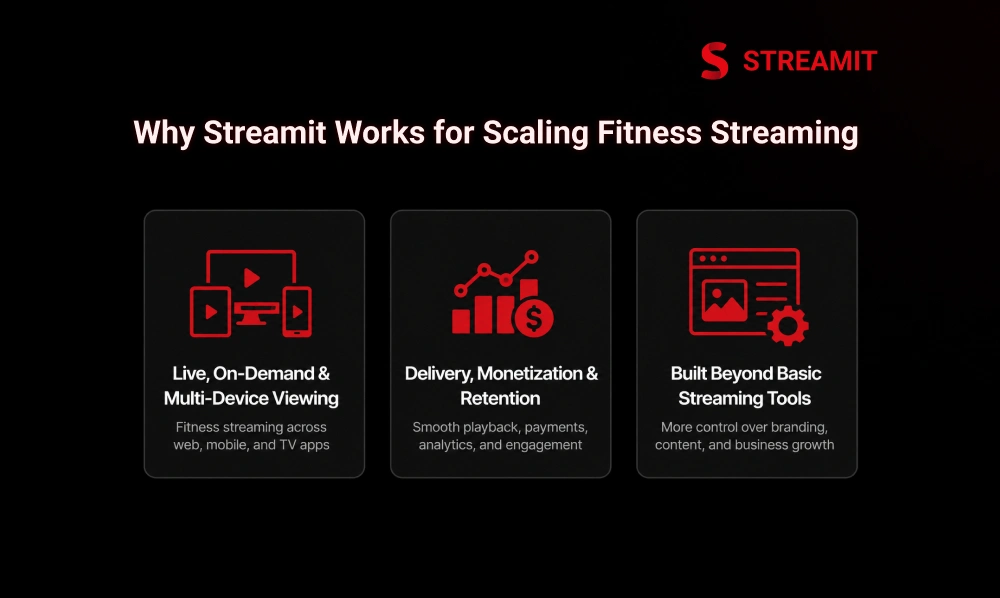
Streamit fits fitness brands that want more than a basic streaming setup.
It can support live classes, on-demand workouts, streaming websites, mobile apps, TV apps, monetization, analytics, and scalable delivery.
For coaches building a serious business, this means the platform can support both content and operations.
Supports Live, On-Demand, and Multi-Device Viewing
Members want access wherever training fits into their day.
Some watch from mobile, some from desktop, and some prefer larger screens. A multi-device setup helps coaches serve different viewing habits from one ecosystem.
Supports Better Delivery, Monetization, and User Retention
A scalable platform needs performance and revenue control together.
Smooth playback, adaptive delivery, secure access, and flexible payments support growth. Retention improves when members can easily find content, follow programs, and stay connected.
Supports Brands That Want More Than Just a Basic Streaming Tool
Some coaches do not want another tool. They want their own platform.
Streamit supports brands that need more control over design, content, payments, access, and growth.
That is the difference between using streaming as a feature and building streaming as infrastructure.
Summary
Key Takeaways
Live Streaming Alone Is Not Enough
Coaches need replays, payments, tracking, communication, and access control to build a complete fitness business, not just a live channel.
Hybrid Models Work Better
Live classes build urgency and community, while on-demand workouts support flexibility and repeat usage. The strongest businesses use both.
Retention Should Be Planned Early
Replays, reminders, check-ins, and progress tracking keep members active. Retention problems start before cancellations appear.
Different Coaches Need Different Setups
Personal trainers, group coaches, studios, and premium brands all need different workflows. One template does not fit all business types.
Structure Before More Content
Disorganized video libraries, manual payments, and scattered communication are what slow growth – not a lack of workout videos.
Streamit Supports Scalable Fitness Streaming
Streamit helps fitness businesses build branded, monetized, multi-device streaming experiences for long-term growth and control.
Conclusion
Conclusion
The best online fitness streaming solution for coaches is not the one that only helps them run live classes. It is the one that helps them build a complete online fitness business.
A strong platform should support live streaming, on-demand workouts, member accounts, payments, client tracking, communication, branding, and retention.
For fitness coaches and growing fitness brands, choosing the right platform matters because it shapes ownership, delivery quality, and long-term control. The goal is not only to stream workouts. The aim is to create a fitness experience that clients trust, return to regularly, and are willing to keep paying for.
FAQs
Frequently Asked Questions
-
Is live streaming enough, or do coaches also need on-demand workouts?
Live streaming is useful for real-time energy and accountability, but on-demand workouts help clients train on their own schedule. Most growing fitness businesses need both for better retention.
-
Should fitness coaches begin with monthly plans, fixed program bundles, or single-purchase offers?
Coaches should start with the offer that matches their audience and content depth. Subscriptions work well for ongoing classes, while bundles work better for fixed programs or challenges.
-
What makes an online fitness streaming solution better than basic live tools?
A proper online fitness streaming solution supports replays, payments, member accounts, progress tracking, and access control. Basic live tools usually only handle the live session.
-
Do fitness coaches need a website, an app, or both?
A website is enough for many coaches starting out. An app becomes useful when the business needs easier access, reminders, engagement, and a stronger branded experience.
-
What usually slows down fitness streaming growth after launch?
Growth slows when content is unorganized, payments are manual, replays are hard to access, and client follow-up is weak. Retention problems usually appear when the platform was not planned properly.
Read Also
Read Also
1. OTT Monetization: AVOD vs SVOD vs TVOD vs FAST Compared
2. OTT Platform Development Cost in 2026: Full Breakdown
3. OTT Platform Architecture: Setup & Hosting Costs Explained
4. How to Create Your Own OTT Platform From Scratch
5. Why Video Streaming App Development Needs Multi-Device Support