7 Steps to Integrate Payment Gateways in OTT Platforms

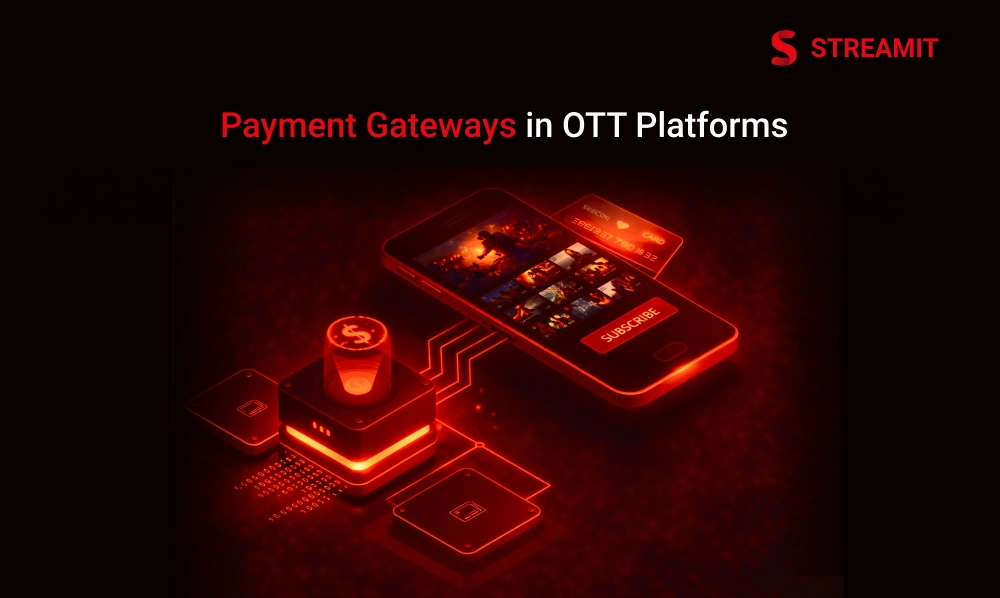
In today’s competitive OTT streaming landscape, providing a seamless payment experience is essential for retaining users and ensuring a smooth revenue stream. An efficient payment gateway integration allows users to make payments quickly and securely, enhancing their overall experience on your platform. Whether it’s for subscription-based models, pay-per-view options, or one-time purchases, a reliable payment system is key to monetizing your service.
Payment gateways play a critical role in processing user payments, enabling transactions across different models and regions. They also ensure secure handling of financial data, which builds user trust.
Why OTT Platforms Need Integrated Payment Gateways
Over 72% of OTT users abandon sign-ups due to poor payment experiences, not content quality.
For business owners building or scaling OTT streaming platforms, payments are no longer a backend feature, they directly decide revenue growth, churn rates, and user trust.
An OTT platform without a reliable payment gateway is like a cinema without a ticket counter. Whether you operate a white label OTT platform, a multi streaming platform, or a niche video hosting solution, seamless payment collection is the backbone of monetization.
Integrated payment gateways allow OTT businesses to:
- Accept global payments
- Automate subscription billing
- Reduce churn from failed transactions
- Scale monetization across web, mobile, and TV apps
Role of Payments in OTT Business Models (SVOD, TVOD, AVOD)
OTT monetization works only when payment models align with user intent.
- SVOD (Subscription Video on Demand):
Monthly or yearly billing for platforms like fitness OTT apps, e-learning portals, or Netflix-style streaming solutions. Requires recurring billing, retries, and dunning logic. - TVOD (Transactional Video on Demand):
One-time payments for premium content, live sports PPV, movie rentals, or exclusive webinars. - AVOD (Ad-supported Video on Demand):
Mostly free, but still relies on payments indirectly through ad platforms and hybrid upsells.
A modern OTT streaming solution often combines SVOD + TVOD, making payment gateway flexibility critical.
User Trust & Conversion: Fast Checkout and Secure Payments
A one-second delay in checkout can drop conversion rates by 7%.
For OTT platforms, payment trust equals user confidence.
Secure OTT payments ensure:
- PCI compliance
- Tokenized card data
- 3D Secure and fraud checks
- Familiar local payment methods
When users trust the checkout, they complete purchases faster, directly improving subscription conversion for streaming platforms.
How Payment Gateways Work?
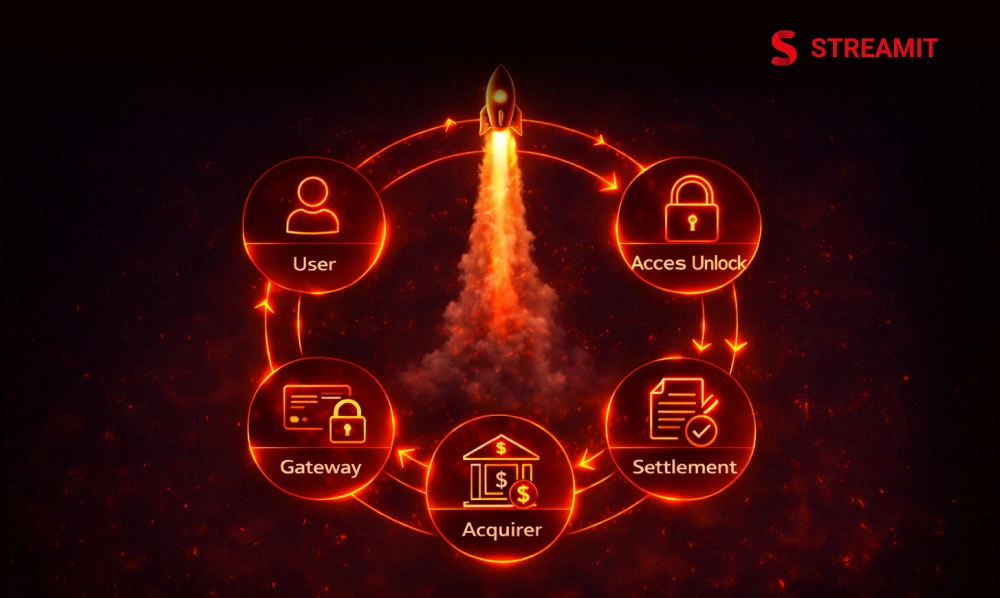
Behind every “Watch Now” button lies a complex but predictable payment flow.
Basic Flow: User → Gateway → Acquirer → Settlement → Access Unlock
- User selects a plan or content
- Payment details are sent to the gateway
- Gateway communicates with the acquiring bank
- Funds are authorized and settled
- OTT platform unlocks access instantly
This flow must happen in milliseconds to avoid drop-offs.
Hosted Checkout vs Direct API vs SDK
- Hosted Checkout
- Fastest to launch
- Lower PCI compliance burden
- Limited UI control
- Direct API Integration
- Full checkout control
- Higher development and compliance effort
- Best for custom OTT paywalls
- SDK-based Integration
- Ideal for mobile and TV apps
- Balanced control and speed
Most white-label OTT solutions combine hosted checkout for web and SDKs for Streaming apps.
Payment Models for OTT Platforms
OTT monetization models define how often, and how reliably, you get paid.
Which Model Needs Recurring Billing vs One-Time Payment?
- Recurring Billing: SVOD, memberships, fitness subscriptions
- One-Time Payments: PPV events, movie rentals, special content
Examples:
- Fitness Subscriptions: Monthly auto-renew billing
- Live Sports PPV: High-volume, short-timeframe payments
- Premium VOD Rentals: Time-limited access after payment
Choosing the right OTT payment setup ensures predictable revenue.
7 Step Payment Gateway Integration to OTT and Multi Streaming Platforms
Step 1: Choose the Right Payment Gateway Provider
Your payment gateway decides how fast you scale globally.
Check Supported Payment Methods
- Cards (Credit/Debit)
- Wallets
- UPI
- Buy Now Pay Later (BNPL)
For OTT platforms in India, UPI acceptance is non-negotiable.
Check Countries, Currencies, Settlement Time & Fees
- Multi-currency support
- Cross-border payments
- Faster settlements reduce cash-flow gaps
- Blocklist handling prevents sudden outages
Developer Experience
- SDKs
- Clean documentation
- Sample code
- Active community support
A poor SDK increases development costs by up to 40%.
Step 2: Create Merchant Account & Complete KYC
Payments can’t go live without compliance.
Merchant vs Aggregator Model
- Merchant Account
- More control
- Faster settlements
- Higher compliance responsibility
- Aggregator
- Easier onboarding
- Slower settlements
- Platform dependency
Documents Required
- Business registration
- Bank account details
- Authorized signatory ID
Step 3: Get API Keys & Configure Environments
Security mistakes here can expose your entire OTT platform.
Secure API Keys
- Server-side only
- Use vaults or environment variables
- Never expose keys in frontend code
Testing Tools
- Test cards
- Webhook simulators
- Sandbox toggles
Step 4: Implement Web Checkout & Subscription Flow
Checkout UX decides whether users pay, or leave.
Hosted Widgets vs Custom UI
- Hosted = speed + lower PCI scope
- Custom UI = branding + flexibility
Paywall Flow
Price Page → Checkout → Success → Access Unlock
Coupons & Free Trials
- Trial-to-paid automation
- Proration rules for upgrades
- Coupon codes for acquisition campaigns
Step 5: Integrate Payments into Mobile & Smart TV Apps
Mobile and OTT TV apps have different payment rules.
App Store Rules
- iOS & Android often mandate in-app purchases
- External checkout allowed for some OTT categories
Receipt Validation
- Server-side verification
- Prevent fake purchases
TV App Notes
- Limited input
- Remote-friendly UX
- QR-based checkout alternatives
Step 6: Implement Webhooks, Reconciliation & Server Logic
Payments don’t end at success screens.
Common Webhook Events
- payment_succeeded
- invoice.payment_failed
- refunds
- disputes
Best Practices
- Signature verification
- Idempotency handling
- Retry logic
- Centralized logging
Finance Reconciliation
- Daily settlements
- Refund tracking
- Chargeback handling
Step 7: Test End-to-End & Go Live
Live events expose weak payment setups instantly.
Test Scenarios
- Success & failures
- 3DS flows
- Refunds
- Currency conversion
Load Testing
Critical for:
- Sports streams
- Premieres
- Viral content spikes
First 72 Hours Monitoring
- Payment success rate
- Decline reasons
- Settlement accuracy
Post-Integration Tasks: Subscription Ops & Customer Journeys
Retention is where real OTT revenue lives.
Billing Retries & Dunning
- Grace periods
- Retry schedules
- Dunning email flows
Customer Self-Service
- Update cards
- View invoices
- Pause or cancel subscriptions
Account Linking
Sync purchases across web, mobile, and TV instantly.
Security & Compliance
OTT platforms handle sensitive financial data daily.
Reduce PCI Scope
- Hosted checkout
- Tokenization
Data Protection
- Encryption
- GDPR basics
Fraud Prevention
- 3DS
- Device fingerprinting
- Velocity checks
Global Payments & Local Methods
OTT platforms handle sensitive financial data daily.
Offer Country-Specific Options
- Wallets
- BNPL
- Bank transfers
Tax Compliance
- VAT
- GST
- Region-wise invoicing
Payment Metrics to Track After Launch
What you don’t track, you can’t optimize.
Key Metrics
- Payment success rate
- Authorization rate
- Trial churn
- LTV vs CAC
Decline Code Analysis
- Bank issues
- Insufficient funds
- Authentication failures
Cost, Fees & Pricing Model Checklist
Typical Fees
- Per-transaction fees
- Monthly charges
- Chargeback penalties
- FX costs
Cost Optimization
- Local acquirers
- Alternate payment methods
- Batched settlements
Vendor Selection & SLA
Evaluation Checklist
- SDK quality
- Documentation
- Support SLAs
- Fraud tools
- Settlement speed
Negotiation Tips
- Volume-based pricing
- Custom SLAs
- Chargeback support terms
How Streamit Makes Payment Gateway Integration Easy for OTT Platforms?
Streamit removes payment complexity so OTT businesses can focus on content.
What Streamit Offers
- Ready-to-use payment plugins
- OTT Admin dashboard control
- Web, mobile & TV payment flows
- Subscription & PPV support
End-to-End Support
- Gateway migration
- Testing assistance
- Post-launch monitoring
- Business-focused guidance
Streamit is built as an all-in-one OTT platform for founders who want faster go-to-market without payment headaches.
FAQs
How do I choose a secure payment gateway for OTT streaming apps?
Choose gateways with PCI compliance, fraud tools, global support, and OTT-ready SDKs.
What is the easiest payment gateway integration method for OTT platforms?
Hosted checkout combined with mobile SDKs is the fastest and safest approach.
Can OTT platforms support both subscriptions and pay-per-view payments?
Yes, modern OTT payment setups support hybrid monetization.
What is the best payment gateway for global OTT platforms?
The best gateway depends on regions, currencies, and settlement needs.
Can I integrate multiple payment gateways for a higher success rate?
Yes, multi-gateway routing improves payment success and redundancy.
Which payment methods work best for OTT in India?
UPI, wallets, cards, and net banking deliver the highest conversion.
How much does it cost to integrate a payment gateway in an OTT platform?
Costs vary based on gateway fees, development effort, and compliance scope.