Creator Monetization Platform for Owned Streaming Brands


The creator economy is moving toward $480B, but most creators still do not own the business underneath their audience. That is the uncomfortable gap. Reach is not the same as control, and attention is not the same as revenue.
A creator monetization platform should help serious creators move from rented visibility to owned streaming brands. For creators with loyal audiences, premium content, and long-term business intent, the real question is not “how do I earn from content?” It is “how do I build a platform I actually control?”
Part 2
What a Creator Monetization Platform Should Help You Own
Ownership is not a logo on an app. It is control over the business layer. Many platforms offer publishing tools, but serious creators need control over content, audience, payments, analytics, and growth.
A creator monetization platform should not only help creators sell videos. It should help them build a streaming business with clear systems for revenue, retention, and long-term value.
Creators Should Own the Content Experience and Brand Journey
Viewers pay faster when the experience feels intentional. A branded streaming platform lets creators shape how users browse, watch, subscribe, upgrade, and return.
This matters because premium content needs premium context. A random content wall feels cheap. A structured content library with playlists, categories, previews, and clear value feels worth paying for.
Creators Should Own Audience Data and Direct Relationships
First-party data is the difference between guessing and growing. Creators should know who is watching, what they watch, when they return, and what content drives paid action.
This direct relationship helps creators improve offers, plan content, reduce churn, and build smarter campaigns. Without audience data, every decision depends on surface-level engagement.
Creators Should Control Pricing, Access, and Revenue Models
A $9 plan, a $49 bundle, and a $199 event are three different businesses. Creators need pricing flexibility because not every audience buys the same way.
A strong platform should support subscriptions, pay-per-view, trials, coupons, memberships, bundles, and content access control. Revenue grows when the model matches the audience’s buying behavior.
Part 3
Monetization Models for Creator-Led Streaming Brands
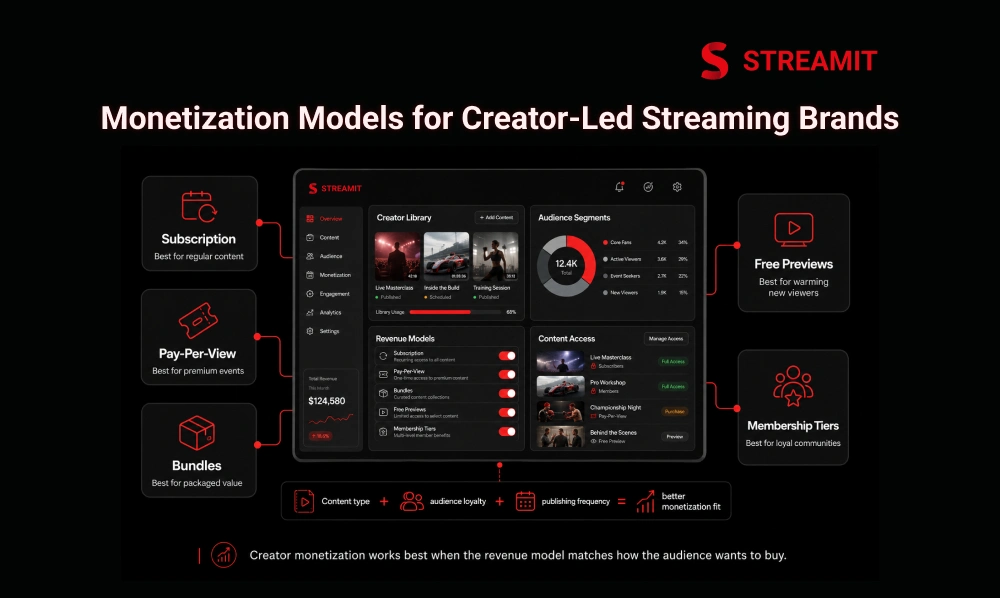
No single monetization model fits every creator. A fitness educator, filmmaker, sports coach, spiritual teacher, podcaster, and niche media brand may all need different revenue structures.
The stronger approach is to design monetization around content type, audience loyalty, publishing frequency, and price sensitivity. That is how creator monetization becomes strategic instead of random.
| Monetization Model | Best For | Revenue Pattern | Main Risk |
|---|---|---|---|
| Subscription | Regular premium content | Recurring monthly or yearly revenue | Churn if content feels repetitive |
| Pay-per-view | Events, workshops, premium releases | One-time high-intent purchases | Revenue spikes but may not repeat |
| Bundles | Course-style or themed content | Higher average order value | Needs clear packaging |
| Free previews | New audience conversion | Warms users before payment | Weak previews may reduce urgency |
| Membership tiers | Communities and loyal fans | Segmented recurring revenue | Too many tiers can confuse users |
Subscriptions Work Best for Loyal Audiences and Regular Content
Recurring revenue works when viewers expect recurring value. Subscriptions are strongest when creators publish consistently or maintain a valuable evergreen library.
This model fits creators with education, fitness, entertainment, niche learning, interviews, documentaries, or community-led content. The key is not just access. The key is habit.
Pay-Per-View Works Best for Events and Premium One-Time Content
Pay-per-view works when the moment has urgency. Live workshops, private events, masterclasses, launches, performances, and premium one-time drops can perform better as direct purchases.
TVOD is useful when viewers do not want a monthly commitment. It gives creators a clean way to monetize high-value content without forcing every buyer into a subscription.
Bundles, Membership Tiers, and Free Previews Reduce Payment Friction
Most users do not jump from free content to premium trust overnight. Bundles, trial access, and previews help users understand value before paying.
Membership tiers also help creators serve different buyer groups. A casual viewer may buy a starter plan, while a serious fan may choose premium access, events, or deeper learning.
Part 4
Features That Make Paid Creator Content Worth Buying
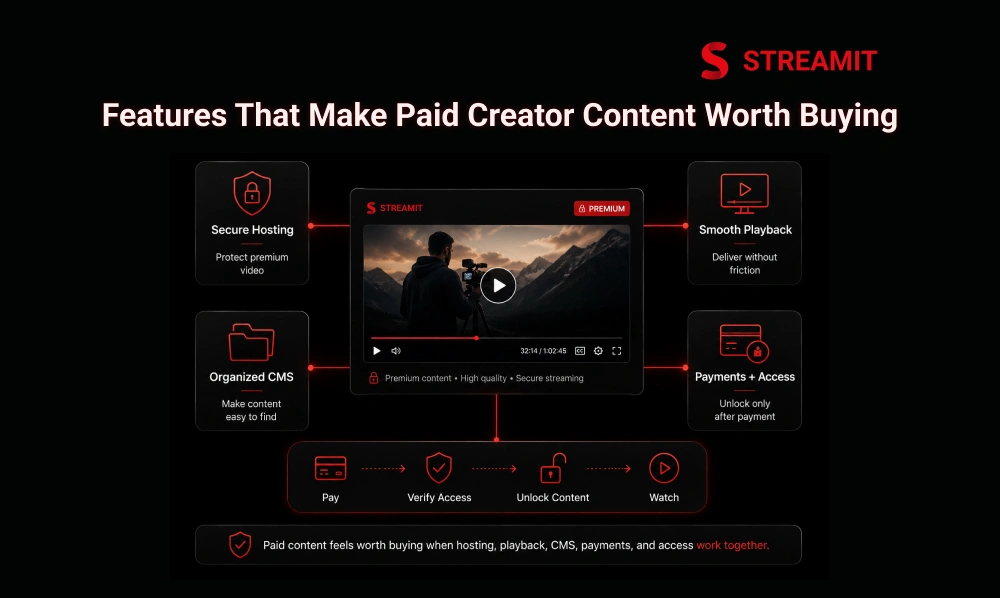
People do not pay only for content. They pay for the experience around the content. If playback is poor, access fails, or content is hard to find, paid users lose trust.
A serious video monetization platform must connect hosting, delivery, CMS, payments, access rules, analytics, and user experience. These parts cannot work in isolation.
Secure Video Hosting and Smooth Playback Protect the Paid Experience
One buffering issue can make a paid user question the purchase. Secure video hosting, adaptive streaming, and reliable delivery are not technical extras. They protect revenue.
For creator-led streaming brands, playback should feel smooth across mobile, web, and TV. If the content is premium, the delivery must feel premium too.
CMS, Playlists, and Categories Make Content Easier to Sell
A messy library reduces the perceived value of paid content. A proper OTT CMS helps creators organize videos into collections, seasons, lessons, programs, or categories.
This matters for conversion. Users should quickly understand what they get, where to start, what is premium, and what to watch next. Good structure quietly increases revenue.
Payments, Coupons, Trials, and Access Rules Must Work Together
Payment success means nothing if access control fails. If a user pays but content remains locked, support issues increase, and trust drops quickly.
A creator monetization platform should connect payment gateways, coupons, subscriptions, trials, billing status, and content entitlements. Monetization only works when the full payment-to-playback journey is reliable.
Part 5
The Ownership Test Most Creator Platforms Ignore
The real test is simple: if you leave the platform, what do you still own? Many creators focus on features first, but ownership decides long-term business value.
A platform should help creators build assets, not just transactions. Audience data, subscriber relationships, content structure, payment history, and brand equity should strengthen over time.
Creators Should Know Who Owns the Audience Data
Data ownership becomes more valuable with every paying subscriber. Creators should understand whether they can access, export, analyze, and use subscriber data.
This includes viewer profiles, watch behavior, payment status, content demand, churn signals, and engagement history. Without this, the creator owns content but not the business intelligence around it.
Creators Should Avoid Building Only on Rented Audiences
Rented audiences are useful for growth, not safe for control. Social platforms can bring discovery, but they should not be the only place where the audience relationship lives.
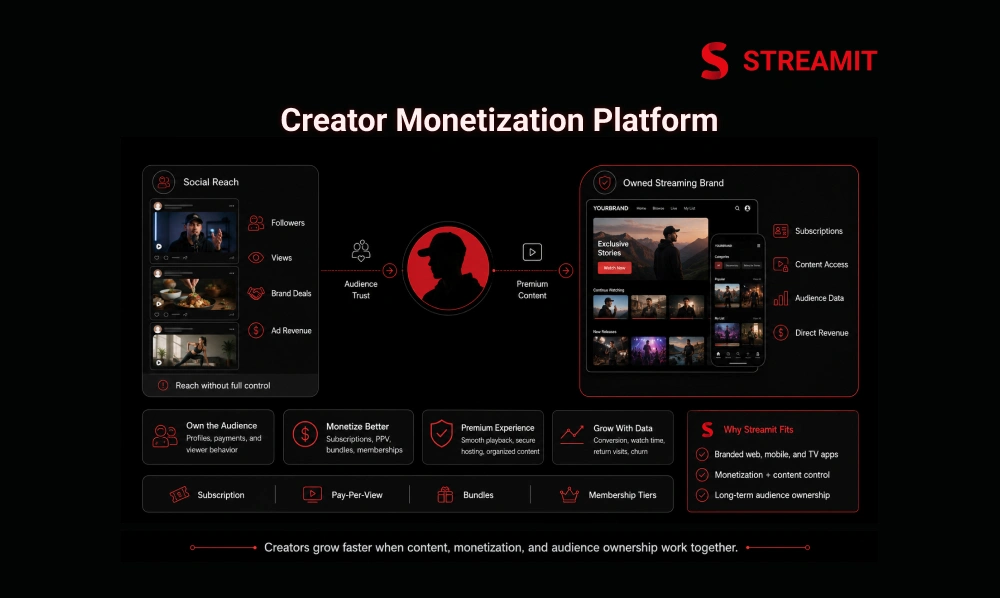
A healthier strategy is simple. Use social platforms for reach, then move high-intent viewers into an owned streaming experience where the creator controls access, data, and monetization.
A Platform Should Build Long-Term Value, Not Only Quick Sales
Quick sales are good. Business value is better. A one-time campaign may bring revenue, but an owned streaming brand compounds through subscribers, content libraries, and retention data.
This is the difference between selling content and building a media asset. Serious creators need a platform that supports scale, not just launch speed.
Part 6
Metrics That Show Creator Monetization Is Working
Views are not the business metric. Paid behavior is. Creators need analytics that connect content performance to revenue, retention, and subscriber movement.
The right metrics show what people buy, what they watch, when they return, and where they drop off. That is how creators stop guessing and start improving the business.
| Metric | What It Shows | Why It Matters |
|---|---|---|
| Paid conversion | Offer strength | Shows whether viewers understand the value |
| Watch time | Content depth | Shows if paid users are engaged |
| Return visits | Habit strength | Shows if the platform becomes part of routine |
| Churn | Retention health | Shows where value may be weakening |
| Revenue per user | Monetization quality | Shows if pricing and packaging work |
| Content demand | Programming direction | Shows what to create next |
Paid Conversion Shows Whether the Offer Is Strong Enough
A low conversion rate usually means the offer is unclear, not always that the audience is weak. Creators should study what turns free viewers into paid users.
Conversion improves when landing pages, previews, pricing, content categories, and value messaging work together. The offer should make payment feel logical, not forced.
Watch Time and Return Visits Show Content Value
A paid user who does not return is a warning signal. Watch time and return visits show whether the platform is becoming part of the viewer’s routine.
This is especially important for subscriptions. If users subscribe but do not build a viewing habit, churn usually follows. Retention begins with content value.
Churn, Revenue, and Content Demand Show Long-Term Growth
Churn tells the truth after the launch excitement fades. A creator platform should show cancellation patterns, revenue trends, and content demand over time.
These signals help creators decide what to promote, what to improve, what to bundle, and what to stop producing. Long-term monetization depends on disciplined learning.
Part 7
Why Streamit Fits Creators Building Owned Streaming Brands
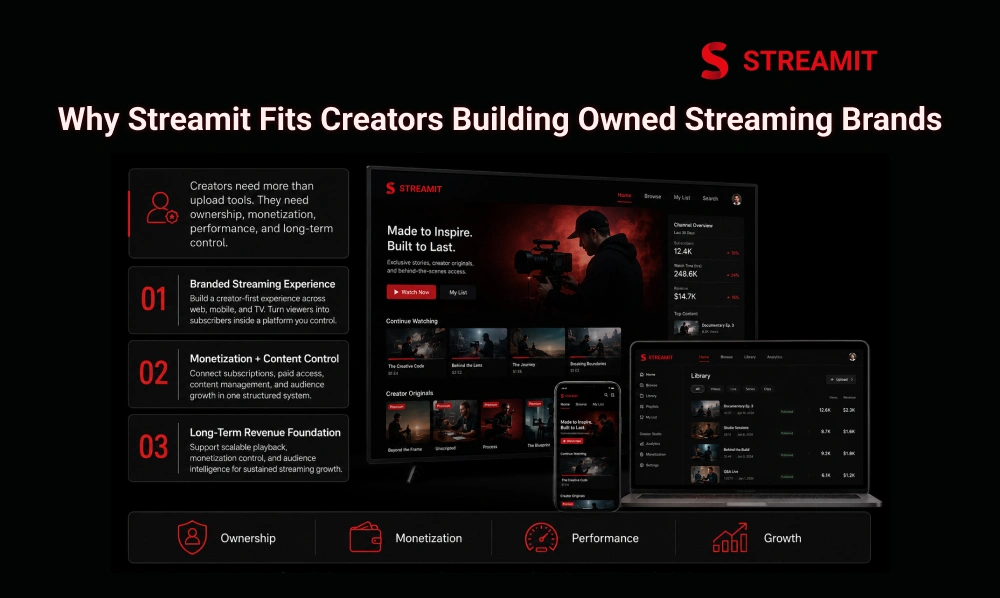
Creators do not need another content upload tool. They need a business foundation. Streamit is built for creators and streaming brands that want ownership, monetization, performance, and long-term control.
For serious creator-led brands, the goal is not to copy large OTT companies. The goal is to build a platform that fits the creator’s audience, content model, and revenue strategy.
It Helps Creators Build a Branded Streaming Experience
A branded experience makes the creator feel like the destination, not just the content source. Streamit helps creators build streaming experiences across web, mobile, and TV.
This gives creators a stronger presence than scattered links and public feeds. Viewers enter a controlled environment where the creator owns the journey from discovery to payment.
It Supports Monetization, Content Control, and Audience Growth
Revenue grows when monetization and access rules work together. Streamit supports the key layers creators need: subscriptions, paid access, content management, user journeys, and analytics.
Creators can organize content, control access, run paid models, and understand audience behavior. That creates a stronger base for growth than relying only on platform payouts.
It Gives Creators a Stronger Base for Long-Term Streaming Revenue
The first launch matters, but the next 12 months matter more. Streamit is positioned for creators who want to grow beyond short-term campaigns and build a streaming business.
That means scalable infrastructure, consistent playback, monetization control, and audience intelligence. For owned streaming brands, these are not luxury features. They are business requirements.
Summary
Key Takeaways
Audience Ownership Over Rented Reach
Social platforms drive discovery, but creators need owned channels to control subscriber data, payments, and long-term viewer relationships that compound in value.
Monetization Flexibility Is a Business Requirement
Subscriptions, pay-per-view, bundles, coupons, and trials should operate together as a unified strategy, not as disconnected revenue tools that compete with each other.
The Paid Experience Determines Retention
Smooth playback, secure hosting, structured content libraries, and reliable access rules directly affect whether paid users stay or cancel after the first billing cycle.
Data-Led Decisions Drive Sustainable Growth
Metrics like paid conversion, watch time, return visits, churn, and revenue per user reveal whether creator monetization is improving or quietly declining over time.
Ownership Means Assets, Not Just Transactions
The real test of a creator platform is what remains – audience data, subscriber history, brand equity – after any single campaign or content launch cycle ends.
Streamit Provides the Foundation for Owned Streaming
Streamit gives creators a branded, monetized, and scalable streaming platform they can grow independently from social platforms and third-party payouts.
Conclusion
Conclusion
The next stage of creator monetization is not about more followers. It is about more control. Creators who already have trust, niche authority, and premium content should not depend only on rented feeds.
A creator monetization platform helps turn that trust into a structured streaming business. For creators building owned streaming brands, Streamit provides the foundation to manage content, monetize viewers, understand the audience, and grow with more control.
FAQs
Frequently Asked Questions
-
Why should creators move beyond social platform monetization?
Creators should move beyond social monetization because reach does not equal ownership. Social platforms help with discovery, but an owned platform gives creators more control over pricing, content, subscriber relationships, and long-term business value.
-
How can creators own their audience instead of renting it?
Creators can own their audience by moving high-intent viewers into a branded platform where they control accounts, payments, emails, data, and content access, while still using social platforms for discovery.
-
Which monetization model works best for creator-led brands?
The best model depends on content frequency, audience loyalty, and buying behavior. Subscriptions work well for regular value, while pay-per-view, bundles, and previews work better for premium or one-time content.
-
When should creators choose subscriptions over pay-per-view?
Creators should choose subscriptions when they publish regularly or have a content library users return to often. Pay-per-view works better for events, exclusive releases, workshops, or premium one-time content.
-
What content makes viewers pay for a creator platform?
Viewers pay for content that feels specific, useful, exclusive, entertaining, or hard to replace, such as courses, private shows, fitness programs, masterclasses, live events, and niche media libraries.
-
When should creators build their own streaming brand?
Creators should build their own streaming brand when they have loyal viewers, premium content, repeat demand, or a clear monetization strategy beyond ads, sponsorships, and social platform payouts.