Streamit TV App: A Smarter Choice for OTT Streaming Brands


47.5% of TV viewing now comes from streaming in recent market reporting, which means the TV app is no longer a side channel. For OTT streaming brands, the living-room screen has become one of the most important places to win trust, increase watch time, and protect recurring revenue.
The problem is that many OTT teams still treat the TV app like a stretched mobile app. That approach may work during launch, but it usually starts showing cracks when users expect faster browsing, smoother playback, better content discovery, and a branded experience that feels built for the big screen.
The Challenge
Why OTT Streaming Brands Need More Than a Basic TV App
A basic OTT TV app can help a brand go live, but it rarely protects long-term growth. Viewers do not judge the experience by how quickly the platform was launched. They judge it by how quickly they can find, start, pause, resume, and enjoy content without friction.
For serious OTT streaming brands, the TV app becomes part of the business model. It affects subscriber retention, monetization, engagement, content visibility, and the brand’s ability to build direct viewer relationships.
Viewers Expect Fast Access, Smooth Navigation, and Reliable Playback
A viewer usually gives the app only one session to prove itself. If loading feels slow, menus feel heavy, or playback breaks at the wrong moment, the content loses value before it even begins.
A strong OTT TV app keeps the path simple. Open the app, find the right content, press play, and continue watching without unnecessary steps.
A Weak TV App Can Hurt Retention Even With Strong Content
Strong content can attract users, but a weak experience can push them away. Retention is not only about what is inside the catalog. It is also about how easy that catalog feels to use every day.
This is where many OTT brands misread the problem. They assume users left because the content was not good enough, when the real issue may be buffering, poor discovery, or a frustrating TV interface.
Brands Need Control Over Experience, Monetization, and Viewer Data
Ownership matters more once the audience starts growing. OTT brands need control over branding, app flow, analytics, payment logic, access rules, and user engagement.
Without that control, growth becomes harder to manage. Teams may launch quickly but later struggle to optimize revenue, viewer journeys, and subscriber relationships.
The Solution
What Makes Streamit TV App a Smarter OTT Choice
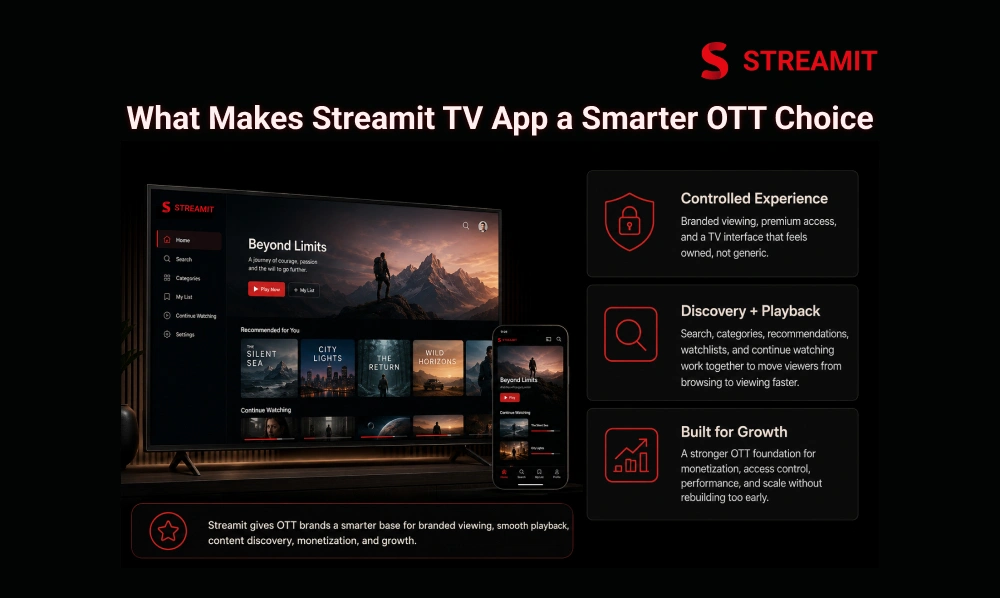
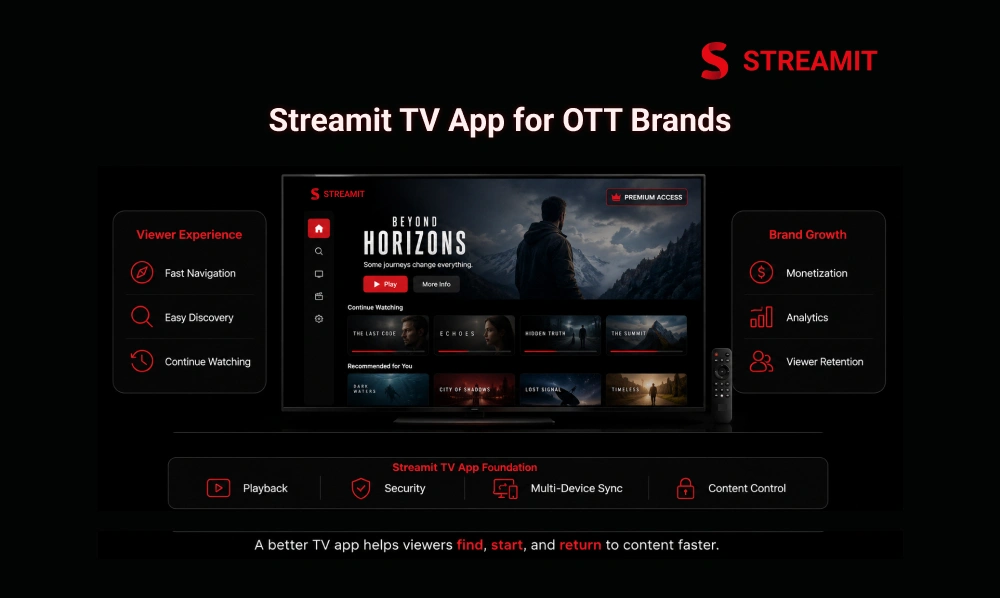
Streamit TV App is built for brands that want more than a basic streaming interface. It gives OTT teams a stronger base for branded viewing, smooth playback, content discovery, monetization, and growth.
The smarter choice is not the platform with the longest feature list. It is the one that connects the right features into one working experience across the viewer journey.
It Gives Brands a More Controlled Streaming Experience
Brand control is not just about logo placement. It includes how users browse content, how categories appear, how premium access works, and how the app feels on a TV screen.
Streamit helps brands create a more owned experience. That matters when the platform needs to feel like a serious streaming business, not a generic template.
It Supports Content Discovery, Playback, and Viewer Engagement Together
Discovery, playback, and engagement should not work separately. A viewer may leave if the content is hard to find, even if the video quality is strong.
Streamit brings these parts closer together. Search, categories, recommendations, watchlists, and continue watching help users move from browsing to viewing faster.
It Gives OTT Teams a Stronger Base for Growth
Growth becomes expensive when the foundation is weak. Teams may spend more later fixing performance, monetization, access control, or device experience.
Streamit gives brands a more practical starting point. It supports the operational base needed to improve, scale, and monetize without rebuilding everything too early.
Platform Comparison
Streamit TV App vs Other OTT Platforms: What to Compare
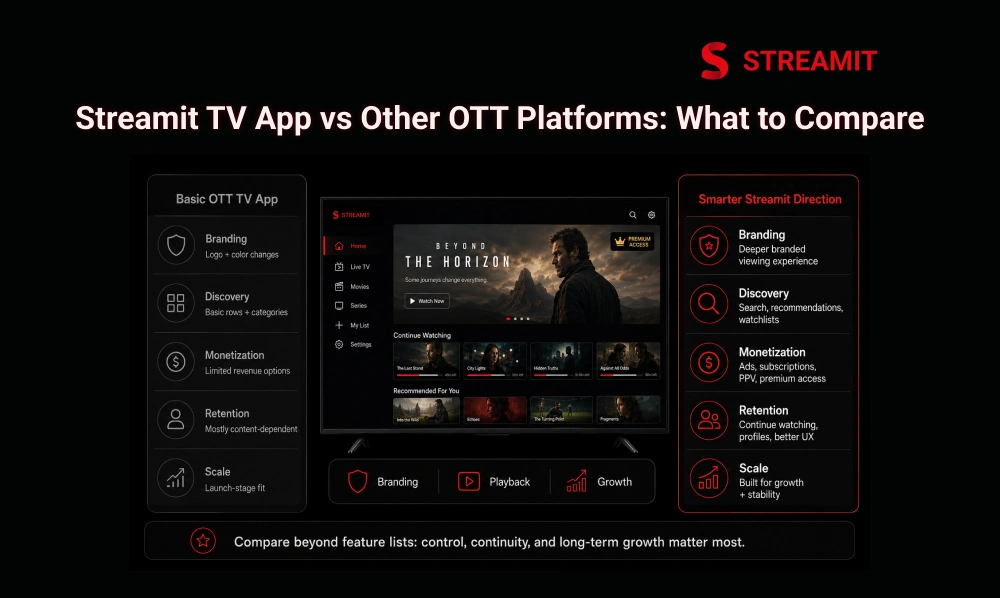
The right comparison is not “which platform has more features?” The better question is which platform gives the brand enough control, stability, and growth room after launch.
OTT platform comparison should include business impact. Branding, devices, monetization, analytics, security, scalability, support, and long-term cost all affect ROI.
| Comparison Area | Basic OTT TV App | Smarter Streamit Direction |
|---|---|---|
| Branding | Logo and color changes | Deeper branded viewing experience |
| Discovery | Basic rows and categories | Search, recommendations, watchlists |
| Monetization | Limited revenue options | Ads, subscriptions, PPV, premium access |
| Retention | Depends mostly on content | Continue watching, profiles, better UX |
| Scale | Works for launch stage | Built with growth and stability in mind |
Compare Branding Control and Customization Depth
Branding control should go deeper than surface-level design. OTT teams need control over the home screen, navigation, content sections, viewer flows, and premium content presentation.
A platform with weak customization can limit positioning. It may make the brand feel replaceable, even when the content strategy is unique.
Compare Device Coverage Across Web, Mobile, and TV
Viewers do not think in devices; they think in convenience. They may browse on mobile, watch on TV, and return later from another screen.
The TV app should support that behavior naturally. Multi-device continuity helps reduce friction and keeps the viewer connected to the platform.
Compare Monetization, Analytics, and Subscriber Ownership
Revenue does not come only from subscriptions. OTT brands may also need ads, pay-per-view, premium content, bundles, and better insight into viewer behavior.
Subscriber ownership is part of long-term control. Brands need access to data that helps them understand engagement, churn risk, content demand, and monetization opportunities.
Compare Security, Support, Scalability, and Long-Term Cost
Cheap launch decisions can become expensive growth problems. Security gaps, weak support, poor scaling, and limited flexibility can increase hidden costs.
A serious OTT TV app should be evaluated over 12 months, not only launch week. The real test starts when usage increases, content grows, and monetization becomes more complex.
Viewer Experience
Viewer Experience Features That Help Streamit Stand Out
Good TV UX reduces decision fatigue. On a big screen, users want fewer clicks, clearer sections, readable layouts, and smoother movement with a remote.
Streamit’s viewer experience features are useful because they support repeat behavior. Profiles, watchlists, search, recommendations, continue watching, and language support all help viewers return.
Clean UI and Remote-Friendly Navigation Reduce Friction
TV navigation has one major limitation: the remote. Every extra click feels heavier than it does on mobile.
A clean UI helps users move with confidence. When the layout is clear, viewers spend less time figuring out the app and more time watching content.
Profiles, Watchlists, and Continue Watching Build Repeat Use
Repeat viewing starts with memory. Viewers expect the platform to remember what they watched, saved, paused, or planned to watch later.
Profiles and continue watching make the app feel personal. They reduce effort and make the next session easier to start.
Search, Categories, and Recommendations Help Users Find Content Faster
A large catalog means little if users cannot navigate it. Search and categories help viewers act with intent, while recommendations support discovery.
This balance matters for retention. Users need both direct access to what they want and guided paths to what they may enjoy next.
Multi-Language and Accessibility Support Improve Audience Reach
Audience growth often depends on removing small barriers. Language, subtitles, navigation clarity, and accessibility support can decide whether more users stay engaged.
For OTT brands serving wider markets, this is not optional polish. It is part of making content usable for more people across regions and viewing habits.
Delivery & Security
Playback, Security, and Delivery Quality Matter More on TV
TV playback failures feel more visible than mobile issues. A viewer on the couch is usually watching longer, with more attention, and often with family or friends.
That makes delivery quality a business issue. Buffering, lag, poor access control, or unstable streaming can damage trust quickly.
Adaptive Streaming Helps Reduce Buffering Across Mixed Networks
Not every viewer has the same connection quality. Adaptive streaming helps adjust quality based on network conditions, so playback stays more stable.
This matters because users rarely blame the network first. They blame the app, the brand, and the platform experience.
CDN and Delivery Setup Affect Playback Stability at Scale
A good interface cannot hide weak delivery. When traffic grows, the platform needs strong delivery planning so content loads reliably across regions and devices.
CDN and edge delivery decisions affect real viewing quality. They help reduce delays, improve stability, and support higher traffic moments.
DRM and Access Control Protect Premium Streaming Content
Premium content needs controlled access. If paid videos, live events, or exclusive titles are easy to misuse, revenue and rights protection become weaker.
DRM, authentication, profile security, and entitlement logic help protect the business. They ensure the right viewer gets the right access at the right time.
UX Testing
The Living-Room Test Most OTT Brands Ignore
The living-room test is simple: can someone use the app comfortably from a sofa with one remote? Many apps fail because they are designed like mobile screens, not TV experiences.
OTT brands should test the full viewing moment. Browse, select, play, pause, resume, search, switch profile, and return the next day.
TV Apps Must Work for Lean-Back Viewing, Not Mobile-Style Browsing
TV viewing is more relaxed, but expectations are stricter. Users do not want to type much, scroll endlessly, or decode crowded screens.
Lean-back design means fewer decisions and clearer paths. The app should guide users without making them work hard.
Remote-Friendly Design Can Decide Whether Viewers Keep Watching
Remote friction can silently reduce engagement. If users struggle to move between rows, open details, or return to content, sessions become shorter.
A better TV layout makes action obvious. The viewer should know where they are, what is selected, and what happens next.
The Best TV Experience Makes Content Easy to Start, Pause, and Resume
A strong TV app respects interrupted viewing. People pause, switch rooms, leave midway, and return later.
Continue watching and synced progress make the experience feel dependable. That dependability supports retention more than many flashy features.
Growth Strategy
Why Streamit Fits OTT Streaming Brands Ready to Grow
Streamit fits brands that are thinking beyond the first launch. It gives OTT teams the foundation to manage branded apps, monetization, playback, analytics, and viewer engagement more strategically.
For growing brands, the goal is not to look like a generic streaming platform. The goal is to own the experience, understand the audience, and scale with fewer operational surprises.
It Supports Branded OTT Apps Across Key Devices
Device coverage matters because viewers move between screens. A serious OTT brand should not depend on one access point.
Streamit supports a branded app experience across important viewing environments. That gives brands more room to reach users where streaming habits already exist.
It Combines Viewer Experience, Monetization, Analytics, and Delivery
OTT growth needs connected systems. Viewer experience, monetization, analytics, and delivery quality all influence each other.
Streamit is useful because these areas are not treated as separate afterthoughts. They become part of the platform base from the beginning.
It Gives Brands a Smarter Base for Long-Term OTT Growth
The first version of an OTT platform should not block the second stage of growth. Brands need space to improve pricing, content, engagement, and operations.
Streamit helps create that room. It supports the practical foundation OTT teams need before scale turns small gaps into expensive problems.
Summary
Key Takeaways
TV App Quality Drives Retention
Strong content is not enough if viewers face slow navigation, buffering, or poor discovery. The app experience is part of the product.
Ownership Grows More Important Over Time
Branding, data, monetization, and access control should stay in the brand’s hands as the audience scales.
Living-Room UX Needs Different Thinking
TV apps must be designed for remote-friendly, lean-back viewing rather than mobile-style browsing – fewer clicks, clearer paths.
Streamit Builds a Stronger OTT Foundation
It connects discovery, playback, security, monetization, analytics, and multi-device viewing into one cohesive platform.
Long-Term Growth Needs More Than Launch Speed
The smarter platform is the one that performs after traffic, content, and revenue pressure increase – not just on day one.
Evaluate Over 12 Months, Not Launch Week
The real test of an OTT TV app starts when usage increases, content grows, and monetization complexity rises.
Conclusion
Conclusion
The TV app is now one of the most important parts of an OTT streaming brand. It shapes how viewers discover content, how often they return, and how much trust they place in the platform.
Streamit TV App gives OTT streaming brands a smarter foundation for growth. With branded experience, smoother playback, viewer engagement features, monetization support, security, and scalable delivery, it helps teams build for the next stage, not just the launch day.
FAQs
Frequently Asked Questions
-
Why do OTT TV apps lose viewers faster than mobile apps?
OTT TV apps lose viewers faster when navigation feels slow, remote controls are frustrating, or playback is unstable. On TV, users expect a smooth living-room experience with fewer steps.
-
What makes a TV app feel better than a basic OTT app?
A better TV app feels simple, fast, readable, and remote-friendly. It helps users find content quickly and continue watching without confusion.
-
Can weak TV app UX hurt retention even with strong content?
Yes, weak UX can reduce retention because viewers may leave before they fully experience the content. Playback issues, poor search, and confusing layouts make repeat viewing harder.
-
How does Streamit TV App support branded OTT experiences?
Streamit helps brands build a more controlled TV experience with branded layouts, content discovery, monetization options, and viewer engagement features. This gives the platform a more owned and professional feel.
-
What security features matter most in an OTT TV app?
The most important security features include secure login, access control, profile protection, DRM, and entitlement management. These help protect premium content and paid access.
-
How do watchlists and continue watching improve OTT retention?
Watchlists and continue watching reduce effort for returning users. They make the next session easier, which helps viewers build a habit around the platform.