7 Psychological Tricks Netflix Uses to Keep Viewers in a Loop

More than 65% of Netflix viewing happens through recommendations, not search. That single data point tells you something important, retention is not accidental. It is designed.
The average binge session often stretches beyond two episodes, even when viewers initially planned to watch just one. That is not just great storytelling. It is behavioral architecture.
Most founders think retention is a content problem. It is not. It is a psychological problem.
This blog breaks down the 7 psychological tricks Netflix uses to keep viewers in a loop, and more importantly, what serious OTT businesses can learn from it without turning their platforms into dark-pattern machines.
Why Netflix Focuses on Viewer Psychology?
Netflix does not just stream content; it engineers behavior. In a world where attention is fragmented across platforms, the real competition is not another OTT app, it is sleep, social media, and silence.
Netflix psychology is rooted in viewer behavior analysis and binge-watching habits. The platform studies how people decide, hesitate, explore, and abandon. Retention begins long before the next episode starts.
Understanding Viewer Mind: Dopamine, Habit Loops
Every completed episode releases a small dopamine reward in the brain. That reward reinforces the habit loop, cue, action, reward.
Netflix designs for repetition. The goal is not just to entertain but to make watching feel effortless and automatic.
Human Desire for Instant Entertainment
People prefer immediate rewards over delayed satisfaction. This is basic behavioral science.
Streaming removes friction between desire and gratification. No waiting, no scheduling, just instant access. That immediacy becomes addictive when paired with emotional storytelling.
The Science Behind Viewer Retention on Netflix
Nearly 35% of viewers abandon content within minutes if engagement drops. Netflix cannot afford disengagement at scale.
Behavioral science, dopamine hits, and emotional storytelling intersect to create what many describe as entertainment addiction, though structurally, it is closer to habit conditioning.
Instant Rewards and Emotional Satisfaction
Immediate continuation reduces friction between desire and action. No decision delay means less resistance.
When the next episode starts automatically, the viewer receives instant emotional continuation.
Positive Loop of Curiosity and Storytelling
Curiosity is one of the strongest psychological drivers. Suspense triggers anticipation. The loop becomes self-reinforcing: curiosity → episode → partial resolution → deeper curiosity.
How Netflix Studies Viewer Behavior to Increase Watch Time?
Netflix processes billions of daily interactions which clicks, pauses, skips, rewinds. Data is not collected for vanity metrics. It is used to shape experience.
Netflix user data powers personalization and streaming engagement strategies. It is less about what is popular and more about what you are likely to watch next.
What Netflix Tracks: Clicks, Watch Time, Skips?
Every micro-action tells a story about preference. Click timing, drop-off points, replay moments, all become signals.
This granular data feeds content positioning and recommendation adjustments.
AI + Machine Learning Predict What You’ll Watch Next
Predictive modeling reduces decision fatigue. When suggestions feel accurate, users stop searching.
Machine learning is not about complexity. It is about probability alignment.
Personal Decisions → Data Models → Behavior Change
Individual choices aggregate into behavioral patterns. Those patterns refine algorithms.
Over time, personalization shifts behavior itself, viewers explore differently when they trust recommendations.
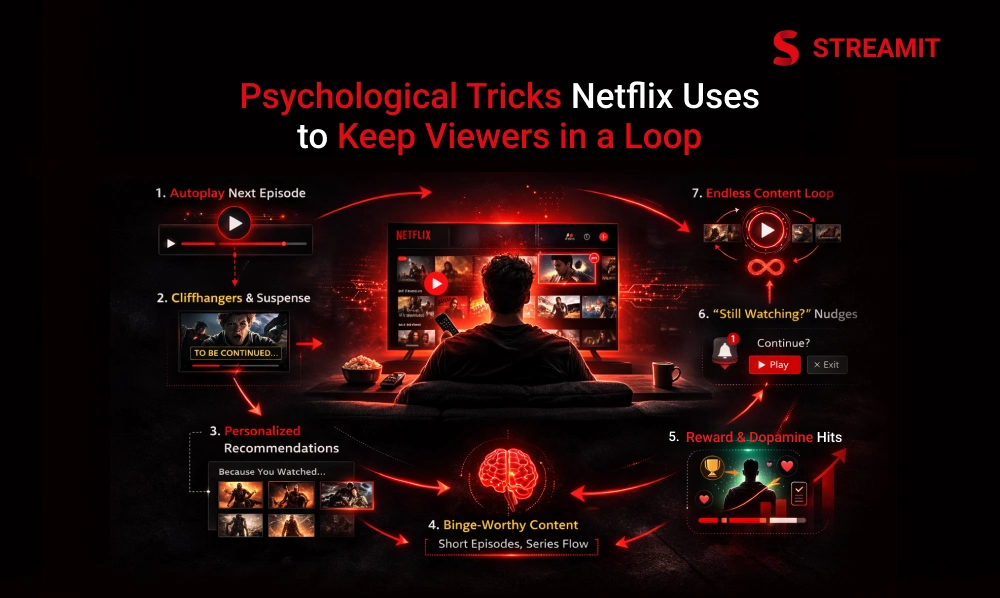
7 Psychological Hacks Netflix Uses to Keep You Watching
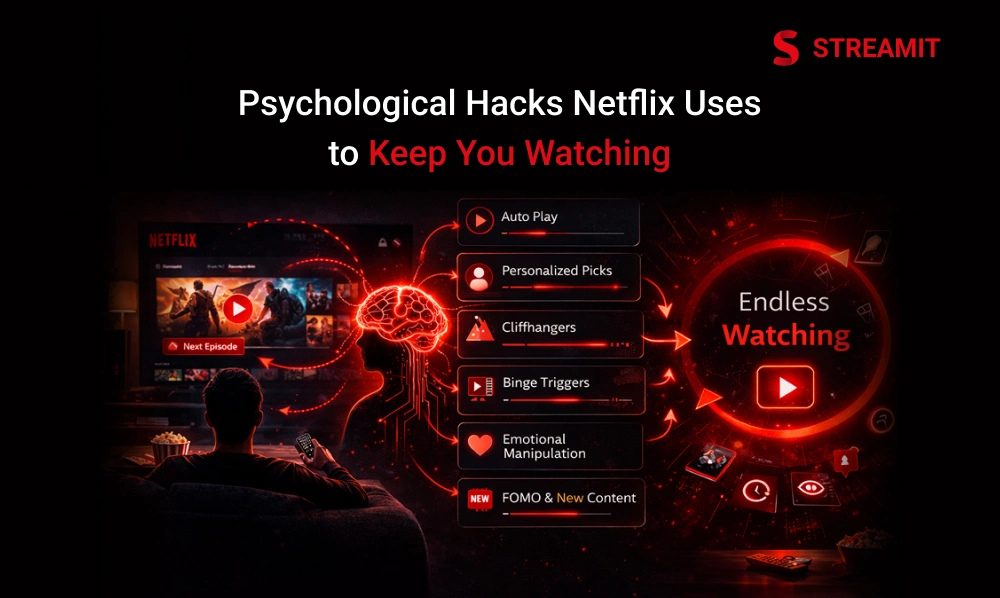
Netflix doesn’t rely only on content quality to keep viewers engaged, it relies on behavioral design. Every feature is structured to reduce decision fatigue, trigger curiosity, and create habit loops that make stopping feel harder than continuing. These psychological hacks work together quietly in the background, shaping how long people browse, what they click, and how many episodes they watch in a single session.
7 Psychological Hacks Netflix Uses to Keep You Watching:
- Autoplay Continuation : Automatically starts the next episode, removing the need to decide whether to continue.
- Personalized Recommendations : Suggests content based on viewing patterns to reduce search effort.
- Infinite Scroll Browsing : Keeps users exploring by removing natural stopping points.
- Emotion-Driven Thumbnails : Uses visual triggers like faces and expressions to increase clicks.
- Cliffhanger Storytelling : Ends episodes at peak tension to drive curiosity.
- Smart Re-engagement Notifications : Sends reminders based on viewer interests.
- Progress Completion Bars : Encourages users to finish what they started.
1. Auto-play Creates Continuous Binge Sessions
Auto-play removes the natural pause between episodes, allowing content to continue without requiring viewers to make an active decision. By eliminating this small moment of hesitation, the platform reduces decision fatigue and keeps the viewing experience smooth and uninterrupted.
Over time, this frictionless transition encourages longer binge sessions, as viewers are more likely to continue watching when the next episode starts automatically rather than having to consciously choose to proceed.
How Autoplay Reduces Viewer Decision Making?
Autoplay removes the need for viewers to actively choose whether to continue watching. By starting the next episode automatically, it bypasses the small pause where someone might decide to stop, making continuation feel effortless and almost automatic.
Why Do Users Keep Watching Even When Tired?
When viewers are tired, their ability to make deliberate decisions weakens. Since the next episode starts automatically, stopping requires more effort than continuing, making it easier to keep watching even when they originally planned to quit.
2. Personalized Recommendations Designed to Feel Perfect
Personalized recommendations are designed to reduce the effort required to find something interesting to watch. By analyzing viewing history, search behavior, and interaction patterns, the platform presents content that closely matches individual preferences.
This precision creates a sense of relevance and trust, making viewers more likely to click quickly and continue watching without spending long periods browsing.
Smart Tracking of Likes, Searches, and Watch History
Every interaction, from what viewers click to what they finish or abandon, becomes a signal of preference. By continuously analyzing likes, search queries, watch time, and skips, the platform refines recommendations to feel increasingly accurate over time.
New Shows Picked Just Before Boredom Starts
Recommendation systems monitor viewing patterns to detect when interest in a current show may decline. By introducing fresh, relevant suggestions at the right moment, the platform keeps viewers engaged before boredom sets in.
3. Endless Scroll Makes You Search Longer
Endless scroll removes the natural stopping points that typically occur with paginated browsing. As content continues to load automatically, viewers stay in exploration mode longer without realizing how much time has passed.
This continuous flow encourages extended searching behavior, increasing the chances that users will eventually find something appealing and start watching.
No Stopping Point Keeps Viewers Exploring
When there’s no clear end to browsing, viewers continue scrolling naturally, extending their exploration time without consciously deciding to do so.
Hidden Psychology of Endless Choice
When options appear limitless, viewers feel encouraged to keep searching, which increases browsing time and delays the moment they decide to stop.
4. Thumbnail Psychology and Emotional Triggers
Thumbnails act as the first emotional handshake between the viewer and the content. Before reading a title or description, people respond instinctively to visual cues such as facial expressions, color contrast, and composition.
By carefully selecting and testing thumbnails, the platform increases the likelihood of clicks, turning simple images into powerful engagement drivers.
Bright Faces, Big Expressions, Eye Contact
Human faces naturally attract attention, and strong emotional expressions make viewers pause, increasing the likelihood of a click.
A/B Tested Thumbnails to Match Viewer Mood
Different thumbnail versions are shown to different users, helping Netflix display visuals that best match each viewer’s interests and viewing patterns.
5. Cliffhangers That Force Curiosity
Cliffhangers are structured to interrupt resolution at the most emotionally charged moment. By ending episodes with unanswered questions or unexpected twists, the story creates tension that demands continuation.
This deliberate pause between conflict and closure strengthens emotional investment, making it difficult for viewers to stop without seeing what happens next.
Sudden Twist at the End of Episodes
Episodes often end with unexpected turns that interrupt resolution, making viewers eager to start the next episode immediately.
Curiosity Gap Keeps Viewers Attached to Characters and Plots
Unanswered questions and emotional uncertainty keep viewers mentally invested, encouraging them to continue watching to find closure.
6. Smart Notifications That Bring You Back
Smart notifications work as gentle behavioral nudges that reconnect viewers with content they already care about. Instead of generic alerts, these messages are triggered by viewing patterns, release schedules, and individual preferences.
By reaching users at the right moment with relevant reminders, the platform increases return visits and helps maintain consistent viewing habits over time.
Notifications Based on Your Favorite Shows
Alerts are tailored to your viewing history, notifying you when new episodes, similar titles, or related content becomes available.
Reminder Psychology Used in Streaming Apps
Timely reminders tap into habit patterns, prompting viewers to return and continue watching without needing to actively search.
7. Progress Bars That Make You Finish What You Started
Progress bars create a visible sense of advancement, showing viewers how much of a show they have already completed. This visual cue builds a subtle psychological commitment, making it harder to abandon content midway.
As viewers move closer to completion, the desire to finish what they started grows stronger, naturally encouraging them to continue watching until the end.
People Want to Complete Shows They Started
Once viewers begin a series, the visible progress creates a natural urge to finish it rather than leave the experience incomplete.
Fear of Missing Out on Ending
Knowing there’s a final resolution ahead creates anticipation, making viewers hesitant to stop before seeing how the story concludes.
Psychological Trigger vs Platform Feature
Are These Hacks Good or Bad for Viewers?
Streaming platforms have redefined how people consume entertainment, but they’ve also reshaped daily routines. Features designed to increase engagement can enhance enjoyment, yet they can also extend screen time beyond intention. The impact depends less on the technology itself and more on how consciously it is used.
Psychological design is not inherently negative. It becomes a concern only when habit overrides choice. Understanding this balance is essential for both viewers and platform builders.
Positive Side: Entertainment and Escape
Streaming provides an easy way for people to relax, unwind, and step away from daily stress. Engaging stories and familiar characters can offer comfort, emotional release, and a sense of connection.
Negative Side: Sleep Issues and Time Loss
Extended binge sessions can quietly push bedtimes later, disrupting sleep patterns and reducing overall rest quality. When episodes continue automatically and curiosity keeps building, viewers may spend far more time watching than they originally planned.
How Netflix Measures Success in Viewer Engagement?
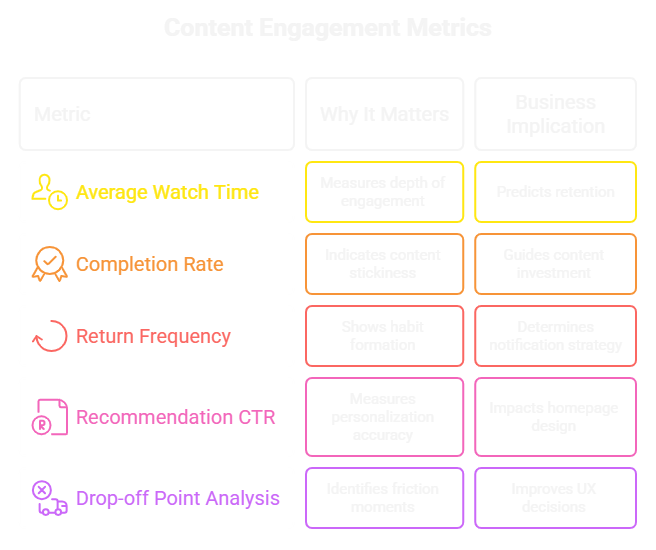
For Netflix, success is not defined by how many people sign up, but by how long they stay engaged. The platform focuses heavily on watch time, completion rates, and repeat visits because these metrics directly reflect viewer satisfaction and long-term retention.
Instead of relying only on subscriber growth, Netflix tracks behavioral signals that show real engagement. These insights help guide content investments, recommendation improvements, and overall platform strategy.
Time Watched Matters More Than Subscriber Count
A high subscriber count may look impressive, but it does not guarantee real engagement. What truly reflects platform health is how many hours users spend watching, how often they return, and whether they complete what they start.
For Netflix, sustained watch time signals satisfaction, habit formation, and long-term retention, all of which directly influence revenue stability and future content decisions.
Content Investment Decisions Based on User Behavior
Netflix does not rely solely on creative intuition when funding new shows. Viewer data, including watch time, completion rates, genre preferences, and drop-off points, plays a central role in deciding what gets renewed, expanded, or discontinued.
By analyzing real engagement patterns, the platform reduces content risk and allocates budgets toward formats and themes that consistently hold attention.
Engagement Metrics That Matter
How Any Streaming Platform Can Copy Netflix Retention Strategy?
Most OTT platforms try to copy Netflix by adding features, but retention does not come from features alone. It comes from understanding how viewers behave, where they hesitate, and what keeps them engaged over time.
The real lesson is not to replicate the interface, but to design systems that reduce friction, personalize experiences, and build consistent viewing habits through data-driven decisions.
UX Design Lessons
Strong retention begins with reducing friction at every interaction point. Navigation should feel intuitive, content discovery should be effortless, and playback should start without delay.
When viewers do not have to think about how to use the platform, they focus entirely on the content, and that simplicity naturally increases watch time.
Personalization and Emotional Storytelling
Retention strengthens when content feels personally relevant and emotionally engaging. Smart personalization ensures viewers see titles aligned with their interests, while strong storytelling builds deeper attachment to characters and narratives.
When platforms combine behavioral insights with emotionally resonant content, they create viewing experiences that feel intentional rather than random.
Push Communication With Audience Behavior Data
Effective re-engagement depends on timing and relevance, not frequency. By using behavior data such as watch history, drop-off patterns, and viewing habits, platforms can send notifications that feel helpful rather than intrusive.
When communication aligns with user interest and context, it naturally brings viewers back without creating fatigue or annoyance.
How Streamit OTT Platform Helps You Keep Viewers Hooked?
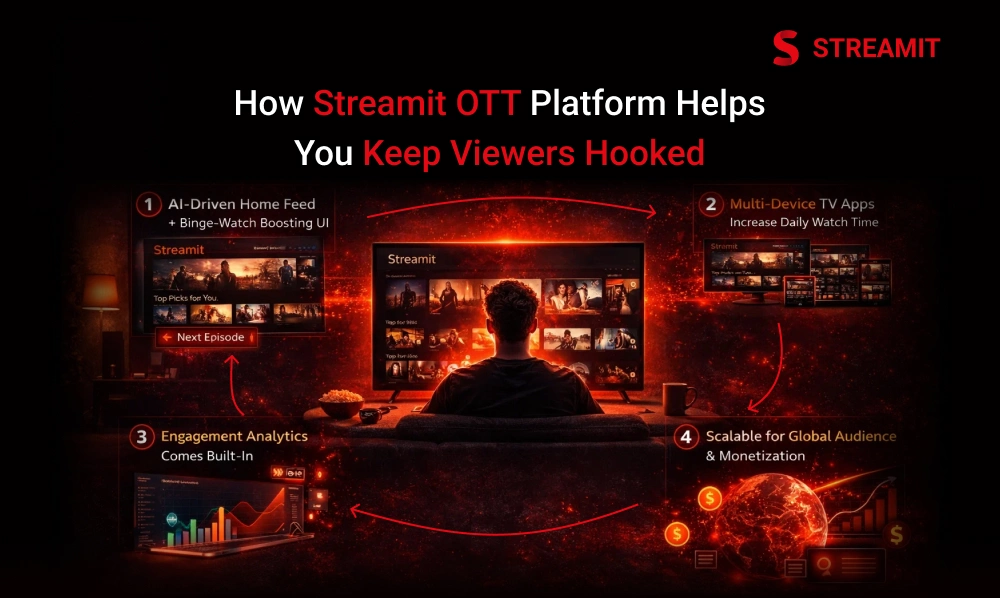
Most OTT platforms struggle with retention not because they lack content, but because they lack structured engagement systems. Viewer attention today is fragile, and without personalization, analytics, and frictionless UX, even strong content loses momentum.
The Streamit OTT Platform is designed with behavioral retention in mind. Instead of chasing trends, it focuses on scalable architecture, intelligent engagement tools, and long-term ownership, so platforms grow sustainably rather than relying on short-term spikes.
AI-Driven Home Feed + Binge-Watch Boosting UI
An AI-driven home feed analyzes viewing behavior, preferences, and watch patterns to display the most relevant content first. This reduces browsing friction and helps viewers quickly find something they are likely to watch.
A binge-watch-focused interface further supports continuous viewing by simplifying navigation, highlighting next-episode prompts, and maintaining smooth content transitions.
Multi-Device TV Apps Increase Daily Watch Time
Availability across Smart TVs, mobile devices, tablets, and web platforms increases accessibility and session length. Viewers tend to consume longer content on larger screens, especially in home environments where watching becomes a shared or relaxed activity.
By supporting multi-device continuity, platforms allow users to start on one screen and continue on another, strengthening daily usage habits and overall engagement.
Engagement Analytics Comes Built-In
Built-in engagement analytics provide clear visibility into how viewers interact with content, from watch time and completion rates to drop-off points and return frequency. These insights help platform owners understand what truly holds attention and where friction exists.
With structured data available in real time, decisions around content investment, UI adjustments, and retention strategies become proactive rather than reactive.
Scalable for Global Audience & Monetization
Designed for 12 months, not for 1 week.
Whether you need a multi streaming platform, a white label OTT solution, a white-label video streaming platform, or an end-to-end OTT solution, structured architecture matters more than templates.
If you are looking to create your own OTT platform, ownership and scalability should come first. A serious OTT streaming solution requires more than a streaming website template or a Netflix clone script.
Conclusion
Netflix did not win the streaming race by content alone, it won by understanding human behavior better than anyone else. The platform’s retention strength comes from small, deliberate psychological design choices that reduce friction, build habits, and keep viewers emotionally invested over time.
The real takeaway for founders and OTT decision-makers is not to copy individual features, but to think structurally. Sustainable engagement comes from aligning UX design, behavioral insights, data intelligence, and content strategy into a single retention ecosystem.
In the long run, retention is not a shortcut, a growth trick, or a UI add-on. It is a strategic foundation, one that determines whether a streaming platform becomes a temporary product or a lasting digital habit.
FAQs
1. What psychological tricks does Netflix use to keep viewers binge-watching?
Netflix uses autoplay, personalized recommendations, dynamic thumbnails, cliffhangers, infinite scroll, smart notifications, and progress tracking to reduce friction and increase habit formation.
2. Why do Netflix thumbnails change for different users?
Netflix runs A/B tested visual variations based on user behavior, showing thumbnails that align with individual viewing preferences and emotional triggers.
3. What is the science behind binge-watching on Netflix?
Binge-watching is driven by dopamine reward loops, curiosity gaps, and habit reinforcement, all supported by frictionless design.
4. What Netflix features create strong binge-watching habits?
Autoplay, progress bars, personalized feeds, and cliffhanger storytelling collectively reduce decision-making resistance and encourage continuation.
5. What can other streaming platforms learn from Netflix’s retention strategy?
They can focus on behavioral design, personalization accuracy, UX simplicity, and data-driven engagement rather than copying surface-level features.
Read Also
1. The Subscriber Retention Secrets Netflix Doesn’t Want Streaming Platforms to Know
2. 5 Proven Retention Tactics Every Streaming Platform Can Steal from Netflix
3. Why Most Streaming Platforms Fail at Retention (and How to Fix It Like Netflix)
4. How to Reduce Subscriber Churn in OTT Platforms: Lessons from Netflix
5. Netflix Retention Secrets Every OTT Platform Should Know in 2025