AI-Powered Platform Intelligence Explained

More than 70% of streaming churn starts silently, users don’t complain, they just stop watching.
AI-Powered Platform Intelligence exists to catch those silent signals early and turn them into confident, data-backed decisions.
Modern streaming platforms don’t suffer from a lack of data. They suffer from a lack of clarity. Every click, pause, rewind, search, and exit already tells a story but without intelligence layered on top, that story remains unread. AI-Powered Platform Intelligence is the system that reads it for you.
This blog explores how AI-Powered Platform Intelligence works, why it has become a foundational layer for successful OTT and media platforms, and how it directly improves retention, engagement, growth, and monetization without drowning teams in dashboards or jargon.
What Is AI-Powered Platform Intelligence?
Streaming platforms already collect millions of signals every day, intelligence is what turns them into action.
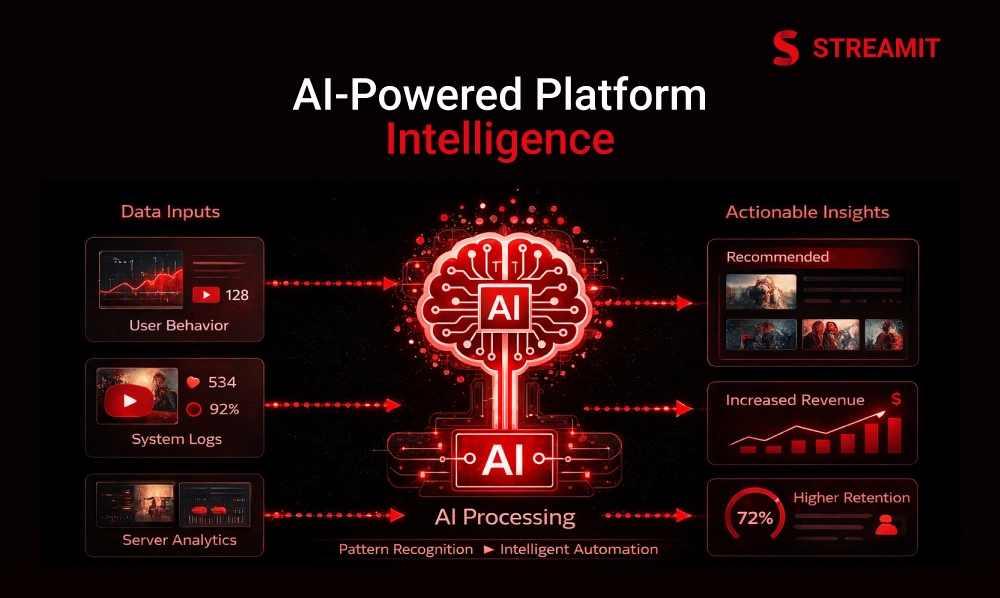
AI-Powered Platform Intelligence is the intelligence layer that sits on top of your platform data and explains what users are doing, why they are doing it, and what is likely to happen next.
Instead of asking teams to interpret raw metrics like views, clicks, or session counts, it answers real business questions such as:
- Why are users dropping off after 10 minutes?
- Which titles actually drive long-term retention?
- What signals indicate a user is about to churn?
- Which viewers are likely to binge, upgrade, or respond to offers?
The system observes behavior continuously, connects patterns across users and content, and surfaces insights that teams can act on immediately.
Why Platform Intelligence Matters More Than Ever
A one-second delay, a bad recommendation, or a slow start can reduce session continuation by over 20%.
In competitive streaming markets, user patience is thin. Viewers compare your experience not with direct competitors, but with the best platform they’ve ever used.
Without platform intelligence:
- Drop-offs are noticed too late
- Churn reasons remain unclear
- Content investment decisions rely on instinct
- Teams react instead of anticipating
AI-Powered Platform Intelligence changes this by making behavior visible in real time and linking it directly to business outcomes.
Every streaming journey has predictable friction points, intelligence decides whether users move forward or leave.
From the moment a user opens an app to the point they renew or cancel a subscription, there are clear stages where engagement either strengthens or breaks.
Add Your Heading Text Here
- Landing / App Open: First Impressions That Shape User Retention
- Browse or Search: How Content Discovery Impacts Engagement and Drop-Offs
- Start Playback: Why Playback Performance Defines Viewer Trust
- First 10 Minutes Watched: The Critical Engagement Window That Predicts Retention
- Episode Completion: Measuring Content Value Through Viewer Commitment
- Next Episode Decision: How Session Continuation Drives Watch Time and Loyalty
- Subscription Renewal or Upgrade: How User Experience Converts Into Revenue
At each stage, AI-Powered Platform Intelligence identifies:
- Drop-off moments: Pinpoints the exact exit points
- Behavioral causes: Reveals the behavior behind exits
- Corrective actions: Outlines actions to improve engagement
Instead of treating churn as a single event, the platform understands it as a series of missed opportunities.
How AI Fixes Drop-Offs Across the Journey
More than 60% of users leave before they truly engage, often without giving the platform a second chance. AI-Powered Platform Intelligence spots these early exit signals and fixes the exact drop-off points before disengagement turns into churn.
Browse & Search Drop-Off
Users often leave because they can’t quickly find content that feels worth their time. AI-Powered Platform Intelligence identifies discovery gaps and content mismatches, then improves search and recommendations based on what viewers actually watch and enjoy, not just what they click.
Playback Start Issues
Playback issues at the start of a session quickly break user trust and lead to early exits. Platform Intelligence detects quality-of-experience patterns across devices, networks, and content formats, then optimizes playback and streaming quality to keep viewers watching smoothly from the first second.
Mid-Session Drop-Off
Viewers often drop off mid-session when the content no longer matches their interest or expectations. Platform Intelligence detects early signs of fatigue and responds with timely content suggestions and smarter previews to keep engagement alive.
End-of-Episode Exit
When viewers reach the end of a title without a clear next step, engagement momentum is lost. Platform Intelligence recognizes this drop in intent and guides users forward with smarter autoplay flows and next-best-action recommendations.
Content Intelligence
Only a limited set of titles truly earns repeat visits, steadily shaping most of a platform’s long-term retention and viewer loyalty by creating familiarity, trust, and a reason for audiences to keep coming back over time.
Content Intelligence goes beyond surface-level popularity. It identifies:
- Titles that increase repeat sessions
- Genres that retain specific segments
- Episodes with consistent drop-off moments
- Content that leads to upgrades or renewals
Content Intelligence Metrics
Engagement Intelligence: Measuring Real Attention
Watch time on its own doesn’t fully capture real engagement, it’s the consistency of sessions and the ability to complete content that reveal whether viewers are genuinely interested and willing to return over time.
AI-Powered Platform Intelligence evaluates engagement through multiple lenses:
- Session frequency
- Watch time distribution
- Completion rates
- Return behavior
This creates a more accurate picture of how invested users really are, not just how long they stayed once.
User Segmentation That Actually Means Something
Watch time alone doesn’t fully reflect engagement, true interest shows up when viewers return regularly and consistently complete the content they start, indicating deeper involvement over time.
AI dynamically groups users based on behavior, not assumptions:
- Binge watchers
- Casual viewers
- High LTV users
- At-risk users
These segments evolve automatically as behavior changes, allowing platforms to respond in real time.
Churn & Retention Intelligence
Churn signals often surface weeks before a user actually cancels, but most platforms fail to notice these early warning signs and only react after the decision has already been made.
AI-Powered Platform Intelligence identifies:
- Declining session frequency
- Shorter watch durations
- Discovery fatigue
- Failed content matches
Instead of reacting to churn, platforms intervene early with:
- Better recommendations
- Targeted messaging
- Personalized retention offers
Growth Intelligence: Understanding What Scales
Not all users, campaigns, or acquisition sources contribute to growth in the same way. Some drive long-term engagement and loyalty, while others deliver quick wins but fade fast. Understanding this difference is key to building sustainable growth instead of chasing volume alone.
AI evaluates acquisition quality by tracking long-term engagement and retention, not just installs or sign-ups.
This helps teams focus spending on users who actually stay.
Monetization Intelligence
Revenue grows when monetization feels natural, not forced.
AI identifies:
- Upsell-ready users
- Pricing sensitivity patterns
- Ad performance segments
Monetization Intelligence Signals
From Insights to Business Impact
Better decisions don’t just create one-time improvements, they compound over time, steadily turning small, informed choices into measurable and sustainable growth.
AI insights directly influence:
- Product decisions → better UX
- Content decisions → smarter investment
- Growth decisions → higher conversion
- Monetization decisions → increased LTV
The result is a better experience, lower churn, and sustainable revenue growth.
Why AI-Powered Platform Intelligence Is No Longer Optional
At scale, manual analysis breaks down under volume and complexity, making it impossible for teams to keep pace with the speed at which user behavior and platform dynamics evolve.
Leading platforms already rely on intelligence systems to stay competitive. For growing platforms, adopting AI-Powered Platform Intelligence is not about copying giants, it’s about building correctly from the start.
Deep-Dive: How Platform Intelligence Works Behind the Scenes
High-performing streaming platforms don’t rely on dashboards alone, they rely on interpretation to understand what the data actually means and how it should guide smarter decisions.
AI-Powered Platform Intelligence works quietly in the background, observing patterns humans simply cannot connect at scale. This is not about complex algorithms or intimidating setups. It’s about building a living understanding of user behavior.
At its core, the system continuously learns from four dimensions:
- User behavior: clicks, pauses, exits, rewatches, searches
- Content behavior: drop-offs, completions, replays, skips
- Context signals: device type, time of day, session length
- Outcome signals: retention, churn, upgrades, ad response
These signals are not viewed in isolation. The intelligence layer connects them to answer why something happened and what should happen next.
Real-World Scenario
Most teams sense that something isn’t working, but without clear insight, they struggle to pinpoint exactly where the problem lies or how to fix it.
Imagine a platform notices a gradual decline in watch time over three weeks. Traditional analytics would show:
- Sessions down 8%
- Completion rate down 5%
But AI-Powered Platform Intelligence goes deeper:
- It detects that drop-offs spike after the first 7 minutes
- It connects this with a surge in new users from a specific campaign
- It identifies a mismatch between ad promise and actual content tone
Action becomes obvious: fix discovery alignment instead of changing content.
This is the difference between reacting late and correcting early.
Intelligence Across the Entire Funnel
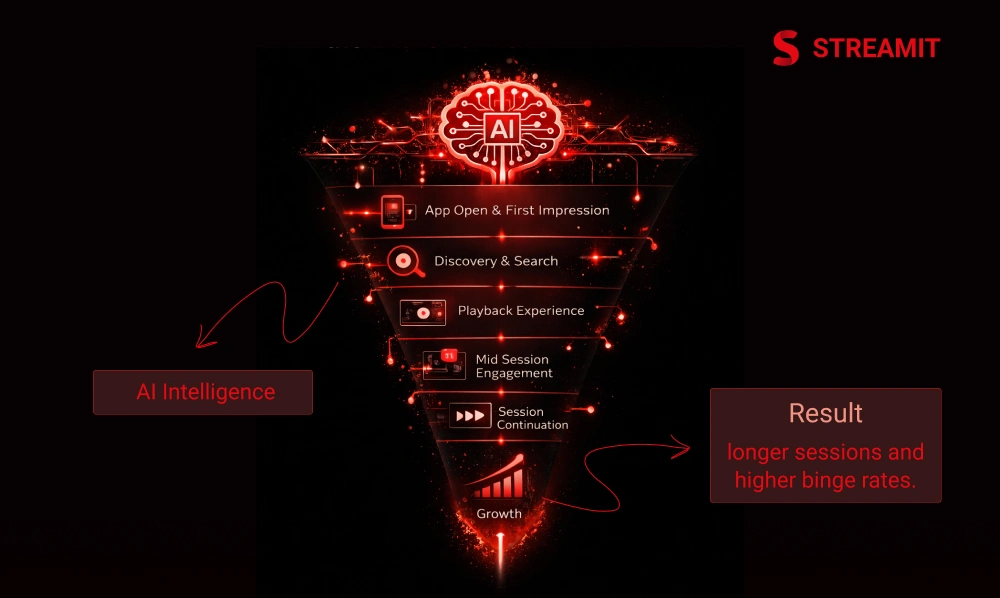
Every stage of the funnel leaks value in small but costly ways, often without being immediately visible. Missed signals, weak transitions, and unclear next steps slowly erode engagement. Intelligence identifies these gaps early and plugs them before they turn into lasting losses.
1. App Open & First Impression
Users decide whether to stay within seconds, making first impressions critical to engagement and retention.
AI highlights:
- Cold-start friction
- Repetitive homepage content
- Overloaded discovery layouts
Result: cleaner first impressions and faster engagement.
2. Discovery & Search
More than half of user exits happen before playback even starts, often during discovery when viewers fail to find something compelling.
AI identifies:
- Searches that lead to exits
- Categories that confuse users
- Content buried too deep
Result: smarter ordering, better discovery flow.
3. Playback Experience
Playback issues quietly erode user trust, often leading viewers to abandon sessions without giving the platform another chance.
AI tracks:
- Startup delays
- Rebuffering patterns
- Quality drops by device or network
Result: smoother sessions and fewer rage quits.
4. Mid-Session Engagement
Attention often starts to fade before boredom becomes obvious, making early signals critical to sustaining engagement.
AI detects:
- Declining interaction
- Passive viewing behavior
- Early disengagement signals
Result: timely nudges, previews, and suggestions.
5. Session Continuation
Session continuation is where momentum either carries viewers forward or fades away, making it a critical moment for sustaining engagement.
AI optimizes:
- Autoplay timing
- Next-episode logic
- Recommendation confidence
Result: longer sessions and higher binge rates.
Advanced Content Intelligence: Beyond Popularity
High views don’t always translate into high value, as true impact is measured by retention, repeat engagement, and long-term loyalty. AI-Powered Platform Intelligence separates attention-grabbing content from retention-driving content.
It answers questions like:
- Which titles create repeat visits?
- Which genres work only once?
- Which shows convert free users to paid?
This prevents platforms from over-investing in content that looks good on paper but fails long-term.
Regional & Audience-Specific Intelligence
What works in one market can fail completely in another due to differences in culture, language, and viewing habits. Audience expectations vary widely across regions. Understanding these nuances is essential to delivering experiences that truly resonate locally.
AI adapts insights by:
- Geography
- Language preference
- Bandwidth conditions
- Cultural viewing habits
This allows platforms to localize intelligently instead of guessing.
Growth Intelligence: Scaling Without Waste
Not all growth is healthy growth, especially when it comes at the cost of retention and user trust. Short-term spikes can hide deeper engagement problems. Sustainable growth comes from users who stay, return, and find long-term value.
AI evaluates acquisition sources based on lifetime behavior, not sign-ups.
Platforms learn:
- Which campaigns bring loyal users
- Which channels churn fast
- Which segments grow organically
Marketing spend becomes smarter, not bigger.
Monetization Intelligence in Practice
Revenue increases when timing is right, not simply when offers are pushed. Users respond best when monetization aligns with their intent and engagement level. Getting the timing right makes revenue feel natural rather than forced.
AI determines:
- When a user is ready to upgrade
- When a discount prevents churn
- When ads hurt experience
This creates monetization that feels helpful, not intrusive.
Enterprise vs Growing Platforms: How Intelligence Scales
Enterprise and growing platforms use intelligence in different ways, but the foundation remains the same. Growing platforms rely on it to avoid early mistakes and build stability, while enterprise platforms use it to optimize efficiency at scale. In both cases, intelligence adapts as the platform grows.
The same intelligence adapts to different stages:
- Growing platforms: use AI to avoid early mistakes
- Mid-scale platforms: use it to stabilize retention
- Enterprise platforms: use it to optimize efficiency
The system grows smarter as the platform grows.
Measuring ROI Without Guesswork
Intelligence must prove its value through clear, measurable outcomes rather than promises. Its impact shows up in better decisions, improved retention, and stronger growth. When results are visible, trust and adoption follow naturally.
Platforms typically see:
- Higher average watch time
- Lower early churn
- Improved trial-to-paid conversion
- Better content ROI
These gains compound over time.
Common Myths About Platform Intelligence
Myth 1: It’s only for big platforms
In reality, smaller platforms often benefit earlier because intelligence helps them avoid costly mistakes and grow with clarity from the start.
Myth 2: It replaces human teams
Platform Intelligence doesn’t replace people, it empowers teams by removing guesswork and supporting better, faster decisions.
Myth 3: It’s complex to use
While the technology behind it is advanced, the experience is simple, with insights delivered clearly without exposing users to complexity.
The Long-Term Advantage
Platforms that understand user behavior early don’t rely on loud moves or constant experimentation, they grow steadily and with confidence. AI-Powered Platform Intelligence isn’t just a feature added on top of a product, it’s a mindset that shapes how decisions are made every day. It replaces guesswork with clarity and direction.
By turning insight into action, this approach transforms growth from uncertainty into a repeatable, dependable system. Teams stop reacting to problems after they appear and start anticipating what users need next. Over time, this consistency becomes a quiet but powerful competitive advantage.
Role-Based Platform Intelligence: How Each Team Wins
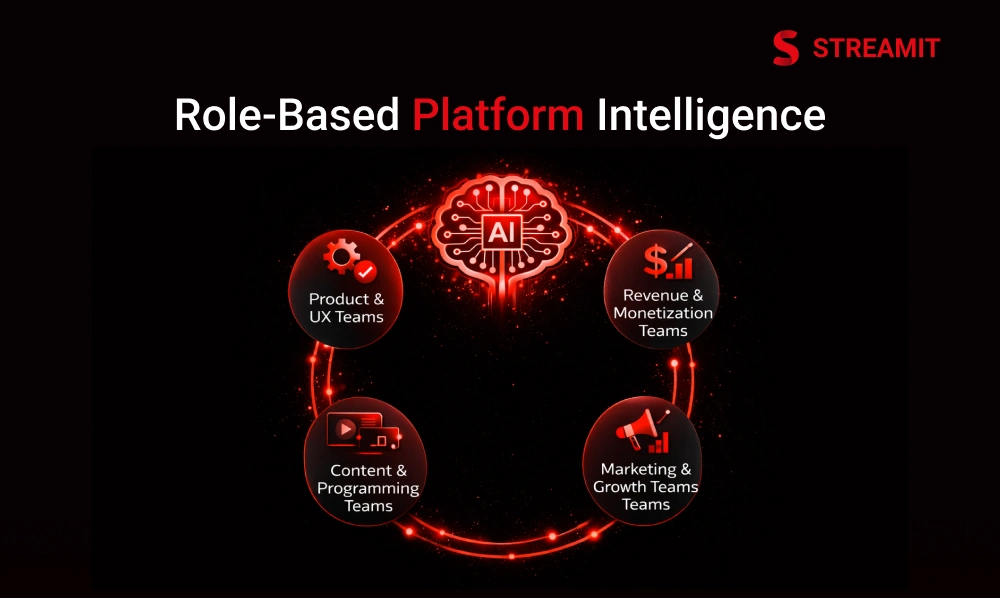
The biggest advantage of platform intelligence is alignment, where every team works from the same shared truth. Decisions are no longer shaped by opinions or isolated data views. Instead, teams move forward together with clarity, confidence, and consistency.
AI-Powered Platform Intelligence removes guesswork across departments by giving each team exactly the insights they need, in language they understand.
Product & UX Teams
Product teams often struggle to balance intuition with evidence, especially when decisions move fast. Clear behavioral insight helps validate instincts and reduces uncertainty.
Platform Intelligence shows:
- Which UX elements delay engagement
- Where users hesitate or abandon actions
- Which layouts improve session depth
Instead of debating design opinions, teams validate changes against real behavior.
Content & Programming Teams
Content teams no longer rely on surface-level metrics to judge success. They make decisions based on deeper engagement signals that reflect real viewer interest and long-term value.
They see:
- Why users stop watching specific episodes
- Which story formats sustain attention
- Which content drives repeat sessions
This leads to smarter commissioning, editing, and acquisition.
Marketing & Growth Teams
Marketing success is measured beyond installs and sign-ups. True performance shows up in retention, engagement, and the quality of users who stay over time.
AI highlights:
- Which campaigns attract high-retention users
- Where messaging mismatches expectations
- Which audiences grow organically
Budgets shift toward quality, not volume.
Revenue & Monetization Teams
Revenue grows when timing meets intent, not when offers are pushed blindly. Aligning monetization with user readiness makes conversions feel natural and effective.
AI identifies:
- When users are ready to upgrade
- When discounts prevent churn
- Where ads reduce experience
Monetization becomes supportive, not disruptive.
Industry-Specific Use Cases
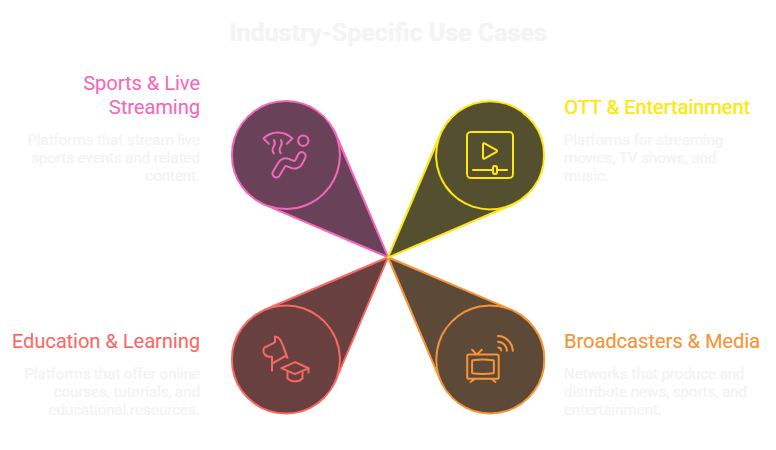
Different industries often share similar behavior patterns, but they apply intelligence in very different ways. Each industry faces unique audience expectations, usage cycles, and business goals. Adapting insights to context is what turns intelligence into real impact.
OTT & Entertainment Platforms
OTT and entertainment platforms rely on intelligence to keep viewers engaged from the first click to the next session. It helps reduce early exits, increase binge behavior, and guide smarter content decisions.
OTT platforms use intelligence to:
- Reduce early-session exits
- Increase binge rates
- Optimize content spend
Result: longer watch time and higher LTV.
Broadcasters & Media Networks
Broadcasters and media networks use intelligence to better understand shifting viewer behavior across linear and digital experiences. It helps retain audiences, optimize ad delivery, and stay relevant in a rapidly evolving media landscape.
Broadcasters leverage intelligence to:
- Transition viewers from linear to digital
- Retain regional audiences
- Optimize ad loads
Result: sustained relevance in digital-first markets.
Education & Learning Platforms
Education and learning platforms use intelligence to track learner progress and spot drop-offs early. This helps improve completion rates and learning outcomes with better personalization.
Education platforms use intelligence to:
- Detect learning fatigue
- Improve course completion
- Personalize pacing
Result: better outcomes and renewals.
Sports & Live Streaming
Sports and live streaming platforms use intelligence to keep viewers engaged throughout live events and breaks. It helps reduce drop-offs, highlight key moments, and support consistent return viewing.
Sports platforms rely on intelligence for:
- Drop-off prevention during breaks
- Highlight-driven engagement
- Subscription renewal cycles
Result: higher season-long retention.
Before vs After Platform Intelligence
The contrast is immediate and measurable once intelligence is applied. Teams gain faster clarity, decisions become more confident, and user behavior starts to shift positively. These improvements compound quickly across the platform.
Before
- Decisions driven by delayed reports
- Churn noticed after cancellation
- Content investment based on trends
After
- Real-time behavioral insights
- Early churn intervention
- Content strategy backed by evidence
Decision Playbooks: What to Do When Metrics Change
Intelligence is only valuable when it guides action, not when it stays trapped in reports. Insights must translate into clear next steps that teams can act on quickly. When action follows understanding, real impact begins to show.
When Watch Time Drops
It’s often a sign of deeper issues in discovery, content fit, or playback experience. Identifying the root cause early helps prevent disengagement from spreading.
AI checks:
- Discovery relevance
- Playback friction
- Content mismatch
When Churn Signals Rise
When churn signals rise, it indicates early disengagement that hasn’t yet turned into cancellation. Recognizing these signals in time allows platforms to intervene and retain users.
AI identifies:
- At-risk segments
- Failing content paths
- Experience breakdowns
Retention efforts become precise.
When a Title Underperforms
When a title underperforms, it doesn’t always mean the content is weak. Often, the issue lies in poor placement, audience mismatch, or unmet expectations that can be corrected early.
AI reveals:
- Audience mismatch
- Poor placement
- Expectation gaps
Content decisions improve quickly.
Long-Term Economics of Platform Intelligence
Small improvements may seem minor on their own, but over time they compound into significant gains. Each better decision strengthens the next, creating momentum. This steady accumulation drives long-term growth and stability.
Over time, platforms experience:
- Higher average session depth
- Improved renewal rates
- Lower acquisition waste
- Stronger brand trust
These benefits scale naturally.
Governance, Trust & Human Oversight
Intelligence is designed to support humans, not replace their judgment. It helps teams see patterns and signals more clearly while leaving decisions in human hands. This partnership strengthens confidence, accountability, and outcomes.
Teams maintain control while benefiting from:
- Transparent insights
- Explainable signals
- Continuous learning
Trust builds adoption.
Final Thoughts
The strongest platforms don’t wait for clear problems to appear on dashboards. They notice small changes in behavior and act before those changes turn into churn or disengagement. This early understanding keeps growth stable and decisions confident.
AI-Powered Platform Intelligence is built to create that quiet confidence. It turns everyday user actions into signals that guide product, content, marketing, and revenue decisions in sync. You don’t fully understand its impact by reading about dashboards alone. It becomes clear when churn slows before cancellations happen, when engagement stabilizes naturally, and when growth feels predictable instead of reactive.
Explore AI-Powered Platform Intelligence and see how early understanding transforms platform performance in real time.
FAQs
1. What is AI-Powered Platform Intelligence?
AI-Powered Platform Intelligence turns user behavior into clear insight. It shows what’s happening, why it matters, and what to improve.
2. How is AI-Powered Platform Intelligence different from traditional analytics?
Traditional analytics shows numbers like views or sessions. Platform Intelligence explains patterns behind those numbers such as why users drop off, which content drives loyalty, and which users are likely to churn or upgrade.
3. Is AI-Powered Platform Intelligence only for large streaming platforms?
No. It benefits platforms at every stage. Smaller platforms gain early clarity, mid-scale platforms stabilize growth, and large platforms optimize efficiency and long-term value.
4. What kind of insights does Platform Intelligence provide?
It delivers insights across the entire funnel, content performance, user engagement, churn risk, growth quality, and monetization opportunities all connected to real business outcomes.
5. Does this require complex setup or technical expertise?
No. The intelligence layer works quietly in the background. Teams receive simple, actionable insights without needing to manage complex dashboards or technical workflows.
6. How does Platform Intelligence help reduce churn?
It identifies early warning signals such as reduced watch time, fewer sessions, and discovery fatigue. This allows platforms to intervene before users cancel.
7. Can Platform Intelligence improve content decisions?
Yes. It shows which titles drive repeat viewing, which genres retain users, and where viewers lose interest helping teams invest in content that delivers long-term value.
Read Also
1. 7 Reasons Why OTT Platforms Will Fail in 2026 Without Retention
2. 10 Powerful Netflix Retention Strategies Every Brand Should Use
3. Why Startups and Enterprises Alike Are Choosing White Label OTT Platforms
4. 7 Steps to Integrate Payment Gateways in OTT Platforms
5. Why Most Streaming Startups Fail in 18 Months (And It’s Not Content)